





In a 2010 assessment report, the US-based group, Human Rights Watch (HRW), posited that the Economic and Financial Crimes Commission (EFCC) was envisaged to tackle corrupt politicians and public sector fraud effectively, but has contrary to expectations, continued to “reward rather than punish corruption”.
Coming just seven years after the establishment of the anti-corruption agency, HRW’s early verdict seemed a clairvoyant perception that has deepened over the years. Although a product of a United Nations Convention, the enthusiasm at the time to nip corruption persuaded the state governors to overlook what was supposed to be an established path to building a strong and enduring institution.
As a strategic agency with a national jurisdiction, the decision to overlook the error may have been inspired by hope that the EFCC may evolve into an independent organization led and run by persons that shared a common desire to chart a firm path where public office holders will be held accountable without fear or favour.
It may have started fairly well under its pioneer chairman, Nuhu Ribadu. But sooner rather than later, it became clear that politicians with views out of sync with those of Aso Rock chief occupant became the prime targets of its operatives. The still-born attempt to engineer a third term for then President Olusegun Obasanjo through a constitutional amendment turned the EFCC into an enforcer against politicians, especially members of the National Assembly where the constitutional immunity for then Vice President Atiku Abubakar and state governors shielded them from the arm-twisting that was generously applied to beat dissenting politicians into line.
At the end of Obasanjo’s second term and the ouster of Ribadu under controversial circumstances, EFCC shed whatever remained of its toga of independence and became a full-fledged tool at the disposal of the tenant of Aso Rock. It became a theatre of hysteria and a potent tool of vendetta without pretence. What with the comical manner Chairman of Globacom, Mike Adenuga, was chased out of Nigeria to Ghana and later Europe; the gestapo-style bid to arrest former governor of Kogi State, Yahaya Bello, not forgetting the invasion of the offices of Dangote Group in search of non-existent documents just to spite its President Aliko Dangote.
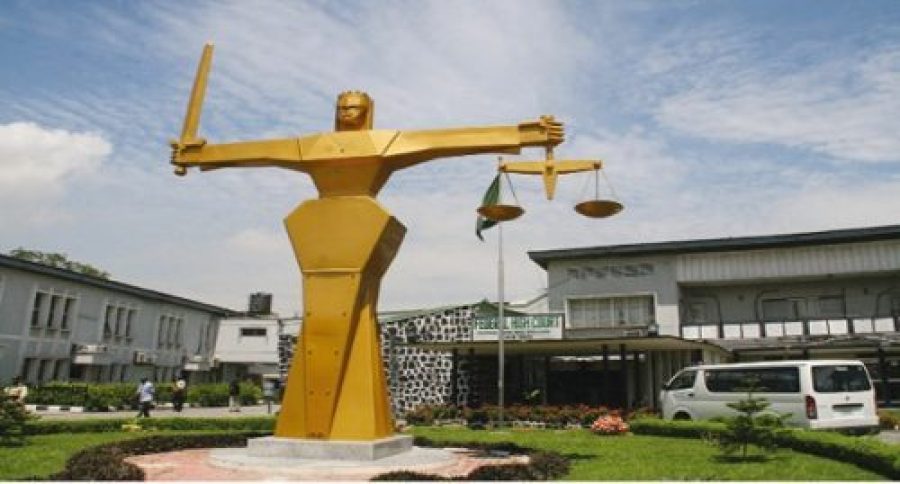
Yet, in the midst of all this and many more, nobody bothered to inquire into how the anti-graft agency was birthed. Was the infraction-burdened commission itself a child of Constitutional infraction? This is the matter before a seven-man panel of Supreme Court justices, led by Justice Uwani Abba-Aji. They are to adjudicate on a case first brought before the apex court by Kogi state through its Attorney-General. A good 15 other states have joined in the consolidated suit which seeks to determine whether the EFCC Bill followed due process of the law, in this case the Constitution, before it became an Act of Parliament. Hearing on the matter has been fixed for October 22.
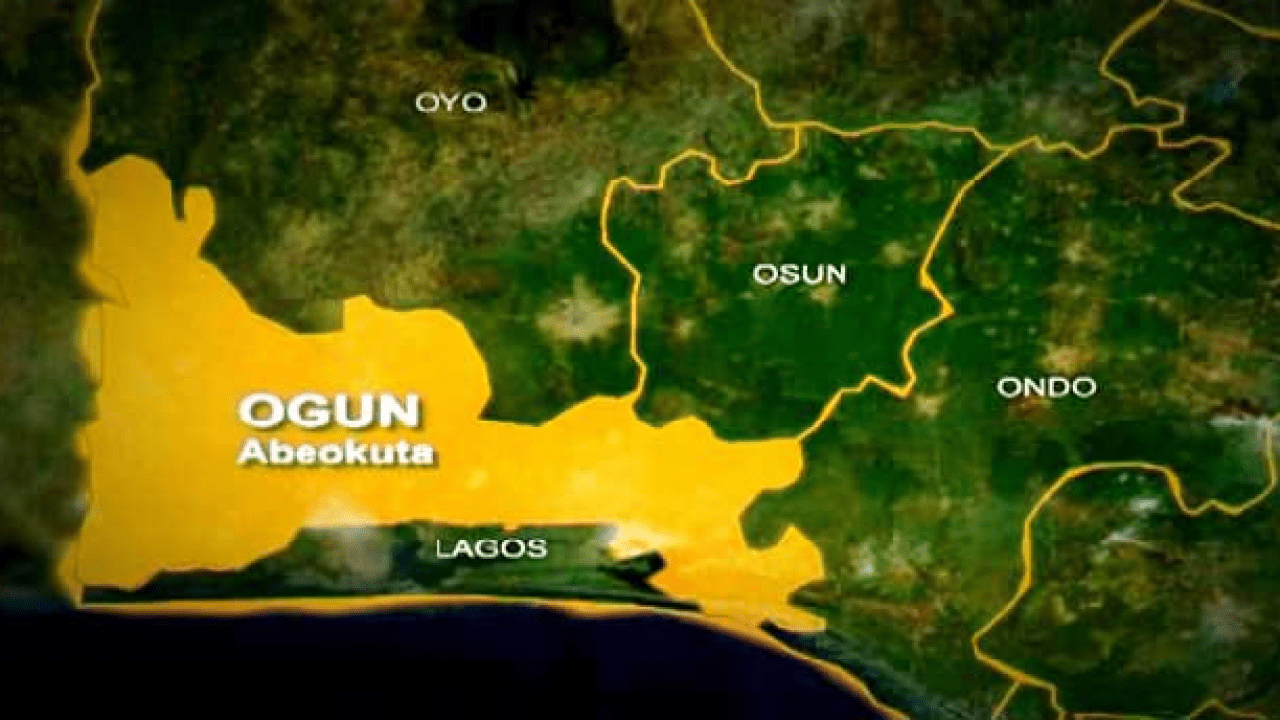
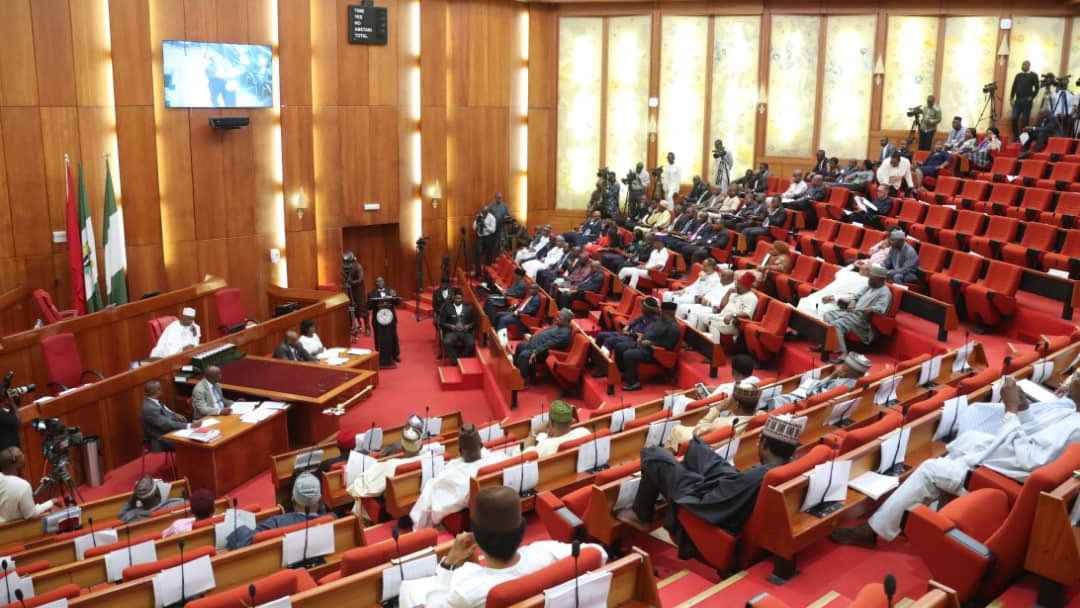
The states that joined in the suit marked: SC/CV/178/2023, are Katsina, Sokoto, Jigawa, Ondo, Edo, Oyo, Ogun, Nasarawa, Kebbi, Enugu, Benue, Anambra, Plateau, Cross River and Niger. Their argument is that the enactment of the EFCC Act grossly undermined the powers and rights of the states as federating units within a Federation. The states have functional Houses of Assembly but the input of these State Assemblies was not sought in the course of the enactment of the EFCC Act as required by the 1999 Constitution (as amended).
This is a strong ground because it borders on Constitutional abuse.
The state governments are relying on the case of Dr. Joseph Nwobike Vs Federal Republic of Nigeria, wherein the Supreme Court held that it was a UN Convention Against Corruption (UNCAC) that the National Assembly converted into the EFCC Establishment Act and that in enacting this law in 2004, the provisions of Section 12 of the 1999 Constitution, as amended, were not followed.
The state governments argued that in transforming a convention into Nigerian law, the provision of Section 12 must be complied with. The 16 state governments assert that the provision of the Constitution demands that a majority of the states’ Houses of Assembly shall agree to bring the UN Convention into Nigeria before passing the EFCC Act or any other such law. They maintain that this critical requirement that underscores the sovereignty of Nigeria as a self-governing entity was never met neither was the constitutional procedure followed.
For the avoidance of doubt, section 12, subsection (2) of the Constitution states that “the National Assembly may make laws for the Federation or any part thereof with respect to matters not included in the Exclusive Legislative List for the purpose of implementing a treaty,” which in this case is the UNCAC, a treaty Nigeria ratified since 14 December 2004 from which the EFCC Act was enacted at the whim of the Executive and the National Assembly without the concordance and ratification from the state Assembles.
Subsection three(3) of section 12 states that “a bill of the National Assembly passed pursuant to the provisions of subsection (2) of the section shall not be presented to the President for assent, and shall not be enacted, unless it is ratified by a majority of all the Houses of Assembly in the Federation.”
The fact that 15 states have joined Kogi in challenging the legality of the process that birthed the EFCC across party and regional lines illustrates the common challenges states face when they hold contrary views with the occupant of Aso Rock. In the prayers brought before the Supreme Court, their major desire is not to be shielded from prosecution but for the process not to be activated at the whim and caprice of the party at the centre or the President at any point in time. The reality of imperial presidency is one of the major impediments to a functional federal structure. Despite being heads of sub-national governments, state governors still face the prospect of arbitrary persecution if they are not in the president’s good book.
The suit before the Supreme Court, if successful and should be, may open the door to the resolution of some contentious issues and proposed legislations that are emasculating the states and the citizens. One of such is the proposal for the Independent National Electoral Commission (INEC) to take over the conduct of local government elections as well as the criteria for choosing its chairman and national commissioners. With every electoral cycle, the overbearing power and influence of the presidency in conducting credible elections become more apparent. The recent gubernatorial election in Edo State is sticking out like a sore thumb.
Above all, what the suit seeks to achieve is to establish that Nigeria is a true Federation hence its statutes including Acts of Parliament must respect the constitutional roles and relevance of the federating units, the states.
Dr (Mrs) Ochioma, political strategy consultant, writes from Benin City