

Wike and verbal political violence, by Pius Mordi
He has coronated himself as one of the nouveau political warlords. Somehow, he thinks his is a political trajectory forged in steel and fire. From his time as governor of Rivers State, he never exhibited the traits of the noble traits of the prime political leader in his state.
Dr. Peter Odili, the father of fourth republic politics in Rivers State, is the epitome of decency and decorum in politics, sharing a political philosophy similar to that Ibrahim Waziri, the exponent of politics without bitterness. Odili wanted to be president after his eight years as governor. But it did not work and he accepted the situation, quietly retiring as an elder statesman that he is. Before retiring, he had groomed a group a young men to succeed him. Of the lot, Chibuike Rotimi Amaechi, Celestine Omehia and Nyesom Wike stand out.
And among the trio who at different times and under various circumstances ran Rivers State as governor, Nyesom stands out. In his time as the chief executive of Rivers State, Wike showed himself as a maximum political warlord. He only determined who emerged his successor as governor and lawmakers at state and federal levels.
That was the mentality he brought to Abuja after President Bola Tinubu appointed him the Minister of the Federal Capital Territory. Even though he claims continued membership of the Peoples Democratic Party (PDP), he remains a wing man for the ruling All Progressives Congress (APC). And he took it as immunity to shoot down any alternative voice and opinion that did not align with his vow to support Tinubu.
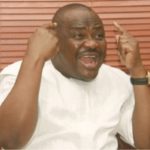
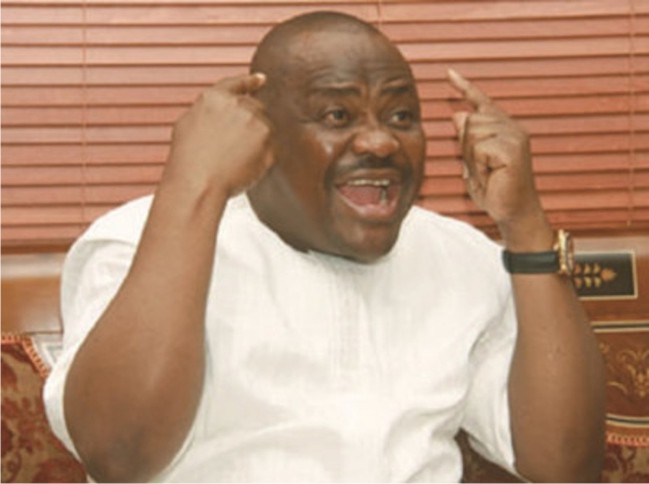
On Good Friday, April 3, 2026, Wike assembled some journalists on a wild and rudderless verbal violence anchored on political developments in the country, specifically on the media. “Were it possible, I would’ve broken my TV screen to shoot Seun Okinbaloye”, Wike said on live television. Okinbaloye is the anchor of Channels Television’s flagship political programme. Wike’s grouse is that Okinbaloye could condemn what is seen as an orchestrated game plan to cripple opposition parties ahead of the 2027 general elections.
“I am particularly pained because what makes the race very interesting is when it is competitive, not when only one party stands in the middle of the ballot”, Okinbaloye had said. Wike contended that, as a journalist, Okinbaloye was not supposed to present his personal opinion, maintaining that such conduct is unprofessional.
It was a show of extreme uncouthness, intolerance for alternative views and assault on free speech. But it was also founded on total ignorance. Wike is not a journalist. He is a lawyer not known to have practiced what he studied. And because he is used to being given so much latitude to engage in verbal assaults in his numerous one sided media outings, he may have told himself that he now understands what journalism entails.
Threatening death on a journalist is a new frontier Wike has opened in his self appointed task of holding down not just PDP, but also any contrary voice. It is verbal political violence laced with hateful rhetoric and dehumanizing language. Such threats from political leaders on citizens function as a precursor to physical violence by normalizing aggression and deepening polarization. It diminishes democratic debate, coerces opponents into silence, and damages communal trust.
In sane societies, Wike’s outburst would have elicited robust, bipartisan condemnation, especially from the National Assembly and even the Independent National Electoral Commission (INEC). Such interventions would have limited the psychological and social damage on the people. Wike’s strategy is used to delegitimize opponents, making the public more susceptible to accepting physical violence. While often viewed as “just words,” as Wike belatedly tried to explain, verbal violence is a deliberate tool used by politicians to rally supporters, create a “war-like” atmosphere, and gain electoral advantages.
The normalization of abusive language in high-level politics can erode respect for democratic institutions and is often marketed as “strength” or “realism”.
The danger in sweeping Wike’s grievous threat of violence against Okinbaloye is that it is easy for him to explain it as mere use of words. He has already told Nigerians that he has reached out to the Channels Television anchor and blamed opposition parties for misinterpreting him. As a member of the opposition PDP as he claims, his classification of other non-APC as opposition politicians is rather uncanny.
His open chastisement and threat on a journalist on live television is not a happenstance. It is a language and strategy he believes in, espouses and, I believe, uses to desired effect for him. It is a familiar strategy taken from Donald Trump’s play book. But while the American political system has all the guardrails to checkmate Trump and his MAGA folks, no such thing exists in Nigeria. Wike is a loose cannon being propped up by a government that rates him high based on his nuisance value and capacity to do the dirty job.
But the regular array of media Wike prefers to address shares in the blame of failure to hold him to account. They don’t hold up the mirror to his face or challenge him on the spurious claims he routinely makes. My friend and professional colleague from our days in The Guardian, Dickson Adeyanju, made a post I completely agree with. Reacting to the impetuous pronouncements of Wike, Adeyanju said: “Seun gave Wike latitude without restraint during his programme on several occasions. Now, he wishes he could kill him. Deal with politicians with an arms length, and this should teach him a big lesson.”
Despite the alarm and indignation generated by the threat, Aso Rock apparatchiks must be quietly having a good laugh. They know they will not need him after the 2027 and will duly ease him out. But before then, Wike must have wreaked tremendous havoc that may not be remedied.