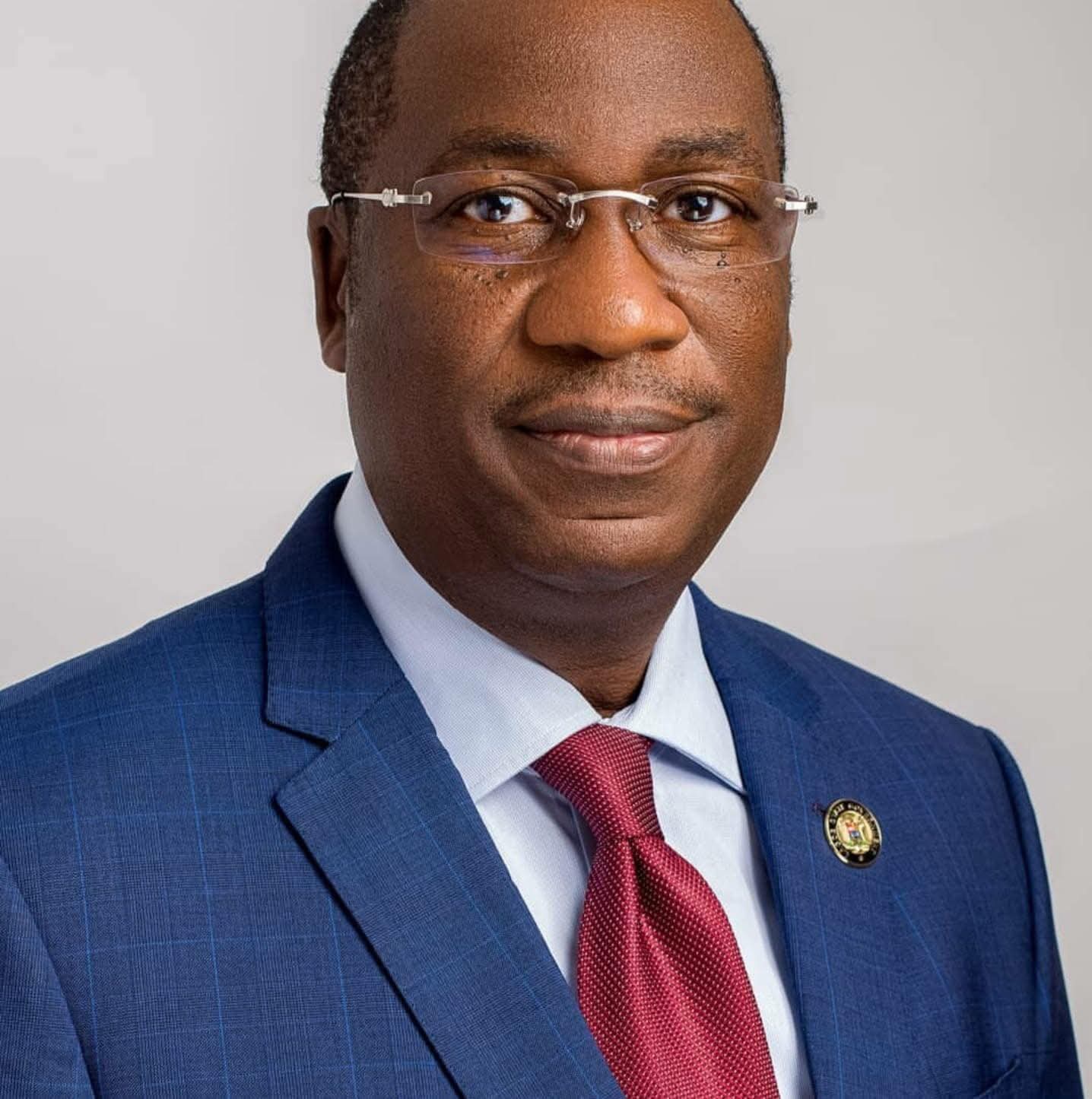
Mr. Hamzat

In the ever-evolving chessboard of Lagos politics, succession conversations often begin long before election season officially arrives. And as the 2027 governorship race gradually enters public discourse, one name increasingly echoes through political circles, policy rooms, and grassroots conversations: Dr. Obafemi Kadri Hamzat.
Whether by design, destiny, or political calculation, Hamzat, born on September 19, 1964 and married to Oluremi, has emerged as perhaps the most visible, talked about and institutionally prepared figure in the conversation about who may occupy Alausa after Governor Babajide Sanwo-Olu. If Lagos chooses experience, technocratic competence, and continuity over political theatrics, then Hamzat may well be the man to beat.
Unlike many politicians whose public careers began in party structures, Hamzat’s rise was first forged in academia and professional excellence. An engineer by training, he earned a degree in Agricultural Engineering from the University of Ibadan, Oyo State before adding a master’s degree and later a doctorate in System Process Engineering from Cranefield University, England. His academic trajectory, no doubt, established him early as a serious-minded intellectual with a strong technical and analytical grounding.
And in a political environment where anti-intellectualism sometimes thrives, Hamzat has consistently projected the image of a cerebral leader – one more comfortable discussing policy frameworks, digital transformation, and governance systems than engaging in populist grandstanding and unnecessary controversies.
Before politics finally arrested him, Hamzat had built a reputation in engineering, systems management, and technology-driven administration. His expertise in technology and infrastructure made him a natural fit for public service at a time when Lagos was aggressively modernising its governance systems.
That technical competence became his entry point into the political establishment. He served as Commissioner for Science and Technology, later Special Adviser on Works. Across these roles, he developed a reputation as a policy wonk and implementation-driven administrator.
Interestingly, Hamzat’s political evolution has been unusual by Nigerian standards.
He is not usually the loudest politician in the room. In fact, he is rarely seen engaging in needless drama. He does not even dominate headlines with flamboyant rhetoric. Yet, within Lagos’ political machinery, his influence has steadily grown.
Born into a politically conscious family, his late father, Oba Mufutau Hamzat, was himself a notable political figure in Lagos. But unlike many second-generation politicians who rely solely on legacy, Hamzat has spent nearly two decades building his own political résumé. His eventual emergence as Deputy Governor in 2019 was not accidental; it was the culmination of years of strategic positioning, administrative competence, and loyalty within the Lagos APC establishment. Since then, he has served as Governor Sanwo-Olu’s dependable deputy, helping to shape and execute the administration’s developmental agenda.
Several factors, of course, make Hamzat a compelling governorship prospect. First, he understands Lagos and its operations as an ‘insider.’ Unlike other contenders who know little about the bureaucracy, infrastructure ecosystem, and policy architecture of the state as intimately as he does.
Second is that he is a technocrat with measurable governance experience.
Third is political acceptability, especially within the APC hierarchy. Yes, Hamzat is widely viewed as disciplined, loyal, and non-disruptive – traits often prized in succession politics.
The fourth is public perception. To many Lagosians, he projects calm intelligence, competence, and seriousness – qualities that contrast favourably with the theatrics often associated with Nigerian politics. Recent endorsements and increasing public succession conversations further reinforce his growing profile as a leading contender.
Challenges, however, cannot be ruled out. Especially because Lagos politics is never straightforward.
Competence alone often does not secure power in Nigeria. Political equations involving zoning, ethnic balancing, party interests, religious leaning, godfatherism, and grassroots calculations will all influence who eventually gets the nod.
Nonetheless, Obafemi Kadir Hamzat represents a rare breed in Nigerian politics: the scholar-technocrat who successfully transitioned into high-level political leadership without sacrificing his intellectual identity.
He has the education, the experience, the institutional knowledge, and the political grooming to govern Lagos. But whether he eventually becomes governor will depend not only on his credentials but on how well he navigates the intricate power dynamics of Lagos politics, under the firm grip of President Bola Ahmed Tinubu, in the months ahead.
But one thing is clear: If Lagos chooses preparation over populism, competence over noise, and continuity over experimentation, OKH may indeed be the man who becomes the next governor of Lagos State.
– Azuh Arinze, FNGE, is the Publisher/Editor-in-Chief of YES INTERNATIONAL! Magazine and author of important books like The CEO’s Bible 1 and 2, Anything and Everything Journalism, Success Is Not Served A La Carte, My Story of Many Colours, etc