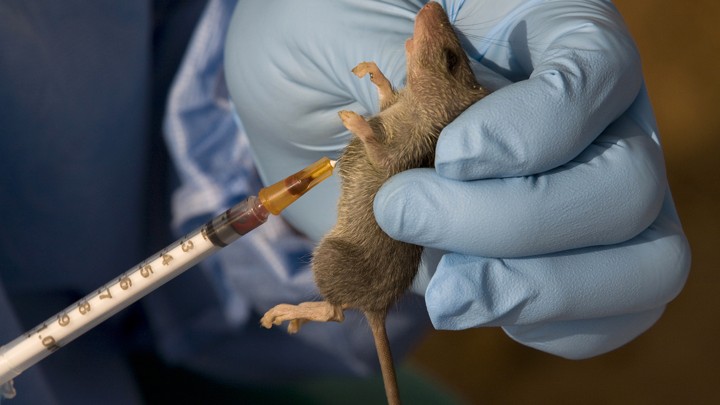
An ecologist extracts a sample of blood from a Mastomys Natalensis rodent in the village of Jormu in southeastern Sierra Leone February 8, 2011. Lassa fever, named after the Nigerian town where it was first identified in 1969, is among a U.S. list of "category A" diseases -- deemed to have the potential for major public health impact -- alongside anthrax and botulism. The disease is carried by the Mastomys Natalensis rodent, found across sub-Saharan Africa and often eaten as a source of protein. It infects an estimated 300,000-500,000 people each year, and kills about 5,000. Picture taken February 8, 2011. To match Reuters-Feature BIOTERROR-AFRICA/ REUTERS/Simon Akam (SIERRA LEONE - Tags: HEALTH SOCIETY ANIMALS) - GM1E72F07HC01
The Federal Medical Centre (FMC) Lokoja in Kogi, has confirmed three cases of Lassa fever with one recorded death at the facility in the last one week.
Dr Bernard Ododo, Head of Clinical Services of the medical centre, disclosed this in an interview with the News Agency of Nigeria (NAN) on Sunday in Lokoja.
Ododo said five suspected cases of Lassa fever were reported in the hospital in the last one week, out of which three tested positive to the virus while one patient died.
”Five suspected cases reported at the hospital in the last one week, three already tested positive, of which one died.
”Two cases already transferred to Lassa Fever Management Center at Irua Specialist Hospital in Edo State.
”Two others (of which one has died) have their results awaited from NCDC Laboratory in Abuja,” Ododo said.
The physician, therefore, advised residents to adopt all the necessary precautions to prevent the outbreak of the epidemic-prone diseases in the state.
He also advised people to maintain high hygienic principles, keep rodents away from residence and food stuff materials.
He further urged the public to seek early medical attention in case of fever, headache, sore throat, vomiting, joint pain, abdominal pain and at late stage, bleeding from body orifices.
The doctor advised relatives or care givers to patients, to be careful and use gloves whenever they touched or evacuated effluents and wastes from patients.
“For health care givers, universal safety precaution is key. Wash hands with sanitisers, glove and kitting on personal protection equipment kit (PPE) are necessary. But first is to uphold high index of suspicion while clerking patient with likely lassa fever signs and symptoms on arrival to hospital”.
“Treatment is more effective if detected early and treatment commenced immediately. Lassa is highly infectious and contagious, everyone must beware,” Ododo advised.