



UNMASKING THE HYPOCRISY: Ribadu’s shifting stance on corruption allegations against Tinubu, others
By Dahiru Yusuf Yabo
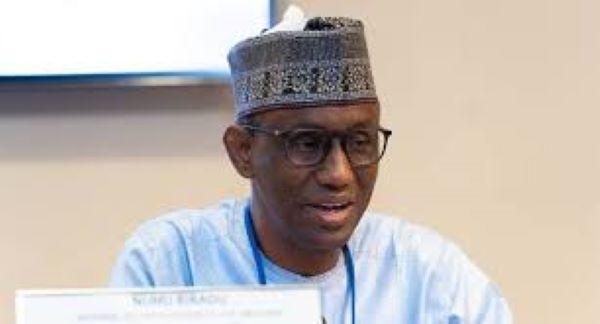
The recent rebuttal by the National Security Adviser (NSA), Nuhu Ribadu, denying that he ever accused President Bola Tinubu, Senate President Godswill Akpabio, and former Governor Orji Uzor Kalu of corruption during his tenure as EFCC Chairman is nothing short of a strategic revision of history.
This outright denial is a calculated attempt to rewrite the past, discredit Hajia Najaatu Mohammed’s well-founded assertions, and shield a political establishment riddled with unresolved corruption allegations.
Historical Context: The EFCC Under Ribadu’s Leadership
As the pioneer chairman of the Economic and Financial Crimes Commission (EFCC), Nuhu Ribadu played a key role in Nigeria’s anti-corruption efforts. During his tenure, the EFCC investigated and indicted several governors for financial crimes, especially in the lead-up to the 2003 and 2007 elections. The agency released a list of corrupt governors deemed unfit for re-election, citing extensive evidence of financial mismanagement, fraud, and embezzlement.
Among these high-profile figures was Bola Tinubu, then Governor of Lagos State, whose administration faced persistent allegations of illicit financial activities, including operating multiple foreign bank accounts in violation of the Nigerian Constitution. In 2011, the Code of Conduct Tribunal (CCT) dismissed the case against Tinubu on a technicality rather than an acquittal based on innocence (Sahara Reporters).
At the time, Nuhu Ribadu was vocal about the EFCC’s position against corrupt officials seeking re-election. However, his recent denial raises serious questions about his integrity and whether his current role as NSA under Tinubu has influenced his selective amnesia. His claim that he never accused Tinubu, Akume, or Kalu contradicts the well-documented records of the EFCC’s activities under his leadership (Vanguard).
Bola Tinubu: A Case of Selective Accountability
Tinubu’s legal entanglements span decades, from his tenure as governor to his role as a power broker in national politics. The corruption allegations against him resurfaced in various forms, including the controversial Alpha Beta Consulting firm scandal, the $460,000 forfeiture case in the U.S., and his involvement in the Remita e-payment system under Buhari’s administration.
Despite these unresolved cases, Tinubu not only retained his political influence but also installed key allies in strategic positions, ensuring that anti-corruption agencies remained ineffective against him. Even as President, the composition of his cabinet—stacked with individuals facing corruption cases—reflects a pattern of impunity.
The Corrupt Network: A Web of Indicted Officials
If Ribadu’s claims are to be believed, why then do multiple members of Tinubu’s administration have pending corruption cases? The EFCC has prosecuted at least 33 former governors, securing six convictions, yet many others, including Akpabio, Wike, Bello, Betta Edu, and Halima Shehu, have been named in major corruption investigations but continue to evade accountability (TheCable).
For example:
Godswill Akpabio (Senate President) was investigated for the alleged diversion of over N108 billion while serving as Akwa Ibom Governor.
Nyesom Wike (Minister of the FCT) faced allegations regarding financial mismanagement in Rivers State.
Betta Edu (Suspended Minister of Humanitarian Affairs) is under investigation for an N585 million misappropriation scandal.
Halima Shehu, former National Coordinator of the National Social Investment Programme Agency (NSIPA), is currently under EFCC investigation for misappropriation of social intervention funds.
These cases exemplify how corruption allegations have become an entry requirement rather than a disqualifier in Nigeria’s political system. Yet, when dissenting voices like Hajia Najaatu Mohammed speak up, the establishment resorts to legal threats instead of addressing the core issues.
Silencing the Truth: The Weaponization of the Legal System
The reported move to engage a law firm to sue Hajia Najaatu Mohammed for defamation is nothing but an extension of the witch-hunt against dissenting voices. Rather than addressing the credibility crisis surrounding Ribadu’s denial, the political elite prefers to use intimidation tactics to suppress opposition.
This follows a familiar pattern: weaponizing defamation suits against critics while shielding allies from prosecution. It is worth recalling that the Nigerian Senate recently called for the removal of Danladi Umar, Chairman of the Code of Conduct Tribunal (CCT), over allegations of corruption and misconduct (The Nation). This is the same tribunal that once prosecuted Tinubu—another reminder that Nigeria’s anti-corruption institutions are not immune to political influence.
Conclusion: A Whitewashed Legacy
Nuhu Ribadu’s attempt to discredit historical facts should be seen for what it is—a desperate bid to maintain political relevance in an administration that thrives on selective justice. His transformation from an anti-corruption crusader to a political gatekeeper reflects the systemic failure of Nigeria’s accountability mechanisms.
Hajia Najaatu Mohammed’s claims are not baseless. They are supported by a history of EFCC reports, legal cases, and investigative journalism. If Ribadu and his allies believe they can erase the past through denial and legal threats, they underestimate the collective memory of the Nigerian people.
The real question remains: If Tinubu and his allies are indeed innocent, why are they so afraid of history?
Dahiru Yusuf Yabo was an Investigation Officer with NCS 2003 & Criminologists (BUK)