





Nigeria: How to build a better tomorrow today, by Ken Ugbechie

In March 2009 when I visited Microsoft India Development Centre, MSIDC, in Hydrabad, India, several things struck me. The expansive nature of what Bill Gates and his colleagues called Microsoft Campus. The campus was home to about 1500 employees, mostly Indians. It was, according to Steve Ballmer, the President of Microsoft at that time, the biggest campus outside the Redmond, Washington headquarters of Microsoft. But it was not always a mega company or campus. By 1998 when the idea of an Indian campus (office) was mooted, it was a 20-man staff company which started strong on Research and Development (R&D) with eyes on doing big things.
In 2008, wrote Srini Koppolu, the then Managing Director of MSIDC in the company’s special publication to commemorate its 10th anniversary, the company has innovated from India to drive global business growth and empower the next billion customers in emerging markets. It has become the biggest Microsoft outsourcing centre outside America. Many other things would fascinate a visitor. Most of the employees were Indians with majority young enough to fit into any high school. Then, there was the rich array of light-years-ahead products from health management software to those for human capital and retail business management.
For the two or three hours that I was conducted round the key departments of the campus in company of hundreds of other editors from around the world, I could feel the momentum of the passion among these Indians. They were young and brilliant. They brimmed with a sense of ownership of the project. It was not just a Bill Gates’ venture in India, it was their own. They ran the show, called the shots and drove the enterprise. They were full of confidence and you could sense that in the manner they strut from room to room.
This picturesque moment of digital nirvana captures the story of 21st Century India. Hydrabad itself, aptly dubbed Hitech City, is an enduring masterpiece of what passion and people’s will can do. It mirrors the real spirit of India, a country that commands one-sixth of global population and far more than the population of the entire continent of Africa. India is home to Tata Consultancy Services (TCS), Tech Mahindra, Wipro, Infosys and other information communications technology, ICT, buzzers making waves around the world.

And as it is in India, so it is in China and Japan. But unlike India which plays big in software engineering, China and Japan are major global forces in hardware engineering. Today, most ICT novices still think of IBM, Dell and other notable brands as made-in- America. Yes, they are made in America but only in branding and brand origin. The truth is that most of these products are now assembled in several parts of Asia and shipped overseas. The manufacture of ICT hardware has become so compartmentalised such that no single company makes a laptop, for instance, from start to finish. Different companies make the different components and one company (otherwise known as Original Equipment Manufacturer, OEM,) couples them into one unit as a product. It is called assembly and it has become the fad in geekdom.
Cheap labour, technical competence, access to the market and availability of raw materials compel mega-corporations to outsource jobs to Asian companies or set up shops there. Africa, particularly Nigeria boasts some of these qualities and you wonder why IBM, Microsoft and Dell do not have plants or campuses in Nigeria.
Aside long years of military rule which created instability, one missing item on the menu is adequate manpower. The nature of our curriculum is such that it does not give room for numerate skill unlike India curriculum. In the 21st Century, your certificate in any discipline is a mere paper if you are not ICT savvy. This is what attracts multinationals to Asia: a preponderance of ICT-savvy graduates and work force.
But Asian countries did not achieve global trust by fiat or sleight. They earned it by first patronising made in Asia products even when such products had not gone global. The Chinese, Indians, South Koreans, Malaysians started by patronising home-made products and services. The local patronage subsisted and this helped the indigenous manufacturers and producers to achieve product and service efficiency.
In the early 1990s, a particular South Korea automobile maker used Nigeria as testing ground for its brand. The cars came in flashy, streamline designs which appealed to the upwardly mobile Nigerians at that time, but the brand was fragile and flaky, and unfit for Nigerian roads. Yet, the brand sold out in Nigeria and only fizzled out of the marketplace when its founder faced bankruptcy and corruption charges in his country.
The Asia success story in the global markets was made possible primarily by patronage and support of respective governments in those countries. This is a culture absent in Nigeria.
In global trade economics, Nigeria is always in deficit. Reason is simple. Nigeria does not patronise home-made products and services. Respective Nigerian governments would rather import exotic products than patronise indigenous ones even when the indigenous products, as we have seen in some cases, are higher in quality than the foreign ones. Local patronage will help indigenous manufacturers to stay in business, improve product quality over time, help upskill human capital and in the long run conserve Nigeria’s foreign exchange purse.
On the contrary, patronising foreign products depletes forex reserves and weakens the naira. This is a national shame. Successive Nigerian governments tout local production, Buy-Nigeria among other slogans. But these have remained mere political catch phrases. Motorcades of government officials are still a constellation of exotic vehicles even when we have local automotive companies churning out vehicles, some of them simply world class.
In the IT space where many Nigerian companies are assembling indigenous brands of computers, laptops and tablets, and writing fit-for-purpose software applications, governments insist on importing foreign brands.
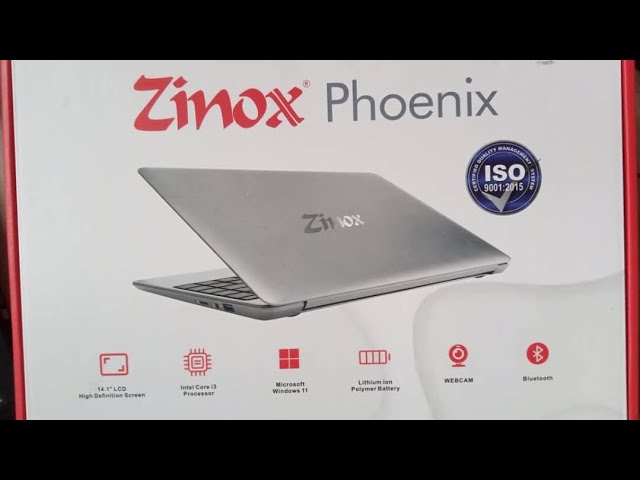
Indigenous automobile brands like Innoson, Nord Automobile, etcetera, and computer brands like Zinox, NASENI and others are easily overlooked by governors, ministers and heads of agencies and parastatals for foreign brands. This is unhealthy economics. Nigeria can only guarantee a better tomorrow by patronising indigenous products and services today. Asians did it. Let’s start now.