





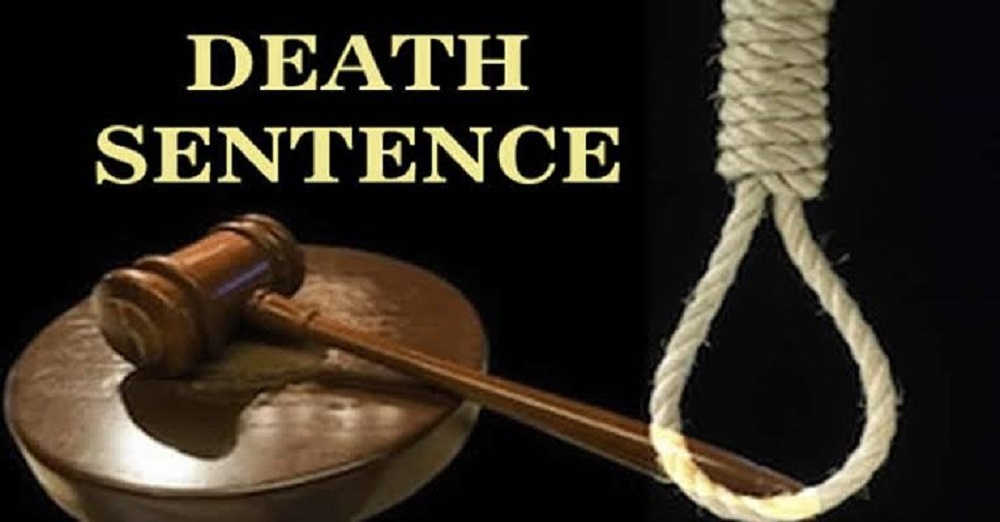
Death row inmates: Kogi, Niger, Nasarawa residents urge governors to sign death warrants without delay
July 29, 2025
…Call for stripping govs of such power
Some residents of Kogi, Niger and Nasarawa States have called on their state governors to sign death warrants of prisoners on death row.
This is in the interest of justice and decongestion of Correctional Service Centres, they explained.
Making the appeal in separate interviews, the residents also called for outright abolishment or fine tuning of the law to address its attendant challenges and threats.
The residents responded to the agency’s survey on reasons for the governor’s negative attitude on the death warrants.
The respondents called for outright stripping of the governors of such power provided in the constitution.
Section 212(1), 33(1) and (161) of the 1999 Constitution granted governors the power to exercise mercy and pardon offenders, including signing of death warrants.
Mr. Taiye Alabi, a Kogi based lawyer, said most governors do not want to be the cause of death of any person, and have deliberately refused to sign any death warrant before them.
“Looking at the challenges their (governors’) refusal to sign death warrants has consequences on justice system and the correction centres; they should be left out of it through constitutional amendment.
“In as much as there is no need for abolishing the laws on the death penalty, the signing by governors should be cancelled.
“Once an accused is tried and all evidences show and prove that the person is guilty and sentenced to death, he or she should immediately be killed without delay by any governor needing to sign to determine his or her fate,” Alabi said.
In his contribution, Mr. Adegboyega Kolade, a legal practitioner, said he supported the death penalty law simply because people unfortunately play politics with everything in Nigeria.
Kolade flayed calls for abolition of the death penalty, moreso that the Holy Books say he who kills by the sword must surely die by the sword.
“This is related to the Mosaic law, which they call an eye for an eye. But a person who took another person’s life, which we all know is sacred, what should be the consequence of his action.
“Infact, it’s for the default of the governors that criminal minded people get encouraged to commit heinous crimes, knowing that they would get pardoned one day.
“As a legal practitioner with 35 years experience, I have several such personal experiences. It encourages more assassinations, wanton killings, ritual killings, banditry, Boko Haram, armed robbery, among others.
“This is what has led to the high level of insecurity that we see today in Nigeria,” Kolade asserted.
Mr. Hamza Lawal, the Executive Director, Initiative for Grassroot Advancement in Nigeria (INGRA), said many governors since 2016 have refused to sign death warrants for inmates on the death row largely due to the slow process of appeals on those cases.
Lawal, a human rights activist, said: “We all know that an accused or convict has the right to appeal his or her conviction or judgement”.
He noted that such process took time because of huge backlog of cases due to the limited capacity of courts and judges in the country.
“I don’t think death penalty should be abolished because certain crimes deserve the death penalty, especially intentional murder and reasonable offences.
“One challenge that is already surfacing due to the refusal by governors to sign death warrants is the over congestion of our correctional institutions.
“From what I learnt, over 3,000 death row inmates are still in custody, and this is draining the resources of the correctional service and the nation,” he said.
Also, Mr Idris Miliki, the Executive Director, Conscience for Human Rights and Conflicts Resolutions (CHRCR), expressed displeasure with the death penalty in the country, saying it should be abolished.
Miliki declared that some people like him were against the death penalty in operation in the country, insisting that it must be abolished.
He noted that in spite of the killing of armed robbers from time in memorial, it has not stopped the robbery cases in Nigeria.
“The fundamental question is, can death of perpetrators compensate for the lives of victims? We say no to death penalties,” Miliki said.
Another lawyer, Mr Adejo Isah, stressed the need to take into account the simple fact that death sentence was tantamount to singing a victory song after a civil war, stressing that it was still a dirge to the nation.
Isah, a Legal Adviser to the Petroleum, Environment and Solid Minerals Degradation Awareness Association (PESMDAA), Kogi chapter, urged the Federal Government to put up proper correctional facilities that could help change criminals’ mindsets.
According to him, a criminal who refuses to change can be sentenced to life imprisonment, where he won’t only be left idle but forcefully made to be productive to the government via learning skills, which at perfection, produce useful materials or products.
“That is what obtains in developed countries of the world instead of wasting the criminals for just no gain.
“The law on death sentence should be abolished. We know that death is sacrosanct, but adequate use must be made of every human being before his death.
“The impact of the refusal by the governors to sign death warrants is monumental on the positive side.
“It is a decision that will culminate to making Nigeria belong to one of the echelon of the developed countries of the world as it relates to her justice system.
“It makes the Nigerian justice system more pragmatic and reasonable in the eyes of the western countries, where such ideologies are maturely in place,” Isah said.
A staff of the Nigerian Correctional Service in Lokoja, told NAN on condition of anonymity, that most Nigerian governors refuse to sign death penalty because they appreciate value for life.
The correctional service official said although he can’t speak for the governors, but based on his own wisdom and experience on the job, he believed the governors preferred to put convicts on death role and send them to the custodial centres that have the facility to host them and make their lives better.
The official said when the convicts with the death penalty get to the correctional centres, they were kept and well taken care of as they wait for the verdict of the courts on what to do about them.
According to the official, conviction in itself is a process for any individual involved to have a rethink and change for the better and add value to the country while in custody.
“We have a lot of people that have passed through process of conviction in Nigeria, who are now notable men in the country today, including past and present presidents, senators and so on.
“This is because after they gained their freedom, they became better persons.
“Death penalty and those in our custodial centres across the nation have some leverages because they have access to learning a skill and also study. The Open University is available to ensure quality skill acquisition and education.
“Inmates don’t have to lose being a better person, they can learn new skills or further their education while in custody, hence, the knowledge gained will eventually be of benefit to them, their families and the country especially when freed at the end.
“Nigeria Correctional Services within the new leadership, the new Controller General on board, Sylvester Nwakuche, is bringing a lot of new innovations to add value to both the centre and welfare of the inmates and staffers,” he said.
The official noted that, through the wisdom of the courts, there was classification and penalties for offences, stressing “that is why after awaiting trial inmates go through court processes, they are given their penalties, which I think is fair enough.”
In Niger, a public commentator and security expert, Dr Abdullahi Jabi, has called for the establishment of a special body with the soul responsibility of executing those people convicted by the competent court of law.
He said that it had become imperative since the state governors found it difficult to sign the warrant.
“I am of the opinion that a specialised body be put in place specifically for the execution of those people who had been convicted by the nation’s competent courts for one offence or the other.
“With this in place, no doubt it will go a long way to address the ugly situation headlong and not necessarily waiting for the governors to sign the warrant being the case today,” he explained.
He noted that the execution of those convicted by the nation’s competent courts for one reason or the other, would no doubt serve as a serious deterrent to others who might be thinking of committing same offence.
Jabi also noted that the development had contributed immensely to the overcrowding of some of the nation’s correctional centres if not all till date, which was not good for a country like Nigeria.
“Look at what the governor of Niger, Muhammad Bago, did recently. He pardoned those who had been convicted and already on death roll rather than giving the go ahead for their execution.
“This singular act has already sparked serious problems now in the state especially in Lapai by the families of those who were killed by the same people he pardoned.
“So, as leaders we must be law abiding citizens and we are in the best position as leaders to live by example for others to follow,” he said.
Also, a lawyer, Mohammed-Abdulkadir Lapai, said rather than killing those convicted by the nation’s competent courts, they should be pardoned and engaged in meaningful ventures for the benefit of the society.
“In other climes, especially in developed countries, hardly will you hear of people being executed just like that. What they do, is to engage them in meaningful ventures; mostly in industries working and earning a living.
“Most times, these set of people can even become trainers of some people after they might have acquired certain training mostly in the industries or any other areas of skill acquisition.
“So, if we replicate same in Nigeria, no doubt it will go a long way in molding them to become respectful people in the society once again rather than outright execution,” he explained.
He, however, urged relevant authorities to think of alternative solutions by way of pardoning those who were convicted and engaging them in meaningful ventures that would benefit the society.
A cross-section of stakeholders in Nasarawa State expressed mixed feelings over the reluctance of state governors to sign death warrants for condemned criminals.
While some respondents argued that the governors are shirking their constitutional responsibilities, others described the decision to spare lives as a moral and humane responsibility.
Mr Pius Audu, a legal practitioner in Lafia, said that the governors’ decision was always influenced by the recommendation of the committee on prerogative of mercy.
He explained that the committee usually recommend such cases to the governor to sign if he feels it appropriate, otherwise he lessens the sentence to life imprisonment.
“It is not automatic for a governor to just sign a death warrant because the court condemned a convict; the law gives him the option to either sign or lessen the sentence.
“After a judgment of death sentence was passed by the court, there are a lot of procedures to be followed because of the importance attached to the life of a human being.
“The constitution of the country quarantined the right to life, therefore, it cannot be taken easily,” the legal practitioner added.
The lawyer further explained that the condemned convict also has the right under the law to appeal his or her death sentence.
He said that the convict has 90 days to appeal the death sentence and can even seek the leave of the court to file the appeal, and the appeal must be concluded and decided before any action can be taken.
“At the end of every procedure, if the governor does not feel inclined to grant the convict pardon, that is when he will sign the warrant for execution,” he stressed.
On whether those condemned to death were responsible for the congestion of correctional facilities, the legal practitioner said most of the inmates at the facilities were those awaiting trials and not convicts.
On his part, Mr Mohammed Abdullahi, a Lecturer with Nasarawa State University, Keffi, said the governors’ reluctance to sign death warrants undermined the rule of law and emboldened criminals.
He therefore called for the amendment of the law because, according to him, it is dangerous to give a politician such powers as they would be sentimental in taking certain decisions because of their political interest.
Also, Hannatu Bala, who spoke for civil societies, argued that the decision to sign death warrants was a complex one that required careful consideration of various factors, including the fairness of the trial and the possibility of wrongful convictions. (NAN)