





To rebrand Nigeria, let’s use tech and techies, by Ken Ugbechie

In recent history, no sector has advanced the international image of Nigeria like technology. Right from the time of Philip Emeagwali, the Math Man, who achieved a historic computational speed of 3.1 billion calculations per second to win the Gordon Bell Prize in 1989 in the United States, the world has always been in awe of what Nigerians can do in the tech space with almost zero supervision. Both at home and in the Diaspora, Nigerians have been known to be innovative and tech-savvy in a manner that befuddles the western world.
Ever heard of Chinedu Echeruo? He was the creator of HotStop App in the United States which he later sold to Apple for $1 billion, a product many believed was undervalued at that time. Later, he invented Tripology, another app that became another huge success. It helps travel companies to generate referrals. The Kings College, Lagos ‘boy’ would later sell the company and it’s now a part of Rand McNally. A listless serial entrepreneur and tech whiz, Echeruo dared to dream more when he founded Love and Magic, a company famed for helping startups to build and innovate. The company launched MindMeet, an app that connects people to share knowledge with one another in the innovation ecosystem. Like any typical Nigerian, he has continued to push himself to expand the global frontier of innovation and knowledge. He has since dived deeper into Artificial Intelligence (AI) and is currently working on AI-powered technology that will help governments manage and optimize their poverty reduction efforts.
Think of a mobile service App called Paystack, acquired by Stripe in October 2020 for $200 million. Paystack is the brainchild of two Nigerians, Ezra Olubi and Shola Akinlade. There are many more of such innovations conceived and midwifed by Nigerians and are now helping the global community build systems that work, help humans to overawe socio-economic challenges, among others.
You cannot overlook the story of Olugbenga Agboola and Iyinoluwa Aboyeji. Both masterminds founded the now popular and ever expanding Flutterwave, a payments tech company now valued at over $3 billion and rated as one of Africa’s fastest growing unicorns. Then, there’s the fairytale story of Tosin Eniolorunda and his Moniepoint payment system, another unicorn that recently hit a valuation of over $1 billion after completing a US$110 million Series C funding round. The story goes on with more feats from Nigerians both at home and in the Diaspora.

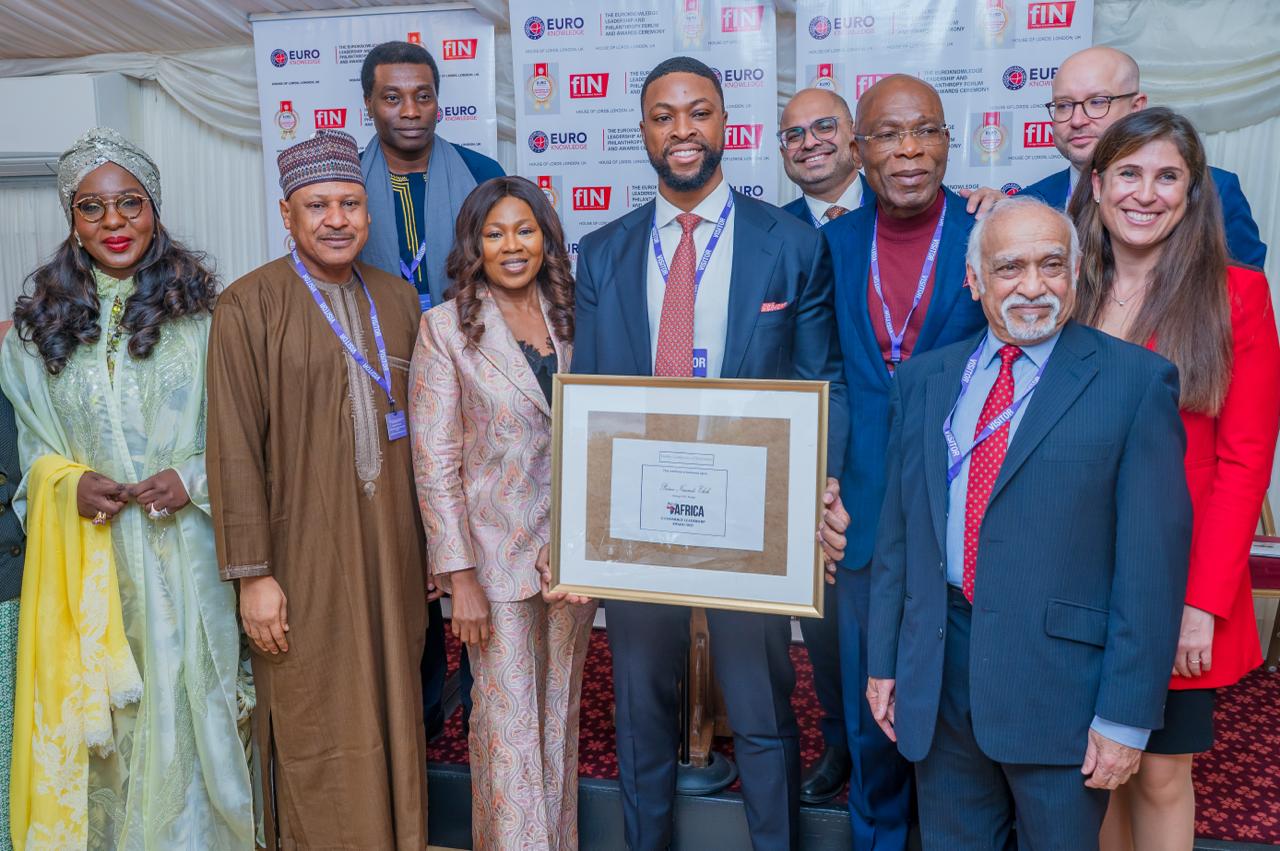
Nigerians truly are raising the bar and shattering ceilings and stereotypes in the global tech space. Just recently, two under thirty-fives stood on the global tech dais to receive awards that demonstrated to the world the spirit of resilience, innovativeness and entrepreneurial derring-do that course through the blood of Nigerians. The Group Chief Executive Officer of Konga, Africa’s fastest growing e-commerce powerhouse, Prince Nnamdi Ekeh, made history inside the House of Lords, London, where he was bestowed with two awards: The Distinguished Euro Knowledge Award for Emerging Leadership in Digital Transformation: e-Commerce, digital infrastructure and financial technology and the Forbes Best of Africa E-commerce Leadership Award 2025 for his extraordinary contributions to Africa’s digital economy.
And just last weekend, another Nigerian under-35, Mrs Gozy Ijogun, caught global attention when she led 38-year-old Task Systems, a company older than her, to win the coveted Microsoft Partner of the Year 2025 Award in California, United States.
In telecoms, Nigeria has not fared badly, either. Nigeria, after India, gave the world a genuine telecom revolution which shot the image of the country in the global communication circuit to the heavens. At the global telecom feast annually organised by the International Telecommunication Union, ITU, Nigeria has since 2021 enjoyed special attention and mention. The accolades are the same during the Commonwealth Telecommunications Organisation, CTO, conferences which Nigeria has had the privilege of hosting since the advent of the telecom revolution. The reasons are not far-fetched.
In the global telecom space, Nigeria has held the record of being the fastest growing mobile market in the world at a time for five consecutive years. Nigeria telecom more than many elsewhere in the world has guaranteed the highest return on investment; it has generated more jobs, steady jobs, and millions of ancillary jobs than any sector in the local economy. It has grown to become a major contributor to the country’s GDP.
At international forums, the telecom sector has attracted positive global commendation for Nigeria more than any other sector. Presidents, techies, technocrats, corporate moguls and leaders of international organisations have consistently cited the Nigerian telecom regulatory model and growth gradient as a template for others.
It is little wonder, therefore, that since the telecom revolution buzzed in Nigeria, other countries have made several sorties to the Nigerian Communications Commission, NCC, to understudy the nation’s regulator. From Kenya to Ghana to Botswana, the NCC has played host to delegations who have journeyed to Nigeria to under-study the Nigerian telecom regulation template.
I recall that in January, 2011, the US Federal Communications Commission, FCC, the equivalent of the Nigerian telecom regulator, NCC, commended the giant strides recorded in the Nigerian telecom industry, giving credit to the Nigerian telecom regulator for bringing Nigeria at par with several advanced nations of the world.
Mignon Clyburn, Commissioner of the FCC at that time during a meeting with the Nigerian delegation, said after comparing notes about how Nigeria has strived to better the sector over the past years and what has been achieved so far, that the Nigerian regulator appears ahead of other African countries and indeed, some more advanced countries of the world in telecom regulation. The NCC delegation to the meeting at the FCC headquarters in Washington DC that year was made up of the Chairman of the Commission, Mr. Peter Igoh, Executive Vice Chairman, Dr. Eugene Juwah and Executive Commissioner, Stakeholder Management, Mr. Okechukwu Itanyi. The lady Commissioner of FCC commended the Nigerian delegation. She observed that it was the first time the Commission would host a delegation of telecom regulatory institution from Africa.
By every yardstick, tech has emerged in recent years as the most effective public relations tool for Nigeria. The signs are all over the place and the brilliant statistics epigraph the arrival of Nigeria on the global telecom stage. The tradition has continued without any sign of abatement.
To keep this momentum, the President Tinubu government must be intentional in its patronage of indigenous tech companies. The government should institute a reward system for Nigerian tech players who fly the nation’s flag and who help to burnish the image of the country through their innovative acts. With tech, we can rebrand Nigeria.