




Aborted census: How Tinubu can cut the losses, by Ken Ugbechie
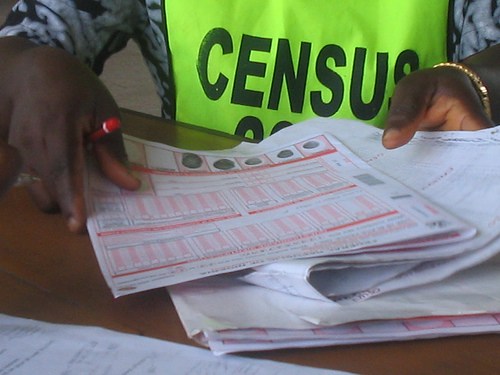
It’s three years now since the National Population Commission, NPC, took delivery of census materials from suppliers. And about two years since ad hoc staffers were trained for what was first, 2022 census, then 2023 until it was postponed ad infinitum. Lest we forget, it is exactly 20 years this year since the last headcount of 2006.
This means that in the last 20 years, Nigeria has been hedging on guesses and forecasts on national population. Nigeria relies on World Bank projections to plan. The danger is monumental. Accurate data begets accurate planning. Where there is no data, planning becomes a wishful exercise, not evidence-based; not data-driven; completely lacking in credible analytics and quantitative outcomes.
By any index of development, this is tardy and completely unacceptable. No serious nation should wait for a long haul of 20 years to organise a headcount that ought to hold every 10 years, and in some countries every 5 years. It does not only show lack of seriousness, it projects a picture of gross underdevelopment and paints a portrait of a people in a bind and unwilling to crawl out of the dark alley. Census is not for fun. It’s for planning, for development, for investment decisions, for improved healthcare, allocation of critical resources, siting of health, educational institutions, general infrastructure allocation, among other props of development.
Advanced and some developing nations across the globe conduct censuses quietly, conveniently and accurately. They have achieved the UN-recommended frequency of ‘every 10 years’. For some, it’s now every five years. With that, they can effectively plan for the development of their respective countries. They can effectively delineate their population along the critical lines of demographics, gender, education, population density relative to counties, towns, cities, states, and any other sub-national units that constitute the superstructure called country. Why then is the case of Nigeria different? Nigerian factor? Lack of political will at the centre? Whatever it is, there must come a time in the life of a nation when both will and resources must coalesce. For Nigeria and her census, this is that time. The Bola Tinubu government must muster the will to conduct a national headcount this year.
Already, the nation has suffered humungous loss and damage. Having been delayed, postponed or cancelled these past years, Nigeria cannot afford further deferment in conducting a verifiable census worthy of a nation that seeks to attract foreign investors.
Aside not earning the confidence of foreign investors who usually rely on national population and demographics data to make informed decisions on where and what to invest, Nigeria has lost billions of naira already invested in the twice-deferred headcount. Between N300 and N400 billion worth of technical equipment and accessories procured by the NPC for the botched census may have been wasted or risk being wasted even if the Federal Government actions the conduct of the national headcount with immediate effect.
Here’s how. In early February 2023, the NPC took delivery of the census materials supplied by vendors and technical consultants and partners. That’s a good three years ago. The materials were delivered nationwide in readiness for the census then scheduled for the second quarter of 2023. The census never held and the materials have continued to gather dust in facilities of Central Bank of Nigeria (CBN) in 36 states of the federation and the Federal Capital Territory (FCT).
President Muhammadu Buhari had wanted to ensure the conduct of the population and housing census as one of his legacy projects before leaving office, but for some reasons, especially the transitional plans to a new government which culminated in the 2023 general elections, the census was postponed. Buhari had dubbed it the nation’s first ever ‘digital census’ because of the heavy deployment of technology to organise what many believed would be the most credible census in the country’s annals.
Technical evaluation by experts shows that most of the equipment may have gone bad due to humidity and lack of use as they may not have been stored in the best conditions that would guarantee their durability and effectiveness over a long period. Technically, some electronic devices, especially tablets, have been known to malfunction when stored in a humid environment on account of heat and poor aeration.
In the case of the NPC and the census, the equipment supplied include tablets, batteries, power-banks and first aid materials. While some of the first aid materials could expire before any new census date is fixed, the motherboards inside the tablets could go bad if the humidity in the storage facilities exceeds a certain threshold.
Experts have warned that if the materials are not warehoused within a conducive ambience, the possibility of the equipment going bad is very high. The Personal Digital Assistant (PDA) which is the tablet to be used in the population and housing census has a shelf-life of about three years which is the average shelf-life of tablets. But this may be compromised if they are not stored in appropriate environmental conditions. Besides, tablets are not designed to last for many years unlike laptops and desktops because of their low processing power and difficult upgradability. This is one compelling reason the government should action the conduct of the census: the risk of losing over N300 billion already sunk into the project.
President Tinubu should make the conduct of the ‘digital census’ a priority of his government. Every delay imprints damage on the nation both economically and socially. Delay is a denial of both indigenous and international investors access to reliable data on Nigeria. One of the complaints of foreign investors about Nigeria is the lack of current and reliable data on Nigeria’s demographics. At international conferences and business meetings, many investors have bemoaned the absence of contemporary data on Nigeria that would help them make intelligence-based decisions on where, what and when to invest in the country.
Holding a national census more than 10 years apart is not ideal for national planning, going by the recommendation of the United Nations (UN). This makes the case for conducting the census as soon as possible inevitable. NPC projects that the census will create about 3 million ad hoc jobs. This will help mitigate the growing unemployment in the country particularly among the youths.
Ghana has achieved national census frequency of every 10 years, same as Singapore. South Africa was holding census every five years but had to push it to every 10 years. South Korea, Canada and Japan hold census every five years. India, with a 2022 population of 1.417 billion, according to the United Nations’ World Population Prospects data, has maintained a 10-year frequency since 1872 when the first census was conducted. If countries with small and mega populations can dutifully keep to the UN-recommended frequency, Nigeria has no reason not to conduct credible census at least every 10 years. The ball is in Tinubu’s court.
Another way to make sense of the census is to, with immediacy, distribute the tablets and power banks (those that are still in good condition) to Nigerian students nationwide, just to cut losses.