
Oborevwori’s sermon at Yoruba Tennis Club, by Ken Ugbechie
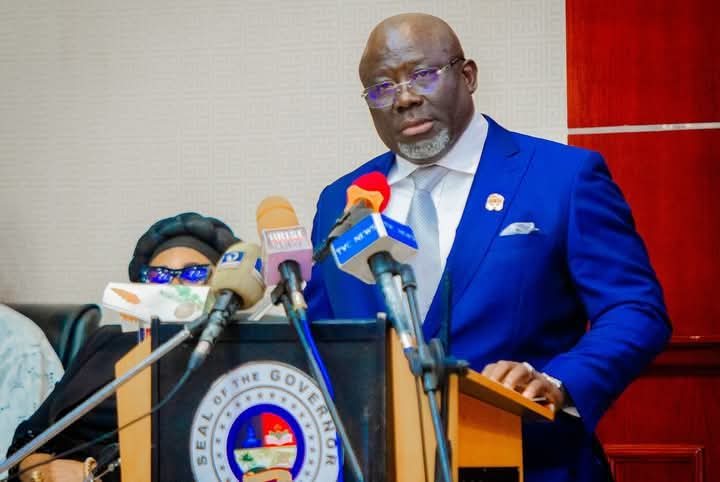
On Wednesday, April 29, this year, Sheriff Oborevwori, Delta State governor, was guest speaker at the Yoruba Tennis Club in Onikan, Lagos. He spoke on the theme: Inclusive Governance and National Unity – Lessons from Delta State for a More United Nigeria. By the way, the Yoruba Tennis Club, clocked 100 years this year. That makes it older than sovereign Nigeria. It was founded by some eminent Nigerians who wanted a social club for Nigerians, not only for the Yoruba. Its location by Race Course (formerly Tafawa Balewa Square) is symbolic. The club is a front-row witness of the lowering of the Union Jack (British flag) on October 1, 1960.; and the hoisting of the green-white-green Nigeria flag. Sitting just opposite the historical Race Course, Yoruba Tennis Club has been a witness to history
At a good 34 years when Independent Nigeria was born in 1960, the club has silently recorded history. If walls truly have ears, I dare say the walls of the club have heard plenty shouts and whispers of the high and the mighty. Before the Race Course became a frequent venue for mega religious and social gatherings in the modern era, it had hosted Queen Elizabeth II during her first visit to Nigeria in 1956, a visit highlighted by royal tour which featured parades, carnivals and pristine aristocratic displays.
In more ways than one, the club has also witnessed the unity that once defined Nigeria. The sense of nationalism, the halo of patriotism that shaped the conduct of leaders and followers in those days, the celebration of scholarship excellence, not a distorted and retrogressive quota systems that elevates mediocrity over merit. It had seen it all. And you reckon that the walls of the club and its members can no longer reconcile the current disunited Nigeria with the Nigeria of yore where the thread of unity knitted the diverse tribes and tongues. A Nigeria where a Tunde, Adamu and Okafor could share a drink and discuss national issues without recourse to their ethnic configurations; all conscious of the existence of the silent minorities within the national matrix who must be deliberately included in the distribution of the levers of power and the sharing of the national patrimony.
It was therefore no surprise that when it wanted to mark its centenary, the club had to search for a leader who is leading to integrate, not to divide. Their choice of Oborevwori was appropriate. Oborevwori is leading to unite multi-ethnic and multi-city Delta at a time the glue that once held the nation together has lost its potency and grip. So, what is Oborevwori doing in Delta that leaders of a good part of post-Independent Nigeria failed to do? That was the leadership the Delta governor was asked to present before an audience of professionals, business owners, politicians and a rich assortment of eminent Nigerians.
Oborevwori did not disappoint. He simply opened his leadership kit. First, he was frank and intentional. He said unity in a multi-ethnic society without the leader consciously promoting inclusivity is an illusion. Using Delta as an example, he took the audience through the history of crisis in the Niger Delta. It was the kind of history that the audience was familiar with. The oil-rich Niger Delta region has been roiled by upheavals typified by youth restiveness, communal clashes and even cult-related uprisings among the youths. The restiveness in the creeks impacted negatively on oil production with a direct bearing on national revenue earnings. When there is peace in the creeks, there is spike in crude oil production. When there is crisis, there is a dip in oil production and Nigeria makes less money. Upon becoming governor in May, 2023, Oborevwori moved quickly to douse any tension in the state. He did not discriminate. He listened to every group, tribe and tongue.
He found an antidote to the restiveness in inclusive governance. It has to be emphasized that the elders of Delta have, as a demonstration of inclusiveness, fashioned an unwritten rotational governorship system whereby the position of governor rotates among the three Senatorial districts. It is based on this rotational formula that Oborevwori, from Delta Central senatorial district, emerged governor, succeeding Dr. Ifeanyi Okowa from Delta North, who himself succeeded Dr. Emmanuel Uduaghan from Delta South. Chief James Ibori from Delta Central was the first to become governor in this 4th Republic. This is the type of political leadership inclusivity absent in many states. Delta is by far a pace-setter in inclusive governance. And Oborevwori has continued to exemplify this in his first term in office by ensuring the equitable distribution of resources and development across the three senatorial districts.
He believes that leadership is a unifier, not a divider. Unification comes from inclusiveness, the type of inclusiveness that he has wrought in Delta. Oborevwori prescribes that a unified Nigeria must be nurtured organically from the states and local governments. To him, when each of the 36 states and 774 local government areas cultivates socio-economic cum political inclusivity, the divisive forces that destroy national cohesion will be substantially mitigated. This draws the citizens into the national unity web and reduces the frequent pandering to ethnic identities.
Without a doubt, Oborevwori is a true exemplar of inclusive governance. He sees Delta as one including non-indigenes living in the state. And they are many. They all benefit from the shared dividends of good governance, including peaceful co-existence. Ever heard of Delta indigenes fighting with Hausa, Yoruba or Igbo in their midst? Never! It flows from the top. When a governor practices inclusive governance, the citizens will follow suit. And it has not gone unnoticed. In March 2025, a coalition of leaders representing the Igbo, Hausa, Fulani, Yoruba, South-South, and Middle Belt populations resident in Delta State conferred on Oborevwori the Most All-Inclusive Governor Award, an affirmation of his government’s “compassion and fairness to all, regardless of origin or background.”
It’s all too obvious that President Bola Tinubu inherited a fractured Nigeria. But Oborevwori believes that the President’s courageous socio-economic policies are beginning to mend the cracks that divide the nation. He believes there is beginning to emerge a shared consciousness among Nigerians in acknowledging the existence of insecurity and economic challenges, but he’s hopeful that Tinubu’s gritty boldness to confront these problems of several decades will lead to a shared national prosperity tomorrow.