




Fuel prices may ease in Nigeria as oil prices slip to a 3-month low after Iran-US peace deal
Oil prices slipped to a 3-month low on Monday after U.S. President Donald Trump and Iran’s deputy foreign minister said they had reached an initial deal to end the war and to resume traffic through the Strait of Hormuz.
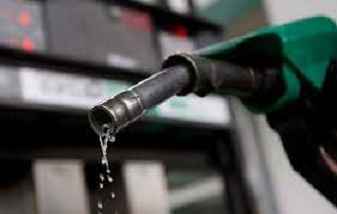
This may signal a fall in fuel prices across the world especially in Nigeria where fuel prices had gone above N1000, selling up to N1,300 in some places.
Brent crude futures fell $4.39, or 5%, to $82.94 a barrel by 0943 GMT and U.S. West Texas Intermediate was at $80.26, down $4.62, or 5.4%. Both contracts fell to their lowest levels since March 10 on Monday after tumbling more than 3% on Friday.
The U.S. and Iran will sign a memorandum of understanding in Switzerland on Friday, said the prime minister of Pakistan, whose country has served as a mediator. Trump said on Sunday that the Strait of Hormuz would be open “toll free” and that a U.S. naval blockade of Iranian ports would also end.
Iran’s semi-official Mehr news agency said the draft deal called for reopening the Strait of Hormuz within 30 days under Iranian arrangements.
“It will take time for oil to approach the pre-crisis level of 20 million barrels per day sailing through this chokepoint. Estimates of the full resumption of traffic vary from weeks to months,” said Tamas Varga, analyst at PVM Oil Associates.
U.S. energy shares fell in premarket trading on Monday as crude prices tumbled after Washington and Tehran reached an initial deal that could end the months-long conflict and reopen the vital Strait of Hormuz.
The U.S. and Iran will sign a memorandum of understanding in Switzerland on Friday, Pakistan’s prime minister said, after his country helped mediate talks between the two sides.
U.S. President Donald Trump said on Sunday the Strait of Hormuz, which carries roughly a fifth of global oil consumption, would be open “toll free” and that a U.S. naval blockade of Iranian ports would end.
“Markets will price in a large optimism discount that ‘normality’ is returning, although we would caution that flows are not likely to resume to anywhere near pre-war levels for months, and investors should follow how quickly Gulf producers are able to resume oil production and exports following damage from the war and whether more ships will enter the region,” said Ashley Kelty, analyst Panmure Liberum.
Brent crude futures fell 4.8% to $83.10 per barrel by 1047 GMT, while U.S. West Texas Intermediate crude was down 5.2% at $80.46 per barrel.
Shares of Exxon Mobil (XOM.N), opens new tab and Chevron (CVX.N), opens new tab fell 2.6% and 2.5%, respectively.
Diamondback Energy (FANG.O), opens new tab, Devon Energy (DVN.N), opens new tab, ConocoPhillips (COP.N), opens new tab and Occidental Petroleum (OXY.N), opens new tab were down between 2.6% and 3.2%.
Refiners Valero Energy (VLO.N), opens new tab, Marathon Petroleum (MPC.N), opens new tab and Phillips 66 (PSX.N), opens new tab also declined between 2.5% and 3%.
In Europe, shares of BP (BP.L), opens new tab fell 3.4%, while Shell (SHEL.L), opens new tab dropped 4.3%.
Energy stocks had rallied since the conflict broke as concerns mounted that it could disrupt shipments through the Strait of Hormuz. Analysts cautioned that physical oil markets could take longer to recover than financial markets.
“Even if ships now have safe passage, tankers are in the wrong place, oil production/refining facilities need to get up to full capacity, and questions over the cost and availability of insurance for ships traversing the Strait will remain,” said Capital Economics group chief analyst Neil Shearing.
-REUTERS