




Tanker traffic through Hormuz picks up after slower flows due to crossing concerns
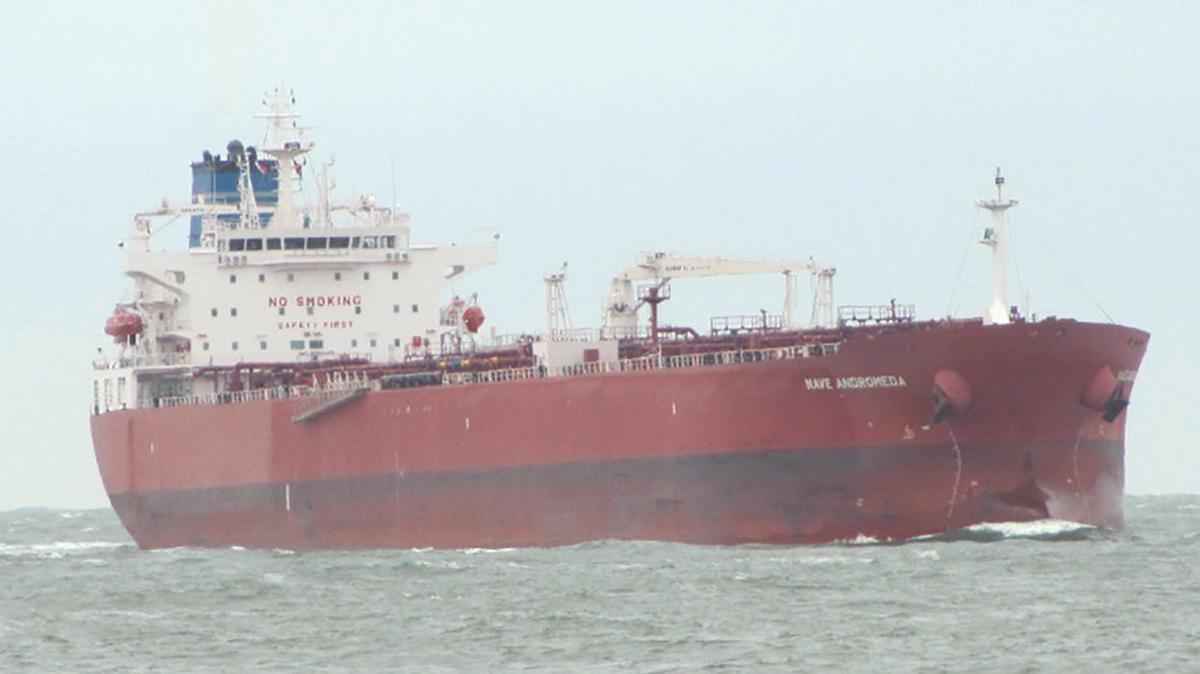
Oil and liquefied natural gas tankers sailed through the Strait of Hormuz on Monday, in a sign of traffic slowly picking up after Iran said it had again closed the waterway over the weekend, shipping data showed.
Iran lifted its effective blockade of Hormuz last week after agreeing to a 60-day ceasefire with the United States while talks for a final peace deal take place. However, Tehran’s Revolutionary Guards declared the strait shut once again on Saturday, in response to Israeli strikes in Lebanon, prompting a fall in sailings.
Four LNG tankers controlled by Qatar headed into the Gulf and through the strait on Monday, while two supertankers, which can carry up to 4 million barrels of crude oil, crossed into the Gulf with one signalling its destination as the Iraqi port of Basra, according to ship tracking data and analysis from Kpler.
Two smaller crude tankers, carrying just under 2 million barrels of oil in total, sailed out of the Strait of Hormuz into the Gulf of Oman on Monday, separate ship tracking data on the MarineTraffic platform showed.
“While daily transits remain below the 125 crossings prior to the Iran hostilities, the trend is positive,” ship broker Clarksons said in a note on Monday.
There could be more ships plying the strait with their transponders switched off, plus outages reported with AIS ship tracking data, shipping sources said. AIS is the tracking system which traders follow to get information on ship movements.
Five vessels passed the strait on Sunday, down from 26 ships spotted a day earlier, Kpler data showed. These included three Very Large Crude Carriers with 2 million barrels of Saudi crude and fuel oil each, one of which was heading to Japan.
“Strait of Hormuz traffic began increasing, with commercial vessels continuing to route south … via Omani territorial waters and via the northern Iranian-controlled route,” the U.S. Navy-led Joint Maritime Information Center said in an advisory on Monday.
Four LNG tankers — Wadi Al Sail, Mekaines, Al Sadd and Mesaimeer — entered the strait on Monday via the Iranian route for the first time since the U.S.-Israeli war with Iran started, ship tracking data from Kpler showed.
QatarEnergy, whose LNG exports have been heavily curbed since the war began on February 28, did not immediately respond to a request for comment.
The Marshall Islands-flagged dry bulk vessel Summit Success also entered the Gulf on Monday, LSEG data showed.
OIL EXPORTS MOVING
The U.S. Central Command said 55 merchant ships transited the strait on Saturday with more than 17 million barrels of oil for global markets.
Among the ships that exited the strait on Saturday, there were three VLCCs carrying crude from the United Arab Emirates, Kuwait and Iraq, and three tankers carrying various oil products, the data showed.
There were 13 ships that entered the strait on Saturday, including two VLCCs, the data showed.
Since last Monday, more than 25 million barrels of Iranian oil have passed through the virtual blockade line, the head of the National Iranian Oil Company, Hamid Bovard, told state TV on Sunday.
Three sanctioned VLCCs — Elva, Virgo and Vigor — carrying Iranian oil loaded from Kharg Island between late April and early May were exiting the strait on Monday, LSEG and Kpler data showed.
Gulf producers Abu Dhabi National Oil Co and Kuwait Petroleum Corp have issued tenders selling crude with the option of loading from inside and outside the Strait of Hormuz.
A spokesperson for the Japan Shipowners’ Association said the number of Japanese-related vessels remaining in the Gulf had fallen to 37 from 45 at the start of the conflict.
Meanwhile, two ADNOC-controlled LNG tankers were delivering cargoes to India on Monday, having exited the strait recently, Kpler and LSEG data showed.
The Al Hamra tanker was discharging at the Ennore LNG terminal, while the tanker Mubaraz was set to offload its cargo at the Kochi terminal on Tuesday, the data showed. Both tankers were last seen in ballast and east of the strait in late May to early June, before reappearing again on ship tracking data over the weekend, located off the coast of India loaded with cargoes.
“We do not comment on the position, movements, and routing of our vessels, or third-party reports, as a matter of policy,” ADNOC said.
Al Hamra and Mubaraz have each now completed two “dark” voyages out of Hormuz since the war started.
REUTERS