





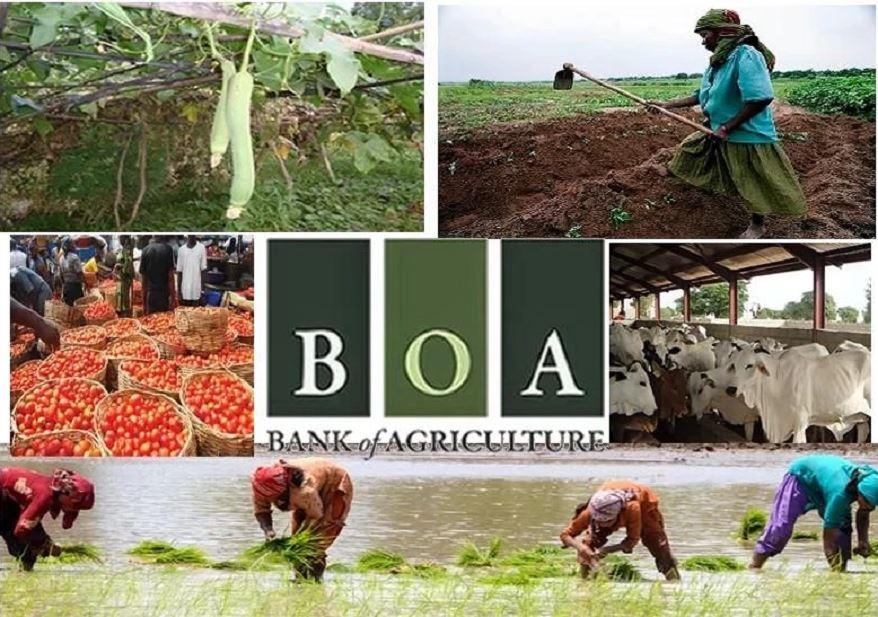
Agribusiness: Bank of Agriculture supporting farmers with N250bn grant facility – FG
The Federal Government says it has granted a N250 billion facility to the Bank of Agriculture (BOA) to support smallholder farmers in Nigeria and providing them with access to credit at a single-digit interest rate.
The Minister of Agriculture and Food Security, Sen. Abubakar Kyari, stated this at the Quarterly Citizens and Stakeholders Engagement Session on Friday in Abuja.
Kyari said that a key area of focus by the ministry was strengthening agricultural insurance and finance facilities and leveraging institutions like the Nigerian Agricultural Insurance Corporation (NAIC), National Agricultural Quarantine Service (NAQS), Bank of Agriculture (BOA), and National Agricultural Development Fund (NADF).
“In the last two years, the Nigerian Agricultural Insurance Corporation has supported 199,275 farmers with N700 billion risk cover, generating N2.43 billion premium income, and paid N200 million claims, boosting farmers resilience.
“The goal of this grant is to boost agricultural productivity, enhance food security, and empower farmers with modern equipment and inputs.
“Specifically, the facility will support food production, enhance mechanisation and improve livelihoods,” he said.
He said the mission of the ministry was to boost agricultural productivity, create livelihood opportunities, and drive wealth creation, ultimately accelerating growth in this vital sector.
“This meeting is therefore a key step towards creating a structured approach to stakeholder engagement, ensuring that government activities in the sector are transparent, well-communicated and informed by stakeholder feedback.
“In the last two years, the Federal Government has boosted agricultural productivity and food security through various initiatives.
“Key achievements include the distribution of over 1.9 million bags of fertilisers to nearly 1 million farmers, promoting sustainable soil management with 12,000 liters of organic fertilisers, and strengthening regulatory frameworks.
“We have made notable collaborations and partnerships with Russia, Turkiye, India, and Canada to enhance fertilizer production and technology transfer.
“Additionally, 109 fertiliser inspectors were trained and equipped, and over 329 industry stakeholders were trained on regulatory compliance,” he said
The minister said that efforts has been made to curb fake fertilisers from Nigerian markets through persecution of offenders.
“We have constructed a National Reference Laboratory and upgraded the National Fertiliser Management Platform to enhance fertiliser quality control, ensure regulatory compliance, and promote transparency in the fertilizer supply chain.
“Over 3,500 farmers were trained on organic fertilisers and soil management, promoting sustainable agriculture practices”, he said.
He said that the Agricultural Research Council of Nigeria (ARCN) is driving transformative change in the country’s agricultural sector through cutting-edge research and development.
“By enhancing crop production and varietal development, ARCN is boosting food security, promoting agro-industrial growth, and improving livelihoods.
“The distribution of 40 million cocoa seedlings by the Council is set to revitalise the country’s cocoa industry, supporting long-term plantation development and export growth,” he said.
Kyari said that the National Agricultural Development Fund (NADF) had also achieved significant milestones over the past two years, bolstering Nigeria’s agricultural sector.
In his remarks, the Minister of Information and National Orientation, Mohammed Idris, said that the event reflected the governing philosophy of President Bola Tinubu, which is rooted in transparency, participation, and accountability.
“Governance must not operate in isolation from the people. It must be open, responsive, and anchored on dialogue,” he said.
He reitrated the commitment of ministry of Information and National Orientation to ensuring that Nigerians understood the direction and purpose of these reforms.
“Our role is to bridge the gap between policy decisions and public awareness. Communication is not propaganda; it is accountability.
“It ensures that citizens are informed about government initiatives and are given the opportunity to ask questions and provide feedback,” he said.
Idris commended Kyari for convening the forum and for his leadership in advancing Nigeria’s food security objectives.
Also speaking, Prof. Abdulhameed Yusuf, President, Nigerian Society for Plant Protection called on government to address the issue of pest and diseases affecting plants.
Other stakeholders also called on the government to address issues on post-harvest losses, mechanisation, access to land, insecurity on farms, among others.(NAN)