Inside a brewery

Gigantic billboards advertising beer now dominate the skyline of Nigeria’s megacity, Lagos, signalling the escalating battle between multinational brewers for drinkers in Africa’s most populous country.
So far it’s a largely untapped market, with Nigerians consuming on average just nine litres (around 16 British pints) of beer a year, well below South Africans’ 57 litres, according to market research firm Euromonitor.
But with more than half of Nigeria’s 190 million people aged under 30 — and the population expected to grow to 410 million by 2050 — the world’s biggest beer companies are looking to elbow in.
For years, Nigerian Breweries has dominated the sector with brands including Gulder, Star and top-of-the-range Heineken.
However its iron grip on the market is under threat from mega-brewer Anheuser-Busch InBev.
It recently opened a new factory outside Lagos and launched Budweiser to face off against Heineken, in a fierce contest for millennial drinkers being played out across Africa.
Promotions have become an arms race among the beer companies as they host concerts, fashion weeks and boat parties to win over customers.
Restaurant and club owners say they are being courted by the beer companies with unprecedented amounts of cash.
“The big guys started noticing there was a new sheriff in town,” AB InBev plant manager Tony Agah told AFP. “It’s the beer wars.”
– ‘Regulatory onslaught’ –
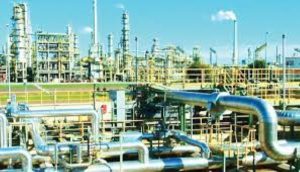
Agah walks through AB InBev’s new factory, the largest in West Africa, located in a lush plot of land in Ogun state earmarked for industrial development.
Green bottles of Trophy and brown bottles of Budweiser whizz by on automated production lines in a labyrinth of gleaming stainless steel.
When AFP visited it was humid — the air conditioning had yet to be installed — with a smell like sweet breakfast cereal, a side-effect of fermentation.
AB InBev built the factory to overcome significant logistical hurdles in Nigeria from potholed roads to spasmodic electricity and reach the neighbouring Lagos market.
Outside, six generators produce 12 megawatts of electricity.
“In a normal world I make beer but here I make beer and power,” quipped Agah.
Yet the biggest constraint in the eyes of executives isn’t infrastructure but erratic government policy.
Two years ago, there was a severe dollar shortage after the price of oil tanked and Nigeria tipped into a recession.
At the height of the crisis, the government decided to introduce a currency peg, making matters worse for multinationals who have to import many raw materials.
Add to that arbitrary rule changes and a tangle of red tape and you have what Nigerian financial journalist Ugo Obi-Chukwu described as a “regulatory onslaught”.
In November, for example, the National Lottery Regulatory Commission sealed the offices of Nigerian Breweries for running illegal lottery operations as part of a marketing promotion.
But for all the headaches, the promise of Nigeria is too great to pass up.
“The thing about the Nigerian market is that, long term, there are huge opportunities,” said Nigerian Breweries marketing director Emmanuel Oriakhi.
“There is a massive home brew category with people making all sorts of alcohol in their backyard, beer is an opportunity to premiumise their experience.”
Oriakhi is sanguine about AB InBev’s investment in Nigeria.
“We’re very comfortable in any battle,” he said with the confidence of having around 60 percent of the market share.
“They’re welcome and it makes the market interesting,” he said with a smile. AFP