




Cardoso and the art of central banking, by Arize Nwobu
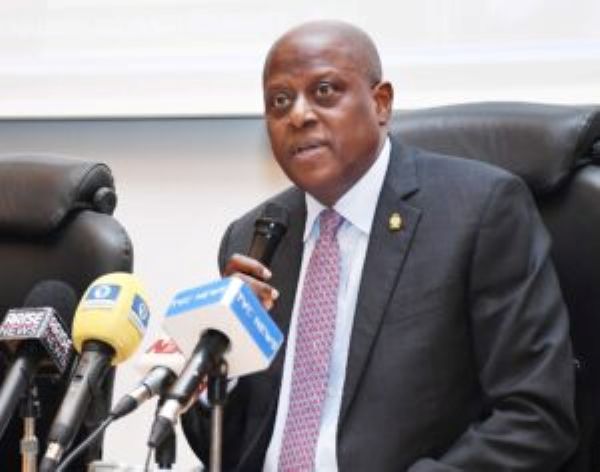
CBN Governor Olayemi Cardoso has been commended for his leadership and policy achievements, with the World Bank endorsing his actions to stabilize the naira and improve the economy; Cardoso’s policies are also highlighted for their impact on foreign exchange market transparency and capital inflows.
Central banks indeed play central roles in the financial system and economies of their respective countries. Basically, they formulate monetary policy and achieve price stability and attainment of macroeconomic policy targets.
The world’s first and oldest central bank is the Swedish Riksbank which was established in Sweden in 1668 as a joint stock company and it chartered to lend the government funds and to act as a clearing house for commerce.
It was followed by the Bank of England in 1694 and Banque de France created by Napoleon in 1800. The Federal Reserve Bank (The Fed) of America followed in 1913, Bank of Canada in 1938 and German Bundesbank which was established after the World War 11 in 1945.
The Central Bank of Nigeria ( CBN) was established by CBN Act of 1958 and it commenced operations in 1959.
The first CBN Governor was Roy Pentov( 1958- 1963). He was succeeded by Aliyu Mai Bornu( 1963- 1967).
Other past Governors were Clement Nyong Isong( 1967-1975), Adamu Ciroma( 1975- 1977), Ola Vincent ( 1977- 1982) and Abdulkadir Ahmed (1982- 1993).
Others were Paul Agbai Ogwuma( 1993- 1999), Joseph Oladele Sanusi ( 1999- 2004), Professor Charles Chukwuma Soludo ( 2004-2009), Sanusi Lamido Aminu Sanusi ( 2009- 2014) and Godwin Emefiele ( 2014- 2023).
The present CBN Governor, Olayemi Cardoso is the twelfth Governor. He was appointed by President Bola Ahmed Tinubu in September 15, 2023 and confirmed officially in September 23, 2023.
Cardoso assumed office at a challenging time in the aftermath of the failed naira redesign policy by his predecessor and which generated crisis in the economy in addition to growing inflation and volatile exchange rate.
He started on an impressive note and made a good diagnosis of the economic challenges at the Senate screening.
Cardoso admitted the enormity of the challenges but assured and expressed optimism that CBN would implement necessary policy measures to improve the economy and enhance public perception of the Bank.
Close to two years in office, analysts and economy watchers tend to agree that the CBN Governor has demonstrated the know- how and evolved the right policies to confront the economic challenges.
Former CBN Deputy Governor, Professor Kingsley Moghalu commended the Bank’s hike in the Monetary Policy Rate ( MPR ) which aimed to fight inflation though he also expressed concern about the impact the policy would exert on businesses.
The Managing Director, Financial Derivatives Company, Bismarck Rewane noted in a press report that the policies of CBN were yielding positive results especially in stabilizing the naira and improving market efficiency.
Rewane was particularly impressed with the elimination of ambiguities in the multiple exchange rate which had opened up the foreign exchange market and made it to be transparent so there could be price discovery for fair value and efficiency.
He further noted that the de-segmentation of the foreign exchange market reduced the speculative instincts and market arbitrage opportunities and ensured some stability.
In addition, Rewane said that the CBN policies triggered capital inflows. According to him, ” foreign portfolio investments brought in about USD10 billion, exports generated USD8.25billion.
CBN itself got inflows of USD 3.7billion and corporates actually brought in USD 9.7billion , making a total of USD31billion which he said was commendable and concluded that the CBN policies were working.
The Lagos Chamber of Commerce and Industry( LCCI) had also commended CBN policy measures especially those aimed at stabilising the exchange rate and controlling inflation.
But the Chamber also expressed concern about the impact of the policies, especially the hike in interest rate, on businesses and consumers.
The World Bank endorsed the CBN policies especially those focused on macroeconomic stability and structural reforms and highlighted the importance of maintaining a tight monetary policy in the circumstance.
World Bank noted that CBN’s policy measures were necessary developments for achieving a more stable and prosperous economy, going forward.
CBN Governor, Olayemi Cardoso was named as the Central Bank Governor of the Year at the 2025 African Banker Awards held at Abidjan, Cote d’ Ivoire.
The African Banker Awards is a landmark annual event which holds during the annual meetings of the African Development Bank.
It is organised by the African Banker magazine in recognition of the personalities and banks that are driving Africa’s financial sector. It celebrates the achievements of those who are driving growth and development.
Cardoso was recognised as the Central Bank Governor of the Year for his leadership and for implementing key policy measures which aimed at stabilising the naira, improving transparency in foreign exchange market and reestablishing policy credibility.
On assumption of office, Cardoso was decisive and took bold steps. He reset CBN policy toolkits and refocused the Bank to its primary functions of determining interest rate, directing money supply to achieve stability, formulating monetary policy, managing foreign reserves and advising the federal government.
He stopped all interventionist policies to “avoid wastages and increase efficiency.” He launched an aggressive fight against inflation.
In a meeting with business leaders, Cardoso assured that CBN would moderate inflation and was optimistic that it would drop to 21.5 percent.
Over time, data by the National Bureau of Statistics ( NBS) showed that inflation dropped to 22.97 percent in May from 23.71 percent in April 2025.
Among other notable policies, Cardoso introduced the Price Verification System ( PVS) which provides details of how customers can acquire foreign currencies and at what rate.
He also introduced the Electronic Foreign Exchange Matching System( EFEMS), an online platform for matching buy and sell orders for foreign exchange transactions and which reduced the volatility of the naira.
CBN policies seem to be creating the necessary positive impacts. World Bank reported that the economy grew at its fastest by 4.6 percent year on year in the fourth quarter( Q4) 2024 and projected continued expansion at a 3.6 percent growth in 2025.
Nwobu, a Chartered Stockbroker and Business Journalist wrote via arizenwobu@yahoo.com Tel 08033021230.