



Conservative Anglicans challenge Archbishop of Canterbury with rival leadership
An influential group of conservative Anglicans announced on Thursday the establishment of a new council to lead the global Anglican Communion, in a direct challenge to the authority of the Archbishop of Canterbury as she is about to be installed.
The move by the Global Anglican Future Conference (GAFCON) – which brings together conservative churches mainly from Africa and Asia and claims to represent a majority of the world’s Anglicans – highlights a deepening rift within the Church after years of tension over theological and social issues.
GAFCON opposes liberal shifts in parts of the Communion, including the ordination of women and greater inclusion of LGBTQ+ members.
CHALLENGE TO FIRST FEMALE ARCHBISHOP OF CANTERBURY
It strongly criticised the Church of England’s appointment last October of Sarah Mullally as its first female Archbishop of Canterbury, and thus spiritual leader of the world’s 85 million Anglicans spread across 165 countries.
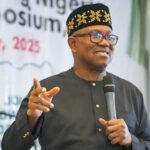
“Believing the current instruments of communion no longer meet the needs of the majority of Anglicans around the world, the global Anglican Communion is to be led by a conciliar structure,” Bishop Paul Donison, secretary-general of the new council, told the conference in Abuja, Nigeria.
The council will include bishops, priests and lay members, each with voting privileges, GAFCON announced.
Archbishop Laurent Mbanda, a former Rwandan refugee who later studied in the United States, was elected chairman of the new council. GAFCON said he would not be “primus inter pares” (first among equals) but would share power.
Asked if GAFCON members still recognised the leadership of the Archbishop of Canterbury, the group’s spokesman Justin Murff said: “The Global Anglican Council recognises Archbishop Laurent Mbanda as its leader.”
A spokesperson for the Anglican Communion Office in London said GAFCON’s announcement failed to take into account years of consultations over “Anglican identity, structures and leadership”.
This had led to ideas, known as The Nairobi-Cairo Proposals, which included exploring “more collegial, diverse approaches to shared leadership” in a post-colonial world, the spokesperson said.
“We encourage Anglican member churches and Anglican groups to engage with this conversation about The Nairobi-Cairo Proposals,” they added.
Mullally, who was officially confirmed in her new role at a ceremony in St Paul’s Cathedral, London, on January 5, is due to be enthroned as the 106th archbishop of Canterbury on March 25.
GAFCON’S MBANDA SAYS ‘NO TURNING BACK’
The Church of England broke from Rome nearly 500 years ago under King Henry VIII. Since then, the Archbishop of Canterbury has been the symbolic head of an Anglican Communion that has expanded worldwide through missionary activity, especially in countries that were once part of the British Empire.
Many Anglicans in Africa and Asia, where the Church has been growing fastest, reject the more progressive trends seen in England and other Western countries.
GAFCON, founded in 2008 to counter what members describe as the abandonment of scripture, says it is not seeking to break away from the Anglican Communion but to “reorganise and realign” it around Biblical authority.
One of the proposed reforms aimed at warding off a full schism would dilute the Archbishop of Canterbury’s role, creating a rotating international figurehead, who would assume some organisational responsibilities while the Archbishop focuses on pastoral duties.
In October, Mbanda said the grouping had “not left the Anglican Communion; we are the Anglican Communion”.
While leading prayers on Thursday, he said: “The future has arrived, no turning back”.
REUTERS