


Coup as emblem of darkness, by Ken Ugbechie
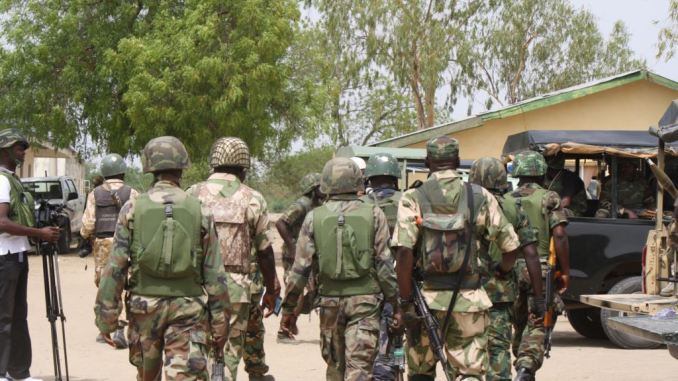
Military putsch, popularly known as coup, has defined leadership in Africa for many decades. It’s actually one of the reasons Africa is tagged backward by the West. The inability of African leaders to offer good governance, submit themselves to the rule of law, make putsch inevitable, almost.
The acclaimed giant of Africa, Nigeria, has drifted in and out of coups since independence. It’s a dangerous precedent by a country that other nations on the continent look up to. Post-independence Nigeria has witnessed six successful coups all under different circumstances. The January 1966 coup that aborted the First Republic; July 1966 counter-coup; July 1975 coup that threw out the Gowon government; the December 1983 coup that brought in Buhari and expended Shehu Shagari’s civilian government; the betrayal coup of August 1985 by Babangida against his boss Buhari; and that August 1993 palace coup by Abacha to end a hurriedly contrived interim civilian government of Ernest Shonekan.
Add to this menu, two failed coups. The February 1976 coup by Lt. Colonel Buka Sukar Dimka in which a beloved military leader, Murtala Mohammed, was assassinated; and the April 22, 1990 Gideon Orkar coup against Babangida which attempted to balkanise Nigeria.
In his radio broadcast announcing the coup, Major Orkar declared the temporary excision of five northern states namely: Bauchi, Borno, Katsina, Kano, and Sokoto from Nigeria to recalibrate the imbalance in power, especially the “domination and internal colonisation” of Nigeria by the northern military and political elite from the affected states.
As with previous coups, the issues of corruption, bad governance, and human rights abuses were trot out as part of the reasons for the coup. Just note this, all the coups that succeeded ended up offering worse governance than they came to correct. The same impunity, human rights abuses and brazen looting that attended the government ousted were replicated, in some cases with primitive viciousness.
And just last October, an ongoing plot to forcibly oust President Bola Ahmed Tinubu was uncovered by military intelligence. Even when Sahara Reporters, the adventurous, sometimes provocative online newspaper, scooped the news, top military sources were swift to deny it. But as it now stands, that was a decoy. A coup was actually lurking in the shadow of Aso Rock with Tinubu, top politicians, senior military officers as targets for possible ‘neutralisation’, to borrow the military word I don’t like to use. And you wonder, for what? For bad governance? Buhari gave us the worst broth of mis-governance. For corruption? The Buhari years were the worst era of corruption, a carry-over from the Goodluck Jonathan era of the locusts. I can’t find any modicum of reason to justify regime change by the barrel of the gun in a season of socio-economic reforms that has just hit an inflection point for the better.
Truth be told, the Tinubu government has been the most realistic Nigerian government in this 4th Republic. It did not pretend. It has been sincere to Nigerians. The pain we suffer today is the consequence of the delusionary leadership of yester-years. Right from Obasanjo government in 1999 when crude oil had both volume and value, and down to Buhari’s wasted 8 years, the leadership failed to genuinely diversify the economy. Gold, lithium, and others now husbanded in structured and regulated quantities by identifiable companies were being freely mined by Chinese crooks and other nationals in concert with Nigerians. Under Tinubu, that trend of brazen stealing of the nation’s solid minerals is ebbing. The same Chinese are being sent to jail or forced to regularize their operations.
Yes, the times are hard, but it is so because the previous governments, including the post-Independence military coup merchants, failed woefully to address the nation’s economic woes realistically. The Tinubu government has been the most realistic of them all. It openly admitted that the nation was broke; but that we cannot continue the toxic practice of printing more banknotes to offset cost of governance. That we must tighten our belt as he reforms the economy. Except that Tinubu and his cabinet do not seem to be tightening their own belts. But the reforms are real with hard knocks, expectedly. And now, there is beginning to appear a dash of rainbow in the horizon. Tinubu has taken Nigerians through the darkest hour, a period of economic umbra. The same Tinubu is taking them to the gray era, a period of economic penumbra, which will ultimately usher in desired bliss. The worst is behind us. And a coup to usher in another military regime is not the solution. This country has suffered ruins in the hands of the military. It cannot afford another gamble.
Military coup is a clear emblem of backwardness. It is prevalent in Africa. A symptom of the continent’s primitive governance codes as well as the weakness of institutions of democracy. Between 2020 and 2025, there have been over 11 successful forceful regime changes across nine African nations. Guinea-Bissau was as recent as November 2025 barely one month after Madagascar coup of October 2025. Gabon fed us with its version in August 2023, just one month after that of Niger Republic in July 2023. Notice the pattern of one-month interval.
Others are Burkina Faso (January and September 2022; two coups in a space of nine months). Sudan (Oct 2021); Guinea (Sep 2021); Chad (April 2021 after Idris Deby’s demise); Mali (August 2020 and May 2021). These are signs of a continent steeped in instability. Africa has been mis-governed but coup is not a worthy alternative.
However, it bears restating that the unruly behaviour of the so-called democratically elected leaders on the continent is the catalyst that fuels the coup spring. When African leaders suborn the laws of their countries, offer nothing but bad governance that inflicts pain on the populace; when they grossly manipulate polls, steal brazenly from public till and flagrantly sit-tight on their seats as if it’s a monarchy, military incursion becomes inevitable.
When a leader sits tight on a seat of power and manipulates the course of democratic change via credible polls, such a leader makes peaceful change impossible. And where peaceful change is frustrated and rendered both improbable and impossible, violent change suddenly becomes appealing and a veritable vent for the people to exhale. This is the crux of the matter in Africa.
There is a coup spring in Africa because the leaders are lawless, corruption oils democratic institutions including the legislature and the judiciary. Nobody audits leadership either qualitatively or quantitatively. I can understand this. But what is hard to understand is why any power monger will want forceful regime in Nigeria at the twilight of 2025, something you can achieve through the ballot in 2027 if that’s your desire. Enough of military in politics.