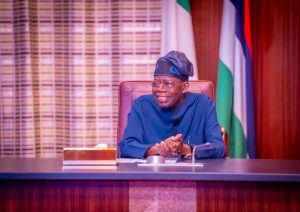
CGC Customs Bashir Adeniyi
By granting license and enabling full Customs operations and stimulating full port procedures at Onitsha, CGC Adeniyi has shortened supply chains for importers in Nnewi, Aba, and Onitsha Main Market, cutting clearance times, reducing demurrage, and lowering the security risks associated with long-haul trucking.

Since assuming office as Comptroller-General of the Nigeria Customs Service in June 2023, Bashir Adewale Adeniyi, in line with President Ahmed Tinubu’s Economic and Renewed Hope Agenda, has been intentional in pursuit of policies that repositioned the Service from a traditional revenue-collecting agency to a reform-driven institution.
The policies, anchored on three-pronged agenda of consolidation, collaboration, and innovation, were targeted at trade facilitation, reduction in cost of doing business, increase in revenue generation, protection of lives of Nigerians and economy through strong anti-smuggling operations; regional, continental and global trade integration, and institutional capacity development.
Beyond the record of historical achievements that resulted from aggressive implementation of these policies, Adeniyi’s tenure has also been marked by deliberate steps to dismantle bottlenecks that once stifled legitimate commerce, especially in Nigeria’s commercial hinterlands. The South East merchants long constrained by moving between Lagos and Port-Harcourt to clear their imports, and the high cost of hinterland logistics, have emerged as major beneficiaries of his trade facilitation drive.
Central to this shift is the operational licensing and activation of Onitsha River Port as a functional cargo destination, allowing containers bound for South East markets to be transported by barges from Lagos and Port-Harcourt ports and berth directly in Anambra State.
By granting license and enabling full Customs operations and stimulating full port procedures at Onitsha, CGC Adeniyi has shortened supply chains for importers in Nnewi, Aba, and Onitsha Main Market, cutting clearance times, reducing demurrage, and lowering the security risks associated with long-haul trucking.
This river-port activation has been reinforced by an aggressive licensing regime for bonded warehouses and terminals across the South East, bringing Customs services closer to manufacturers and traders in Abia, Anambra, Enugu, Ebonyi, and Imo. The policy logic is clear: decongest the seaports, domesticate compliance, and let goods clear where they will be sold or used.
Trade facilitation is the deliberate removal of bottlenecks that increase cost, time, and risk of moving goods across borders and within national corridors. In Nigeria, the South East region — home to Africa’s largest market at Onitsha Main Market, the industrial clusters of Nnewi, and the commercial hubs of Aba — has historically borne disproportionate logistics costs due to over-dependence on seaports outside the region. Cargo destined for the region would first berth at the seaports, then endure long road haulage, multiple checkpoints mounted by both state and non-state actors and weeks of demurrage before reaching the final buyer.
This structure inflated prices, discouraged formal importation, and pushed traders toward informal routes. The activation of Onitsha River Port and the licensing of numerous bonded terminals across the South East under CGC Adeniyi’s administration represent a structural shift aimed at correcting that imbalance.
Commissioned in 2012 and rehabilitated in 2020 but largely dormant, Onitsha River Port has been operationally activated as a Customs outpost under Adeniyi’s trade facilitation agenda. The port allows containerized and bulk cargo to move by barge from seaports via the River Niger channel directly to Anambra State, where full Customs procedures — valuation, examination, and duty payment — are now conducted. For South East importers, this cuts the leg from a times 2-week road ordeal to a 48–72 hour barge movement, slashing demurrage, reducing exposure to highway insecurity, and lowering landing costs.
Manufacturers in Nnewi can now receive industrial inputs closer to factory gates, while traders in Onitsha Main Market clear goods within the same commercial ecosystem where they sell. The port’s activation aligns with Adeniyi’s stated principle that reforms must “reduce clearance times, increase transparency, and eliminate avoidable bottlenecks”. By domesticating cargo clearance, Onitsha River Port transforms the South East from a consumption endpoint to an active node in Nigeria’s import-export chain.
Complementing the river port is the aggressive licensing of bonded warehouses and terminals across Abia, Anambra, Enugu, Ebonyi, and Imo States. A bonded terminal is a Customs-approved facility where imported goods can be transferred directly from the port of entry, stored duty-unpaid, and cleared in stages as the importer sells or utilizes them. Under Adeniyi, the NCS has expanded these licenses to decongest seaports and push compliance closer to traders.
The operational benefits are three fold. First, decongestion: containers no longer stack up at seaports waiting for South East consignees to arrange haulage. Second, cost efficiency: importers avoid storage charges and pay trucking fees only from the nearest bonded terminal, not from the coast. Third, compliance: with Customs officers stationed within the region, physical examination and duty assessment happen in the importer’s environment, reducing under-declaration and smuggling incentives.
Together, Onitsha River Port and bonded terminals are reconfiguring the region’s trade geography. Aba’s garment and leather industries clusters can now import textiles and accessories with shorter lead times. Onitsha’s electronics and building-materials dealers and manufacturers reduce inventory costs because goods and raw materials clear faster and in smaller lots from nearby bonded warehouses. Nnewi’s auto and auto-parts manufacturers like Innoson Motors benefit from predictable input supply, improving production planning. The multiplier effect extends to huge job opportunities, as banks, insurers, clearing agents, hospitality providers and other businesses now set up operations around these facilities, deepening the formal trade ecosystem and wealth creation agenda of Tinubu administration.
Critically, these assets also support export. Agro-processors in Ebonyi, Enugu and neighbouring state of Benue can consolidate products at bonded facilities and ship via Onitsha to the coast, giving South East exporters a viable channel outside the traditional seaports.
While acknowledging the tremendous economic benefits of the policy and commending Adeniyi for his efforts at pursuing ease of doing business across the country and especially in the South East, capital dredging of the River Niger channel, barge availability, and road evacuation from Onitsha remain operational constraints. Sustained success requires inter-agency coordination — Nigeria Inland Waterways Authority for waterways, Nigerian Ports Authority for barge operations, federal and state governments for access roads and curbing excesses of security agencies and non state actors.
Yet the policy direction is clear. By licensing Onitsha River Port operations and expanding bonded terminals locations, the NCS under Adeniyi is executing a deliberate decentralization of trade infrastructure. It is a model that recognizes that trade facilitation is not just only about digitization, but about physically relocating the points of clearance to where trade and productions actually happen, creating huge business and employment opportunities thereby boosting President Tinubu’s Economic and Renewed Hope Agenda.
Mr Okey IBEKE is the Principal Consultant, International Trade Advisory Services Ltd.