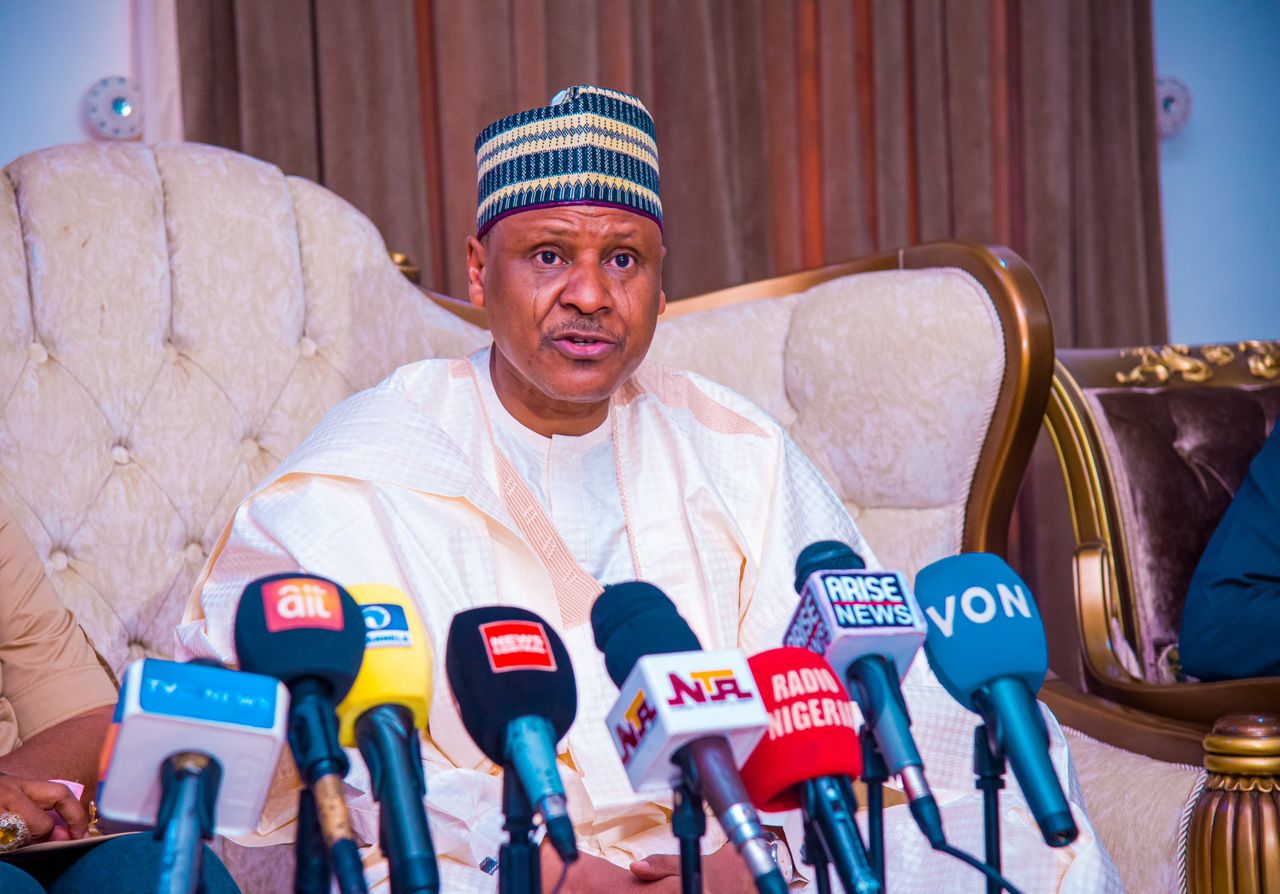
Mohammed Idris

To: Honorable Minister of Information and National Orientation, Mohammed Idris
Attention: Dr. Charles Ebuebu, Director-General, National Broadcasting Commission (NBC)
CC: Honorable Minister of Communication and Digital Economy,
Jane Nkechi Egerton-Idehen, Managing Director/CEO, NIGCOMSAT
Honorable Minister,
A Note of Caution to the Minister of Information, Regarding False
Narratives and Inaccuracies on the “BIG PICTURE”.
Addressing the Critical Gaps in Nigeria’s latest DSO initiative to be
relaunched on Satellite.
The Federal Government’s determination to execute the Digital Switch Over (DSO) by June 17, 2026,
marks a decisive pivot from a fractured terrestrial framework to a ubiquitous satellite delivery
architecture. While the FreeTV Direct-to-Home (DTH) strategy conceptually resolves geographic
broadcasting limitations, severe informational gaps, hardware bottlenecks and technical contradictions
currently propagated by NIGCOMSAT threaten to derail this generation-defining transition.
A rigorous assessment of the operational realities reveals critical, unaddressed risks concerning
sovereign satellite infrastructure, STB hardware and deployment logistics, and commercial audience
measurement data.
1.Nigcomsat as the Platform: Satellite Infrastructure Continuity and Orbital
Migration
The Sovereign Infrastructure Deficit and Satellite Age The foundational premise of the 2026 DSO relies
entirely on NigComSat-1R to host the national broadcast channels. However, the engineering
parameters of its DFH-4 satellite bus dictate a strict, non-negotiable 15-year design lifespan. Having
been commissioned in late December 2011, NigComSat-1R will cross the threshold of absolute fuel
exhaustion by December 2026. After this date, the satellite can no longer maintain its precise 42.5°E
orbital slot. Furthermore, what specific inclined-orbit operational maneuvers are authorized to
artificially extend its operational window prior to the mandatory graveyard deorbiting, and what is the
calculated daily duration of signal dropout expected for fixed DTH consumer dishes during this
degraded operational phase?
To date, public communications have failed to transparently address this imminent, mathematical
certainty.
Renewal Delays and the Replacement Capability Gap: The necessary successor constellation,
NIGCOMSAT-2A and 2B, is fundamentally misaligned with the rapid DSO rollout. Executive leadership,
including the Managing Director of NIGCOMSAT, Jane Nkechi Egerton-Idehen, has officially confirmed
that NIGCOMSAT-2A is scheduled for launch in 2028, with NIGCOMSAT-2B following in 2029.
Furthermore, the 2026 Appropriation Bill reflects a 30% reduction in dedicated funding for the project,
indicating a phased capital disbursement that firmly locks these launch dates into the late 2029s. The
intersection of NigComSat-1R’s fuel exhaustion and the delayed launch of its replacements creates a
2
guaranteed sovereign broadcasting capability gap spanning 24 to 36 months.
Moreso, the said launch of the replacement satellites is seemingly doubtful, given that the potential
Partners of the Launch, Thales Alenia have FAILED to deliver on two recent launches leading to
massive cancelations by global Satellite giants, SES and Eutelsat. If they can fail these two, they will
probably fail Nigcomsat. What happens to DSO when they fail to deliver?
The Unbudgeted Repointing Crisis: If and when a replacement failure occurs as looks more likely, to
bridge this capability gap, the NBC and NIGCOMSAT will be forced into a stop-gap measure, leasing
commercial capacity from third-party operators such as Eutelsat. Transitioning the broadcast signal
from the 42.5°E orbital slot to a third-party commercial backup satellite at a different longitude (such as
36.0°E or 16.0°E) will inherently change the required angle of incidence for reception. Consequently,
every consumer satellite dish aligned for the initial FreeTV launch will simultaneously lose signal lock.
Satellite dishes possess highly narrow beamwidths; a deviation of even one degree is sufficient to
cause a total loss of signal lock. Therefore, the instant the NBC and NIGCOMSAT throw the switch to
migrate the broadcast away from the dying NigComSat-1R, every single television screen utilizing the
FreeTV DTH service across the entire Nigerian federation will simultaneously go black.
Restoring service will require a physical, manual realignment of every dish across the federation.
Executing this mandated repointing for just the five million households will cost approximately N100
billion and demand months of continuous labor, effectively punishing early adopters with systemic
blackouts.
How does the NBC practically plan to execute millions of physical, household-level dish realignment
interventions (involving azimuth, elevation, and LNB skew adjustments) without plunging the newly
adopted viewer base into nationwide service blackouts extending for multiple months?
Assuming that the replacement delays are eventually overcome and NIGCOMSAT-2A successfully
achieves orbit in 2029, seeking to reclaim the sovereign ITU-coordinated 42.5°E slot, does the Federal
Government possess a cohesive, funded strategy to execute a second massive nationwide repointing
effort to physically migrate millions of viewers back from the leased stop-gap satellite to the newly
operational national asset?
2.Set Top Box (STB) Hardware Bottlenecks: Hardware Supply Chain and
Judicial Compliance
STB Hardware Deficit and Policy Alignment: Simultaneously, achieving digital saturation demands
approximately 32 million Set-Top Boxes, This new pivot demands that Free To Air Set Top Boxes
(STBs) from any source and anywhere can and will be used for this purpose. In 2015, Set Top Box
Manufacturers (STBMAN) were licenced by the NBC to manufacture STBs for the DSO. Since 2024, the
STBMAN are in court with the NBC over issues bordering on Set Top Boxes. Who is going to
Manufacture the Over 30million Set Top Boxes that will be needed for this Satellite pivot? Will this
demand go to Importers who have no stake, no factories, no licences and no participation in the DSO
process since inception? Anticipated regulatory pivots toward mass STB hardware importation directly
contradict the President’s “Nigeria First” policy and will lead to loss of jobs for the country.
Litigation issues and Capital Protection: This has already triggered an active judicial injunction (Suit
No. FCT/HC/GAR/CV/442/2024). This legal stalemate paralyzes the procurement architecture,
ensuring a catastrophic physical hardware vacuum. How will the NBC ensure adequate hardware
availability by the mid-2026 deadline without violating the executive mandates of the President’s
“Nigeria First” policy on domestic manufacturing procurement?
In light of the active judicial injunction secured by STBMAN under Suit No.
FCT/HC/GAR/CV/442/2024—which effectively prohibits the mass importation of fully assembled
receivers—what is the NBC’s immediate legal and operational contingency plan? If the courts uphold
the ban and domestic manufacturers are unable to scale production to cover the 31-million-unit deficit
within a matter of weeks, how will the government prevent the total collapse of the hardware
deployment phase?
Middleware Standardization and Legacy Integration: For the specific demographic of households
bypassing external decoders by utilizing direct DVB-S2 television integration, what specific firmware,
3
middleware, or other standards has the NBC legally mandated to ensure that crucial interactive
features—such as Electronic Programme Guides (EPGs), emergency broadcast alerts, and regional
channel clustering—function universally across highly fragmented, legacy television manufacturing
brands? Is this going to be a free for all standard?
Fate of those without STBs: DSO is meant to switch Analog Terrestrial Transmission to Digital
Terrestrial Transmission.! Switching to Satellite Transmission is NOT DSO! The analog Transmissions
of Multiple TV stations all over Nigeria are still existing! They cover large geographies and being the
only hope of the poorest of the poor in many areas and localities in the country.
So after this Big Picture on Satellite, what happens to the Analog Terestrial Transmissions of over 50
State and Private Television Channels all over Nigeria and their viewers?.
It costs currently about N80,000 to buy Satellite Antenna, Free To Air Decoder, LNBF, Cables and
Installation, to be able to provide access to this Big Picture on Satellite!This is more than the Minimum
wage, as today. What is in there for the poor? Will Government provide subsidy for them to get on to
this Big Picture
Inversely, it will cost less than N50,000 to acquire same on DTT, the original DSO plan, which has been
seemingly abandoned as it were, on the basis of lack of funding and non subsidy.
3.COMMERCIAL FRAMEWORK AND VIABILITY
Ownership of the Platform: Inview UK which is the parent company of Inview Nigeria, operators of the
FreeTV has packed up since 2022 and no longer operational.
This begs the question, who owns Inview Nigeria, and invariably who are the owners of FreeTV? Inview
Nigeria? NBC? BON? Ministry of Information? Nigcomsat?
Who is the owner of this FreeTV platform? Can this question be answered clearly once and for all?
Audience Measurement Feasibility and Algorithmic Integrity: This is to expose the severe technical
contradictions between unidirectional broadcasting architecture and the IP-dependent data harvesting
systems.
The Return-Path Infrastructure Void: The NBC heavily promotes the GARB audience measurement
system’s 94% accuracy, a metric heavily reliant on the harvesting of return-path data. Given that direct
DVB-S2 satellite reception provides only a passive, unidirectional video downlink, what precise
technological mechanism will transmit real-time viewership logs back to the GARB servers from
millions of rural and peri-urban households that lack active broadband connections or IP-enabled smart
televisions?
Algorithmic Demographic Skewing Mitigation: If the vast majority of automated return-path data is
successfully harvested exclusively from affluent households with Wi-Fi connected smart TVs and youth
utilizing the DSO Mobile App, how will the GARB Artificial Intelligence extrapolation models prevent the
generation of a massively skewed demographic profile? Specifically, how will the system
mathematically compensate for the systematic undercounting and erasure of the rural, low-income,
non-IP satellite viewer demographic?
Measurement Flaws: Beyond the orbital mechanics, the commercial viability of the DSO rests on the
GARB audience measurement system, which relies heavily on return-path data. Because DVB-S2
satellite reception is a unidirectional downlink, generating this data requires an active internet
connection. Millions of rural and economically disadvantaged viewers lacking broadband access will
vanish from the data stream, skewing the demographic profiles heavily toward affluent urban
households and mobile app users. This algorithmic distortion will misguide advertising capital and
starve regional broadcasters of essential revenue.
The Commercial Viability of the Rate Card: If the foundational audience data utilized to construct the
tiered rate card is fundamentally corrupted by the aforementioned IP-connectivity bias, skewing heavily
toward urban mobile engagement, how can the NBC convince regional broadcasters and national
corporate advertisers to trust the valuation metrics intended to resurrect the N605.2 billion advertising
market?
Conclusion
The unwavering determination of the Federal Government to execute the Digital Switch Over by June
17, 2026, represents a decisive, high-stakes manoeuvre designed to close a technologically
4
embarrassing and financially devastating 17-year chapter of regulatory stagnation. The strategic pivot
away from a highly fragmented, capital-intensive terrestrial architecture toward a centralized, satellitefirst
hybrid DTH model utilizing NigComSat-1R instead of SES as previously used, is conceptually and
geographically sound, offering a viable mechanism to achieve instantaneous national coverage across
Nigeria’s diverse topography.
However, the execution roadmap is dangerously misaligned with the unforgiving physical realities of
space infrastructure and orbital mechanics. Forcing the migration of millions of newly onboarded
television viewers onto a geostationary satellite that faces an imminent, mathematically certain
terminal fuel exhaustion between late 2026 and 2027—without a synchronized, fully funded sovereign
replacement in place—borders on infrastructural malpractice. The inevitable reliance on a third-party
commercial stop-gap satellite will precipitate a catastrophic ground-segment logistical nightmare. The
physical repointing of millions of consumer satellite dishes will require thousands of labor hours,
potentially costing billions of unbudgeted Naira, and effectively punishing early platform adopters with
extended, systemic service blackouts.
Simultaneously, the foundational pillars of the ground segment are buckling under severe legal and
technical pressures. The domestic legal warfare surrounding the importation of Set-Top Boxes
threatens to leave millions of legacy households without the necessary hardware interface, directly
contradicting the executive “Nigeria First” policy and stranding billions of Naira in domestic
manufacturing capital. Furthermore, the critical technical blind spots inherent in attempting to execute
sophisticated return-path audience measurement via unidirectional satellite links threaten the entire
commercial viability of the ecosystem. The integration of the GARB analytics system under these
constraints risks producing a deeply flawed, highly skewed demographic dataset that cannot
accurately or ethically sustain the N605.2 billion television advertising market it seeks to regulate.
Unless the regulatory authorities and executive leadership transparently address these severe
infrastructural sequencing errors, preemptively secure funding for the inevitable repointing
contingencies, definitively resolve the hardware supply chain litigation, and redesign the audience
measurement architecture to account for the rural IP void, the 2026 DSO risks becoming another
hollow milestone. Without executing these critical interventions, the initiative will merely migrate the
Nigerian populace from localized analog obscurity into a highly fragmented, legally embattled, and
temporarily dark digital void. The ultimate success of this generation-defining technological transition
will not be judged by the ceremonial pomp of the June commissioning, but by the systemic resilience of
the network when the engines of NigComSat-1R inevitably fall silent.
Digital Switch Over will not be determined by the ceremonial commissioning, but by the systemic
resilience of the network when NigComSat-1R inevitably expires and analog Terestrial Transmissions
nationwide are switched off. Regulatory accountability demands that these infrastructural sequencing
errors, hardware supply chain litigation, and audience measurement flaws be preemptively and
transparently addressed.
This Big picture seems to be too big and too opaque.
Let this picture be small but clear and transparent to all stakeholders.
Sincerely,
Ladi Yakubu
A Concerned Industry Stakeholder.
Kaduna, Nigeria. 08038982934 trexolution4i@yahoo.com