






Food security: Thought for a Hungry World
In a world of over 8 billion inhabitants, hunger, food insecurity and poverty and malnutrition remain among the most vital challenges facing humanity.
Global hunger has remained a critical challenge, with nearly 879 million people still facing food insecurity globally, including in developed countries, according to reports.
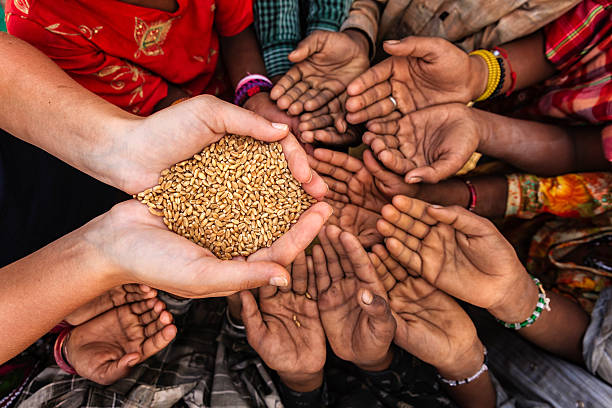
Copyright: Bartosz Hadyniak
An official United Nations Millennium Declaration report released on January 15, 2004 states, “the world is failing to put forward the need effort regarding hunger and poverty, the problem not being an absolute shortage of food in the world, but the unavailability of food and adequate nutrition to those who really lack money”.
According to Global Hunger Index (GHI) 2024, hunger at serious or alarming levels in 42 countries; progress stalled since 2016 due to conflicts, climate, and economic shocks; low hunger unlikely until 2160 at current pace.
However, at the African Union Extraordinary Summit on the Post-Malabo Comprehensive Africa Agriculture Development Program (CAADP), held in Kampala, Uganda, in January 2025, a 10-year CAADP Strategy and Action Plan (2026-2035) and the Kampala Declaration was adapted, with African leaders committing to “boost agrifood output by 45%, cut post-harvest losses by 50%, and triple intra-African agrifood trade by 2035 to enhance food security amid population growth to 2.5 billion by 2050”.
This was a follow up on the Africa Union summit in January 2014 in Addis Ababa, Ethiopia tagged: Transforming Africa’s Agriculture: Harnessing Opportunities for Inclusive Growth and Sustainable Development, where the AU heads of state launched 2014 Year of Agriculture and Food Security, marking the 10th Anniversary of the Adoption of the Comprehensive Africa Agriculture Development Program (CAADP).
The Year of Agriculture and Food Security according to the AU “will be a year that gives opportunities to communities, state and non-state actors to interact, express their voices on what works and chart the focus and targets for the next decade.
Sustaining the CAADP momentum decade of experience the AU said, is a demonstration that Africa has a well-crafted, home-grown framework guiding policies, strategies and actions for agricultural development and transformation.
Through the instrumentality of CAADP, African agriculture and food security concerns remain high on the policy agenda at national, regional, continental and global levels as countries within the continent still grapple with farmer herder clashes and climate concerns, exacerbating the call for a hungry free Africa under Agenda 2063.
Howard G. Buffett in his 2014 book 40 Chances: Finding Hope in a Hungry World offers a modern lens on fighting hunger through sustainable agriculture, emphasising the importance of empowering smallholder farmers, respecting cultural contexts, and promoting biodiversity and conservation farming tailored to local environments.
Africa’s agricultural transformation continues to be vital for economic growth, poverty reduction, and food security. Efforts now increasingly focus on sustainable practices, market access, and infrastructure development to boost intra-continental trade from under 12% in 2013 toward the AU’s 2045 target of 50%.
Nigeria, as Africa’s most populous nation, is advancing agricultural reforms that align with these continental goals, aiming to eradicate poverty and improve food security through innovation and investment, building on the foundation laid by CAADP as on April 14, 2025, President Bola Tinubu declared a national emergency on food security, underscoring the urgency of strategic planning, particularly in the face of the growing population.
As hunger, food insecurity, and poverty remain critical challenges worldwide efforts to transform agriculture and ensure food security continue to be top priority.
The vision articulated by the AU in 2014 remains relevant but now integrates lessons from global experiences if Africa must transform her food security landscape by 2025 and beyond.
Despite progress, global hunger persists, with recent data by the World Health Organisation (WHO) and the Food and Agricultural Organisation (FAO) project that 582 million people will be undernourished by 2030. Factors such as economic shocks, conflicts, climate change, and food loss of about 1.3 billion tonnes annually according to UN food agency, have disrupted food security gains, especially in low- and middle-income countries dependent on imports.
As politicians and stakeholders continue to debate and governments continue to maneuver, each for its own advantage, Africa’s agricultural transformation under CAADP remains vital amid global setbacks in food security.
However, Continued commitment to sustainable development, economic integration, and innovation in agriculture is essential to meet the 2030 goal of a world without hunger.
Reporting by: Theresa Igata Snr. Correspondent