





A journey to belong: migrants describe ten years in Europe
August 7, 2025
Ten years ago, one million migrants poured into Europe, fleeing conflict and poverty. Many had travelled for years in search of peace, prosperity or stability, and went on to find it in countries like Italy, Germany and Belgium.
But the journey to truly belong continues. A decade on, after receiving asylum, finding work, and learning new languages, four migrants who spoke to Reuters feel torn.
They are still homesick and wrestle with the possibility – or impossibility – of return. They remember the forests of northern Nigeria, a river through a town in Syria, but also the nightmare of child abuse in Afghanistan. Meanwhile, their presence has altered communities across the continent. They are part of a new, transformed Europe.
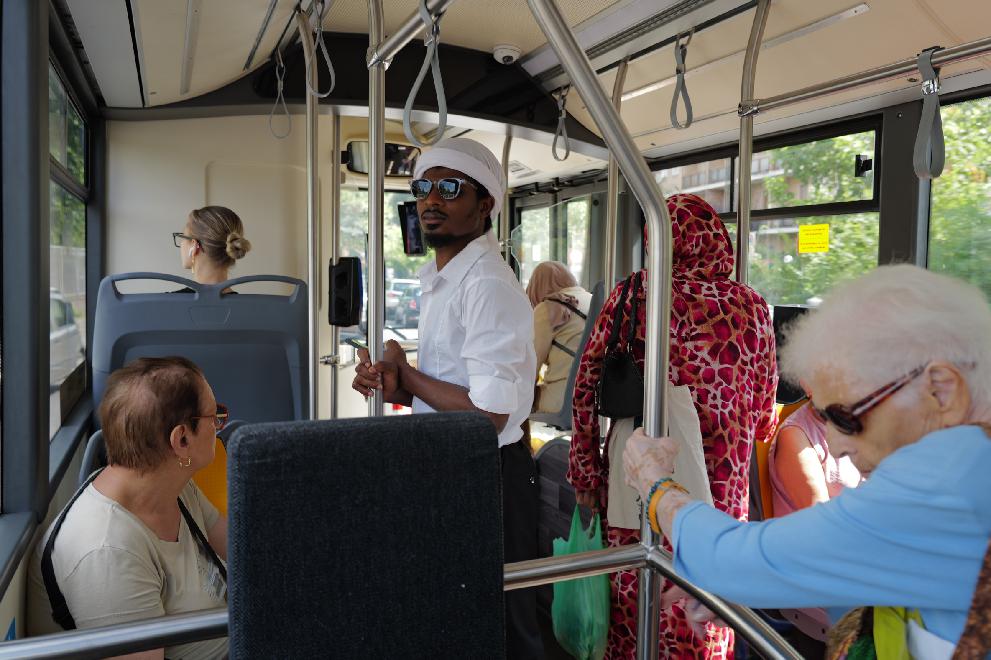
When Naziru Usman Abubakar fled the city of Maiduguri in northern Nigeria in 2014 after violence by Boko Haram insurgents, he took his school certificate with him. Securing a higher education was vital to him and he wanted proof that he had attended school.
The document got wet as he travelled on an overcrowded migrant boat from Libya to Italy in April 2016 and still bore the water stain when he used it to apply for a scholarship at Turin University years later.
“That water mark is very significant. Whenever I see it, the history comes back. It reminds me of the journey,” he said.
His first home in Europe was a migrant reception centre in Turin, where, with no word of Italian, university felt like an impossibility.
He moved into his own place, started to learn the language, worked as a plumber and as a dishwasher at a restaurant. But after paying rent and bills, he was penniless and lonely.
He missed Nigeria, where he used to race his friends to school on bikes and sought the cool air of the forests on hot days.
He missed his mother, who had always encouraged his learning.
“The dream of education fell away. I thought my life was wasted. I lost the meaning of everything.”
But things changed eventually. He saw an advert online about scholarships and won one to study law at Turin University. He graduated in 2024.
Europe had provided, but it was not easy. He described repeated incidents of racism, including being stopped by security on his first day at university and asked why he was entering campus.
Today, Abubakar works at a migrant centre, helping others with asylum applications. He hopes to apply for Italian citizenship in 2026.
But for other migrants, he adds, Italy can be one of the most difficult places to live.
Courtesy REUTERS