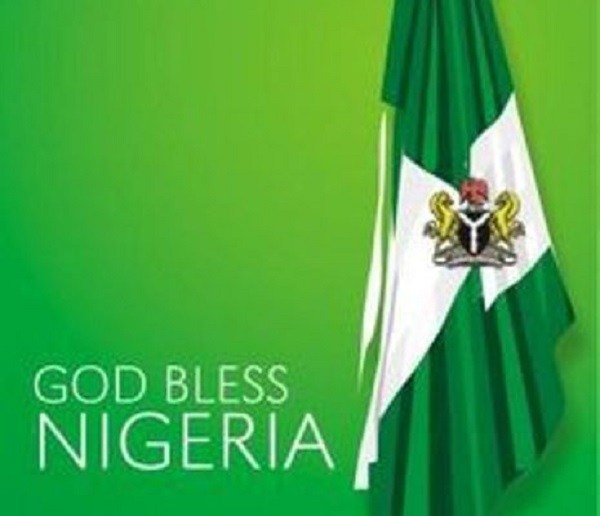
Nigeria flag

Nigeria has elevated religion and all its accoutrements to a fetish. The two major religions of the world, Christianity and Islam, live in Nigeria. They bloom in the south and flourish in the north. Religion is in every endeavour in the country.
In politics, we pray as we rig the election. After rigging and winning by sleight of men, we pray, praise and dance. We even thank God for prospering our rigging enterprise. In the corporate space, we still find time to pray even if it means reporting to work late. And as we pray, we concoct charms, invoke voodoo and seek alternative powers to kill or hypnotise our colleagues; or to take them out so we can take their place. In the marketplace, sights and scenes of men and women squatting in self-piety to commune with God assail the eyes. Before they eat, Nigerians pray. Before any event, secular and religious, they pray. After the event, they still pray.
Nigerians are deeply religious. A praying people, but is God listening? Does the righteous Arbiter answer as Nigerians pray? These are questions that defy answers and perhaps, question the quality of the prayers of Nigerians. But whether God is in the prayers or even bothers to hearken finds worrisome expressions in the reality that these days with intensive prayers, phones still get stolen inside worship centres, during solemn assemblies steeped in spiritual nirvana. Charging your phone inside a prayer house, a worship centre, is at your own risk. Tithes and offerings still take flight into private pockets even in the midst of fervent prayers. Anywhere you look, Nigeria is a religious patch under heaven swamped in spiritual wetland. Spiritualism is everything, character is nothing.
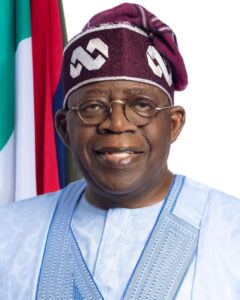
It was, therefore, no surprise that at the last Federal Executive Council (FEC) meeting, religion was one of the issues on the discourse menu. The council was preoccupied with many issues and it elaborately dealt with them. Flooding, road rehabilitation and construction were top on the agenda. If you consider what damage was done to Borno state recently by flood, you’ll appreciate why council backed the President Bola Tinubu’s idea of setting up a Disaster Relief Fund. The Fund will draw from a portion of the revenue accruing to the federation account as well as from the private sector. Commendable initiative. As part of strategies to avert future flooding disaster, the FEC agreed on the need to conduct integrity tests on Alau Dam and other dams countrywide by a competent technical committee. Another smart decision.
The Council also approved the Economic Stabilisation bills. The bills entail the recommendations of the Presidential Committee on Tax and Fiscal Policy Reforms set up last year by the President. The bills are result-targeted. They seek to amend the income tax laws, promote export of goods and services, reform the exchange rate regime and unlock foreign exchange liquidity. One of the bills offers tax relief to companies that generate incremental employment. Another offers personal income relief to people in private and public employment, from N200,000 to N400,000 per annum. Overall, the bills are critical to addressing a wide range of the challenges dragging the nation into the abys. Here, you can now appreciate why the President delegated Vice President Kashim Shettima to lead the Nigerian delegation to UN General Assembly in New York.
To show how religious the nation is and how much of our direct obligations we have outsourced to God, FEC approved two memos presented by the Ministry of Information and National Orientation. One memo centered on the restoration of dignity and standardisation of national symbols, such as the national flag, coat of arms, national anthem, and national pledge. The FEC approved that the first stanza of the national anthem should be rendered at all official functions, while the three stanzas should be for special occasions, namely: `Independence Day, Democracy Day, Inauguration of the National Assembly, Children’s Day, Armed Forces Remembrance Day and Workers Day. This is the first time in recent history that Nigeria is adopting standard and putting context to the rendition of national anthem. Again commendable.
But what is hard to comprehend and difficult to explain is the adoption of the third stanza of the Anthem as the National Prayer, as the council put it, to replace the current National Prayer. This is the aspect of Nigeria that sips into the subconscious of any rational mind as a national dose of hypocrisy. Why does Nigeria require a standard national prayer? The concept of prayer speaks to a communion with a deity. Call it God, or any name. But the reality is that humans, including Nigerians, do not serve the same deity as God. Some persons serve a deity they see, feed, pour libations on. Some serve a deity they do not see but believe it exists. It’s for such plurality of faith and variations in mode of worship that make governments to treat issues of worship and religion as personal, at the discretion and whims of citizens and never as a collective national ethos.
Religion as preached and practiced over the ages births a reasonable measure of righteousness among those who submit to such belief. It’s first a personal decision. Much more, it is symbolised by piety, respect for the dignity of man, respect for the rule of law and other virtues that espouse love, selflessness, sacrifice and a life abounding for the common good. This is not the religion practised in Nigeria and on whose wings the government is prescribing a National prayer. Nigerians have prayed enough as a people. Nigerians have undertaken pilgrimages to holy lands including Rome, Jordan and Saudi Arabia, yet the country remains one of the most corrupt nations of the world. Nigeria has one of the largest pools of worship centres yet corruption abounds as a national culture. The processes of the pilgrimages performed every year by Nigerians are fraught with fraud. Of what use is the entrenched culture of national prayer? Religion without righteousness?
Nigeria is tensed. The country’s tensile strength is almost, if not, exhausted. Too many issues demanding attention and urgently too. What is required now is a rebooting of the system to purge it of corruption, promote excellence over mediocrity, trigger indigenous production of goods and services and ensure that every citizen submits to law and order. Prayer is private and should be treated as such.