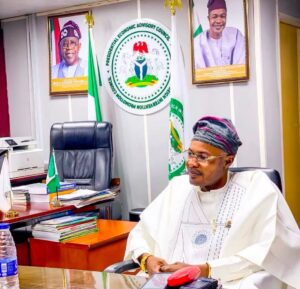
Min. of Health, Isaac Adewole
By: Dr. Mike Adeyemi-Lawal
Health, like housing, income and virtually all other aspects of human life, has a political dimension. The central importance of health in a nation’s development is illustrated by the links between population health within a country and its productivity, which is an essential ingredient for economic growth. Political decisions have a strong influence on a nation’s health outcome, which in turn affects other policy and political initiatives around economic growth. The dire performance of health systems in Nigeria’s history has stemmed largely from a lack of political will.
In the WHO ranking of health system performance of 191 countries, Nigeria ranked ‘187’, only ahead of countries like the Democratic Republic of Congo, Central African Republic, Myanmar and Sierra Leone. A report this year from the Brookings Institution, “Health Governance Capacity: Enhancing Private Sector Investment in Global Health” examined 18 low- and middle-income countries around the world to see how effectively they utilized external investment in global health research and development (R&D). The study examined management capacity, regulatory processes, health infrastructure, policy conditions, and health systems. Vietnam, South Africa, China, and Ghana ranked the highest, while Congo, Pakistan, and Nigeria ranked the lowest. Despite its huge agricultural potential, Nigeria has one of the worst nutrition status indicators in the world especially among children less than five. Cholera outbreaks keep recurring and very little seems to be done in relation to the water supply, drainage system and waste management system in those areas with recurrent outbreaks. Regulatory enforcement capacity is weak, and thus, items with potential risk factors for health, especially Non-Communicable Diseases (NCDs) flood the shelves of local shops. This, at a time when there is increasing focus on the growing double jeopardy of protracted infectious diseases and rising non-communicable diseases.
Nigeria is a signatory to a number of global health strategic policy documents and agreements; from the World Health Organization (WHO) Alma- Ata Declaration on Primary Health Care to the United Nations (UN) Millennium Development Goals (now Sustainable Development Goals and the Abuja Declaration of 2001 on funding and budgetary allocation to health. Universal Health Coverage offers an opportunity to turn these ambitions into real positive action by improving access, quality and affordability of health services for everyone who needs them, and thus contributing towards improving the country’s health indicators.
Out-of-pocket payments constitute the largest chunk of total health expenditures in Nigeria. This indicates that Mallam Ciroma, the groundnut farmer in Kebbi, Mama Chukwuma, the seamstress in Aba and Ogbeni Adekunle, the cocoa farmer in Ijebu Ode all depend on their daily earnings to pay for healthcare services in case of an unforeseen deterioration in their health and the health of their family members. Coping with ill health in yourself or a family member is stressful and not having the means to pay for healthcare services makes it even more depressing. Social and mass media are flooded with Nigerians soliciting for funds to offset health bills. For a nation’s citizens to have to resort to such methods to secure healthcare is a breach of trust by the leadership and a failure of governance. Therefore, every government in power, irrespective of political affiliations, needs to focus on moving the country closer to achieving Universal Health Coverage. The blueprint for achieving this should not be left for an after-campaign discussion; it should be clearly stated from the beginning because sustainable growth cannot be attained with a fire brigade approach to health.
Political debates should move from asking blanket questions about health to precise questions about the plan to address the high maternal mortality, low health insurance coverage, recurrent outbreaks of infectious diseases like cholera and Lassa to name but a few. This would provide more objective and measurable benchmarks for assessing the performance of political office holders. Political office is a call to serve and the governed deserve the best service. This essentially summarizes the concept of democracy as power of the people to demand accountability from the government. Hopefully, as campaigns for the 2019 elections increase in tempo, with the selection of candidates, Nigerians will be able to ask more specific questions about healthcare, rather than the generic conversations of the past.
Mike Adeyemi-Lawal is a Medical Doctor with professional experience in Programmatic Health Systems Strengthening, Humanitarian Emergency Response and Population-based surveys in resource-limited settings.
Courtesy: Nigeria Health Watch