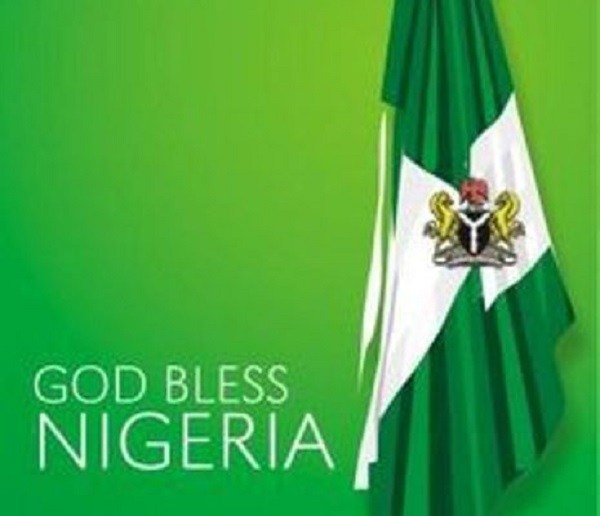
Nigeria flag

Nigeria is a mystery among nations. Nigeria trends for good and for bad. A patch of earth where the ridiculous interfaces with the sublime. Where oddities find bold expressions. Welcome to paradox paradise.
Nigerians are smart, intelligent, confident, gifted entrepreneurs. They triumph in maths, they grace the topmost positions in science, entertainment, medicine, law, businesses, literature and tech. In just about any field, Nigerians show both aptitude and ability. A rich harvest of gifted human capital.
With these traits, you would expect the country to be a paradise on earth. Blessed with good weather, arable land, swathes of lush green vegetation all year round, water bodies that splash up her scenic ambience from north to south, Nigeria is what many nations wish they were by natural endowments. Nigeria has in abundance what many nations wish they have, from mineral deposits to an assortment of natural resources.
Yet, this same Nigeria is unable to feed herself. She imports food from far and near including from countries at war. In the midst of plenitude in natural resources, Nigerians are daily migrating to other less endowed countries in search of the good life; the good life their country cannot offer them. Stats say over 17 million Nigerians are living abroad. Some were born overseas, some migrated as part of the fleeing contingent, the Japa syndrome. As you read this, thousands are preparing to leave the country, either by sea, air or land. Some are falsifying documents including bank statements to show ‘proof of fund’. Some universities through a convoluted syndicate are minting degree certificates in any discipline to enhance the chances of applicants getting visa and residency permits. It’s a buffet of documents forgery.
So, what ails the country? Why are Nigerians leaving their country in droves, selling off property at home just to raise funds to emigrate to Canada, US and Europe? The answer is simple. Nigeria frustrates. The country frustrates her citizens, frustrates intellect, hard work and integrity. Roiled by corruption and racked by ethno-religious persuasions, Nigeria mocks honesty and exalts criminality. She promotes a culture that makes bandits and thugs rule over the genteel and the gentle. Nigeria is a curious paradox, a distressing irony. A country where religion is the biggest industry but still ranks as one of the most corrupt nations of the world. At every turn, there is either a church or a mosque. When factories and businesses shutter on account of low patronage, it’s either a church or mosque that takes over the factory and converts it to a place of spiritual purification and prayer. Yet, the country reeks of graft and greed.
And what do they pray for; that the Almighty will give them jobs and business opportunities. Simply put, breakthrough! They forget that where they kneel, stand, squat to pray was once a hub of jobs and business opportunities. It’s a contradiction in terms that while Nigerians pray and worship their God from Sunday to Saturday, elsewhere in US, Canada, Europe and Asia, the people give themselves to enterprise at least six days of the week. And they live well, create jobs and wealth. They work to build their countries into first world status with little or zero prayer. Nigerians who pray without ceasing are reduced to hopeless mortals in their country; without jobs, without food, without mirth. They look to the non-praying nations. They admire the good life they live. They desire the jobs and the wealth they create. And in one moment of guided, sometimes misguided, escapism, these Nigerians arrange to emigrate to the country that does not pray just so they, too, will live the good life. So, prayer does not create jobs and good life. A functional leadership that promotes hard work and industry over pilgrimage does.
This is the sad reality that punctuates every moment in the story of Nigeria. And this explains why Nigerians fail at home but thrive abroad. A friend once told me the story of an undergraduate engineering student at the University of Nigeria, Nsukka. At 100-level, he had loads of carry-over to the embarrassment of his parents. Because his family was well to do, they flew him to the United States where he did not only make good grades but transformed into an engineering whiz. That story illustrates the Nigerian mystique of men and women who excel overseas far more than they would have if they were in Nigeria.
Just imagine this! At the 2024 Paris Olympics, eight Nigerians won medals for other nations where they pledged their allegiance. Femi Bam Adebayo, more popularly called Bam Adebayo won gold with US Basketball team; Victoria Ohuruogu represented Great Britain to win bronze medal; Barthelemy Chinenyeze won gold for France in volleyball; Samu Omorodion, represented Spain and won gold medal in men’s football; Michael Olise (a footballer of immense guile and grit) won silver for France in men football; Annette Echikunwoke won a silver medal in hammer throw for US; Salwa Eid Naser, originally born as Ebelechukwu Agbapuonwu in Nigeria, won silver medal for Bahrain; and Yemisi Ogunleye won gold medal for Germany in the women’s shot put. They all have good reasons to switch nationality. These are talents that the toxic Nigerian environment steeped in corruption, nepotism and plain roguery would have dimmed.
There is a long list of Nigerians doing exploits overseas. Some were unknown and unsung while they were in Nigeria but morphed to geniuses once they step out of the shores of the country. And these exploits are not lost on the world. In the United States, Nigerians are held in awe for their capacity to combine multiple jobs with education, some with double Master’s degrees. Nigerians reputedly are the immigrants with highest number of PhD holders in the US. They are wonks and they are respected and acknowledged for that.
So, what is it that frustrates Nigerians at home but facilitates their rise overseas? The answer is down to leadership and its culture. Leaderships in Nigeria promote corruption because the leaders are themselves corrupt. In Nigeria, corruption is glorified but in the countries Nigerians run to for refuge and good life, corruption is punished. In Nigeria, impunity thrives. In the countries Nigerians Japa to, the rule of law is upheld.
I look forward to that day when a clean, sacrificial leader will emerge; when occupants of leadership positions would be men and women of stellar character; when the occupant of Aso Rock would be someone above board, beyond venalities and crude acquisition of public wealth. I still dream, like Boxer in George Orwell’s Animal Farm, that all the fruitful fields of Nigeria shall be used for the good of Nigerians alone.