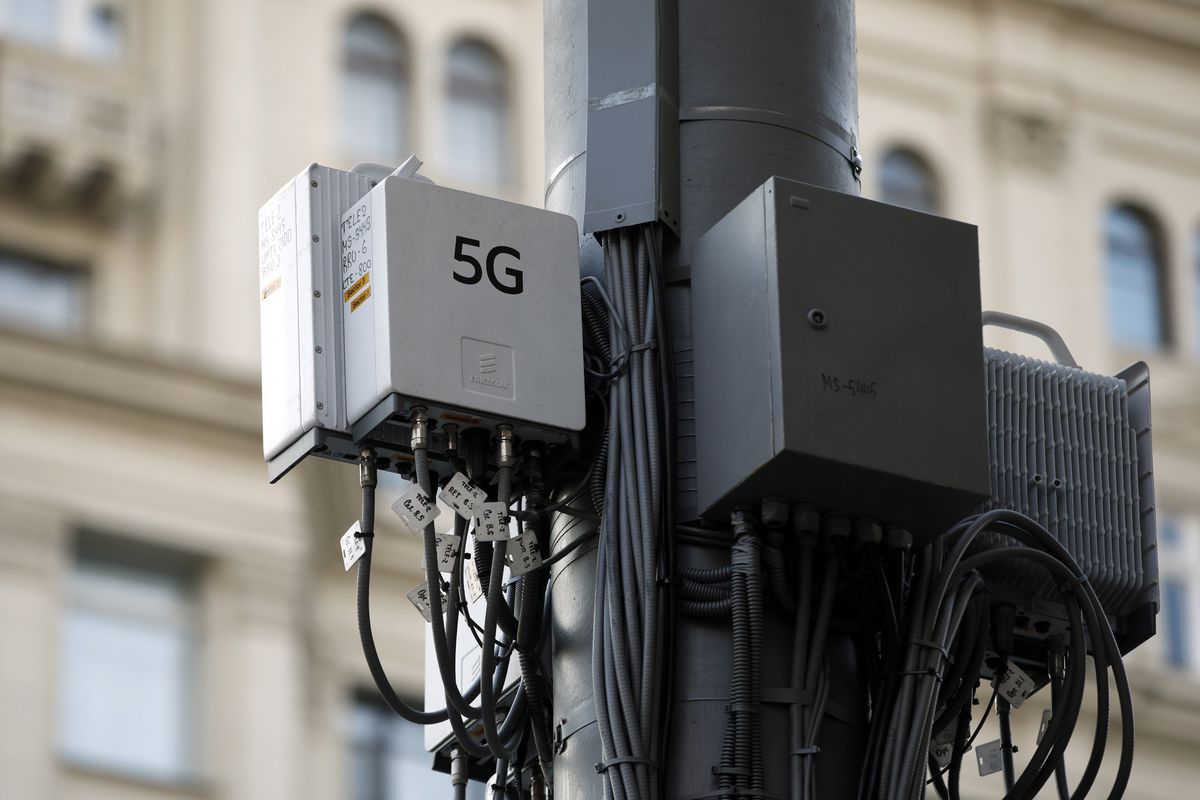
5G tower

A mother of three, Mrs Asake Ayinde, who lives at Oridagogo, Odo-Ona Kekere, a suburb area in Ibadan, the capital of Oyo State can’t use WhatsApp, a social media platform effectively when she is at home as a content creator.
According to her, the poor network cuts across all mobile networks and also makes normal calls and messaging difficult.
“I was frustrated when I attempted to do an online course to improve myself on my job as it became almost impossible to join Zoom meetings and log in to the e-learning platform required for this training.
“What frustrates me the most is the inability to call or send messages to my husband or children whenever I am away from home.
“What if there is an emergency? Poor network would have deprived me of averting it,” Ayinde said.
Ayinde said she completed her online course with the help of her daughter who found a section of their home with a good internet connection at a particular time of the day.
Another respondent, Mr Gboyega Ayodeji, who lives at Iyana Bodija in Ibadan, says digital banking has become very difficult these days for him.
Weak internet connectivity means he is unable to rely on his banking app to make digital financial transactions from the comfort of his home.
“Oftentimes, you have to get into the banking hall to do the digital transfer which could have been done on your mobile app if the internet is stable and this increases stress and makes time management difficult.
“The service providers should ensure to provide more mast systems to areas where they have a large number of customers,” Ayodeji said.
It is the same story for Mrs Tolulope Laniya-Awolola from Abuja, the Federal Capital Territory, who has faced challenges with her digital payment activities for some time now.
“Such experiences on weak internet connection can be very frustrating; difficulty in completing online banking transactions like transfers or bill payments. Delays in receiving important updates or alerts from banks are some of the frustrations I have been dealing with.
“Inability to access banking apps or websites for balance checks or account management are some of the downsides resulting from poor internet connectivity,” Laniya-Awolola said.
According to her, she has trouble learning through digital platforms. “I have trouble attending live online classes or having difficulty downloading study materials or submitting assignments on time.
“Lagging video calls or messages are other issues too. Issues with streaming music, videos, or playing online games and delays in completing work tasks or joining virtual meetings are too much weight to bear due to the situation of the internet in the country.
“So, one has to keep switching from one internet service provider to another.”
Mr Olubunmi Adeite in Arulogun, a suburb of Ibadan and Mr Bamidele Olatunde from Abule Egba, in Lagos both run education consultancy outfits preparing students for A level, Cambridge, TOEFL and IELTS examinations, to them good and reliable internet connectivity is crucial.
According to them, running their various platforms to support teaching and learning activities for their clients have been challenging including processing foreign academic applications for overseas study.
They all blame it on poor internet access.
“Yes. It has hindered urgent transactions and has affected the smooth running of business,” Adeite said.
Internet connectivity is key to realising digital transformation for many, expanding access to improved services across all sectors of the economy.
The Nigerian National Broadband Plan 2020-2025 agenda on broadband internet includes increasing access to high-speed internet for the population, covering an increase in speed with a minimum of 25 Mbps in urban areas and 10 Mbps in rural areas.
The plan also aims at least 90 per cent of the population having access to internet coverage by 2025 and data not costing more than N390 per 1 GB, which is 2 per cent of the median income or 1 per cent of the minimum wage.
But as the 2025 deadline for the country’s goals in broadband internet fast approaches, Nigeria seems far from realizing this goal.
Speaking on the status of internet connectivity in Nigeria, the president of the Association Telecom Companies of Nigeria (ATCON), Mr Tony Emoekpere, said as of December 2023, Nigeria recorded 163.8 million internet subscriptions, representing a 9.07 per cent year-on-year growth, with internet penetration exceeding 40%.
According to him, Lagos State leads the nation with 18.9 million internet users, followed by Ogun with 9.5 million and Kano with 9 million.
“This growth underscores the increasing role of Internet access in education, business, and social interactions despite challenges like economic volatility and infrastructure limitations,” Emoekpere said.
The ATCON president, however, stated that broadband penetration remains a concern, currently at 48.1 per cent, short of the government’s target of 70 per cent by 2025.
“Network quality also varies significantly across urban and rural areas, with urban regions like Lagos enjoying faster and more reliable connectivity compared to underserved rural areas, where infrastructure gaps persist,” he said.
Emoekpere said the barriers to broadband internet expansion in Nigeria reflect a combination of infrastructure deficits, economic constraints, and systemic challenges.
He noted that addressing these was critical for achieving equitable digital inclusion and supporting the country’s economic growth.
The ATCON president, however, called for tariff adjustments and economic incentives so operators can sustain their infrastructure investments.
“Increased investment in broadband infrastructure is essential. The government should foster PPPs to expedite the deployment of backbone and last-mile networks, especially in underserved areas.
“(It should) provide targeted subsidies for low-income households to access broadband services and affordable digital devices. These initiatives can promote inclusion while increasing the user base for operators.
“(Government should) expand digital literacy programmes at the community level to empower more Nigerians to leverage the internet for education, commerce, and social inclusion,” he said.
Emoekpere underscored the importance of Partnering with energy providers to ensure telecom sites have reliable power supply, thereby reducing reliance on expensive alternatives like diesel generators. (NAN)
By Ibukun Emiola, News Agency of Nigeria
This report is produced under the DPI Africa Journalism Fellowship Programme of the Media Foundation for West Africa and Co-Develop.