



Okonjo-Iweala Tasks Nigeria to Lead Africa’s Single Air Transport Market Agenda
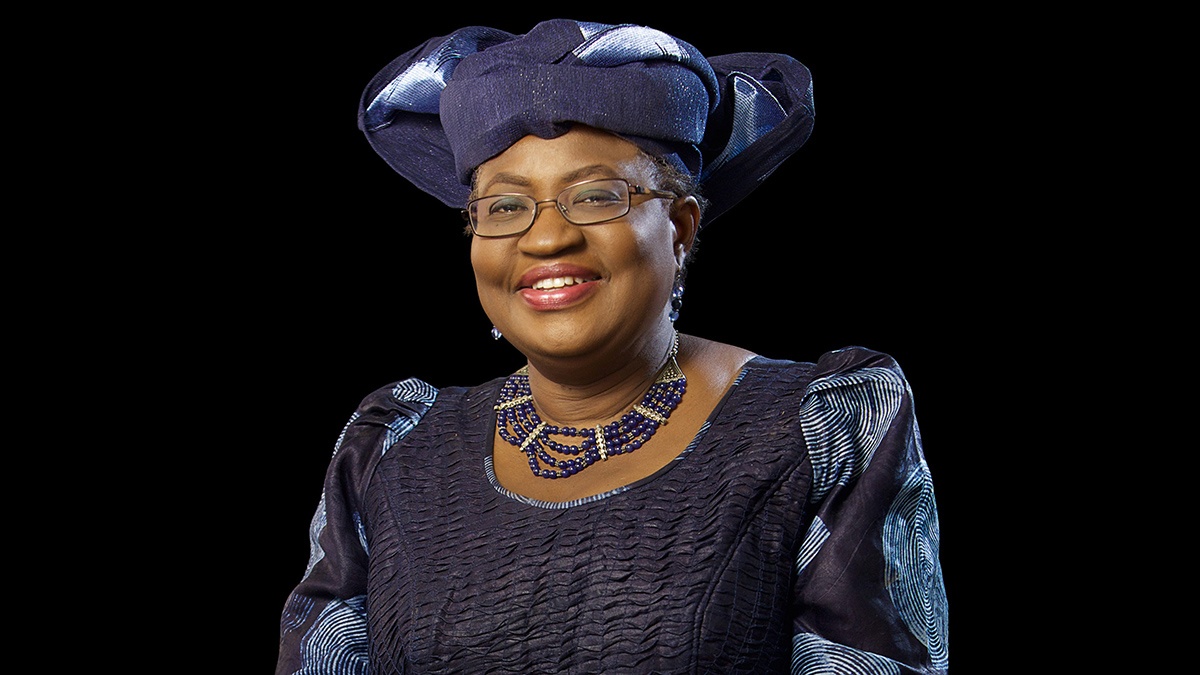
The Director-General of the World Trade Organisation (WTO), Mrs. Ngozi Okonjo-Iweala, has called on Nigeria to champion the Single African Air Transport Market (SAATM) initiative.
Okonjo-Iweala made the call virtually at the maiden Nigeria Aircraft Acquisition and Investment Summit (NAAIS) 2026, on Wednesday in Lagos.
The summit had the theme: “Unlocking Capital, Confidence and Capacity in Nigeria Aviation Industry”.
Okonjo-Iweala noted that SAATM, unveiled in 2018 as a flagship project of the African Union Agenda 2063, sought to create a single, unified, liberalised aviation market across the entire continent.
She noted that SAATM sought to overcome bilateral arrangements and fragmented national policies and ensure that aviation played a transformative role in Africa’s development than it had played elsewhere.
“Boosting intra-Africa trade, deepening tourism, and giving the continent a connectivity infrastructure to meet its growth trajectory demands Nigeria has both an interest and a responsibility to lead that agenda from the front,” Okonjo-Iweala said.
She said that the opportunities in the aviation sector were abundant and the needs were huge while the rewards were massive.
Okonjo-Iweala called on the Federal Government to shift from viewing aviation as a revenue source to seeing it a strategic economic initiative.
She said that Nigeria had to move into a high-value, export-oriented economy and stop viewing aviation primarily as a source of tax revenue.
According to her, the aviation sector should be treated as a critical infrastructure, underpinning the African Continental Free Trade Area.
She said: “Air connectivity in Africa is more time-consuming and costly, which can constrain trade.
“Very often, to fly between two African countries, passengers have to go through Europe to catch a connecting flight.
“This adds to the cost of trading or doing business. This is a structural constraint on growth, not a footnote to it.
“This partly explains why intra-Africa trade is still only about 16 per cent and Africa’s share of world trade is about three per cent.”
She noted that in 2025, air cargo accounted for nearly 30 per cent of global trade by value in spite of representing less than one per cent by goods.
“That asymmetry tells us that aviation does not move all commodities. It moves the highest value, most time-sensitive goods, pharmaceuticals, electronics, parachutes, air-related components, and the small parcels.
“That underpins that global e-commerce economy depends critically on air transport. When air cargo functions well, it does not merely complement trade, it enables it,” the director-general said.
Okonjo-Iweala said that the Nigerian aviation sector had grown in recent decades, with more private airlines along with new airports and related infrastructure.
“The safety record has also improved in the last 19 years, but there is still a long way to go.
“Existing airlines need to upgrade their fleet and scale up their operations to improve their competitiveness.
“It is estimated by IATA that the sector currently supports over 216,700 jobs and contributes less than three billion dollars to gross domestic product.
“International tourists arriving by air contributed an estimated 760 million dollars to the Nigerian economy in 2023. Nigerian airports handled 195,700 tonnes of air freight in 2023.”
The director-general said that a country of Nigeria’s size should be earning much more than that from the sector and creating more jobs.
According to Okonjo-Iweala, for a country seeking to move up the value chain, reliable and affordable air freight infrastructure is not optional but a prerequisite.
She said that transforming Nigeria into a high-value trading economy and a gateway between West Africa and global markets could not be achieved without investing in the underlying aviation ecosystem.
She said that investment might begin with an increased fleet by private sector operators, but more would need to be done.
She urged that aircraft acquisition must be accompanied by sustained investment in airport infrastructure and air navigation services and complemented by a strong maintenance budget.
“Reliable, cost-efficient operations are what create the conditions for airlines to serve less profitable routes, reduce fares, and grow passenger base.
“In spite of high ticket prices, African airlines earn less than the global average, in terms of profit per passenger. The full cost structure needs to be re-examined.
“Low costs, airport taxes, and charges are estimated to be about 12-15 per cent above the global average.
“The good news is that this transformation need not depend on public expenditure alone or public action.”
She said that public/private partnerships offered a credible and proven path to mobilising private capital for airport modernisation and transport infrastructure.
“The model is straightforward in principle,” said.
She said that where it was structured well, the partnership model had delivered world-class airports and logistics hubs.
“There is no reason Nigeria cannot replicate and surpass those examples, but for this to work, the government’s role should be clear.
“It should maintain a fair and predictable tax regime, advance market liberalisation by opening routes in a reciprocal manner with other countries or regions and removing bilateral restrictions that tend to limit where after-time carriers can fly.
“Most fundamentally, governments must view the aviation sector as the strategic economic enabler it is, rather than as a revenue source to be extracted. (NAN)