Peter Obi

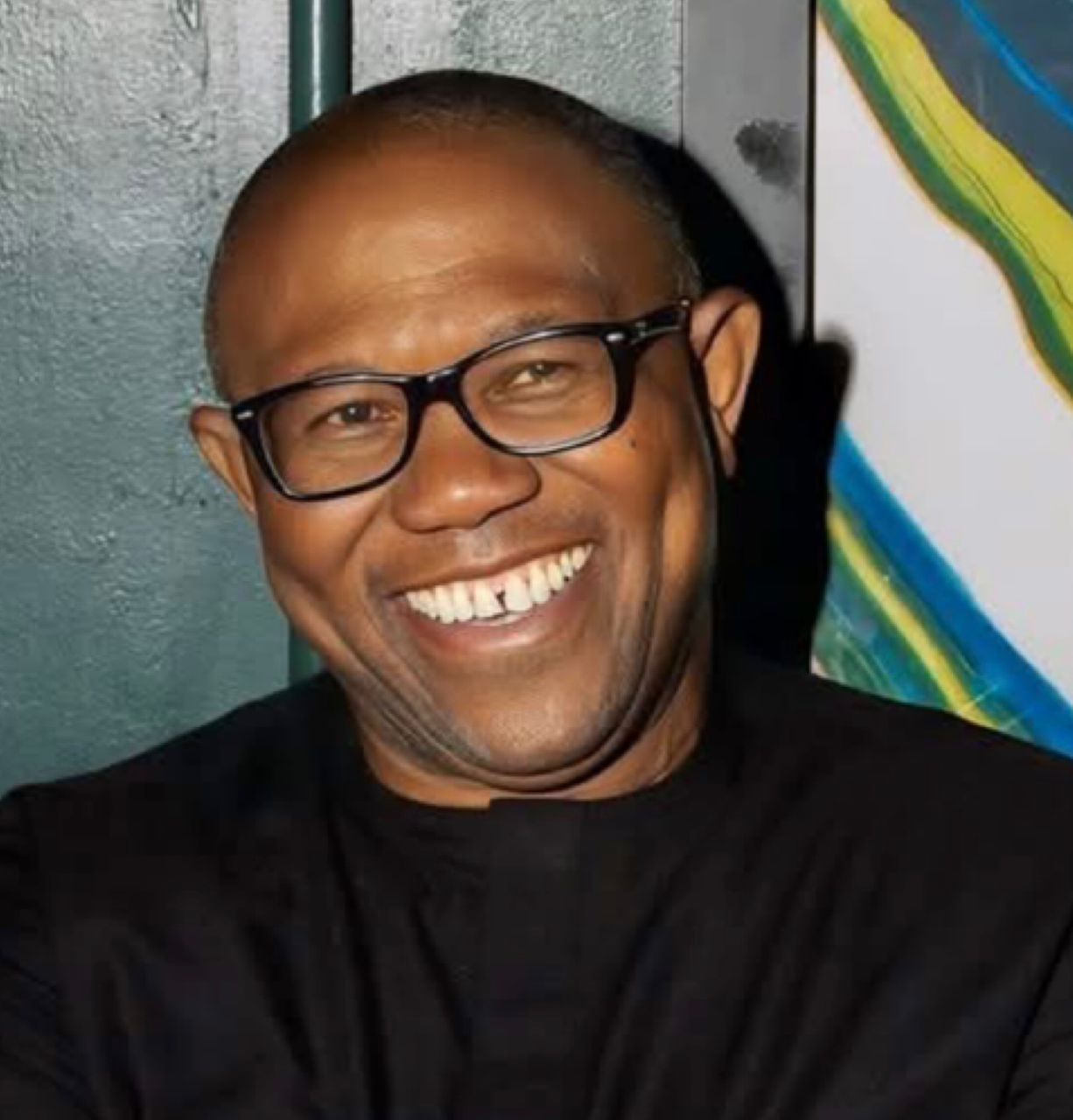
How did it come about that a wealthy trader-turned-governor, born in Onitsha in 1961, became one of the most influential political catalysts in the history of modern Nigeria? Much like the great disruptors of global history, no one is neutral about Mr. Peter Obi; he is either loved or hated with a passion that has not cooled since he entered the political arena like a meteor and altered the nation’s political orbit.
To his fiercely loyal followers, he is a political messiah – a symbol of ascetic discipline, fiscal prudence, and the long-awaited rescue of a nation in distress. He is a solid family man, untouched by any scandal of gallantry, intrigue, or liaison common among Nigerian politicians. Because of the nature of Nigerian politics, dictated by a transactional mindset, we have seen him move from one party to another, but he has never allowed his political somersaults to disturb his political equilibrium or the values that have made him beholden to Nigerians.
Yet the intensity of opposition he provokes is equally volcanic. It is often a carryover of the disruptions he caused in Anambra State. He promoted policies that gave sufficient stimulus to inventiveness, industry, and thrift. He marched through the state with an economising scythe and abolished all offices that carried emoluments without duties. Is this what he will come and thrust at the presidency? This question often comes from some politicians who are at home with the sharing of the national cake without baking any. Those who oppose him, or who speak against him on behalf of political interests, such as Mr. Daniel Bwala, a man who can hardly speak without lying or act without treachery, often portray him as a destabilising force, a man whose emergence disrupted an established political order that has since struggled to regain equilibrium.
This displacement has, in turn, triggered what some describe as a sustained, coordinated, and often unforgiving campaign aimed at diminishing his political relevance. This persistent critique draws in a wide and shifting constellation of voices- state actors, political commentators, and former allies – ranging from official spokespersons like Bayo Onanuga, the oldest and fountainhead of the group, to vocal media critics such as Reno Omokri, one who places more value on people’s favour than reputation, always self-imprisoned in his heritage of hatred for the truth, and Femi Fani-Kayode, the “Agadiekwenka” of the group, who could fittingly be described as oil-mouthed, slippery, and a time-serving sycophant. When he writes or speaks, it is easy to observe unmannerly flares of wrath.
It also includes notable political realignments and defections, from the sharp rhetorical shifts of Daniel Bwala to the bitter fallout with Kenneth Okonkwo, the “Onuku”, who always speaks with the fury of a maniac. He fights without rational restraint, using every device of satire, ridicule, and vituperation to achieve the crafty distortion of truth. He once openly expressed deep admiration for Obi and a desire to serve closely within his political structure. Whether driven by conviction, strategy, or realignment, their collective posture has often been interpreted by supporters as an attempt to deliver a knockout blow, that is, the utter destruction of the “Obi phenomenon.”
Ultimately, the intensity of opposition he attracts is, for his supporters, itself a form of validation. In the theatre of Nigerian politics, he has become a figure that cannot be ignored – only embraced or rejected. He remains one of the most loved, most criticised, and most consequential political figures of his era because he has decided to side with the people against their oppressors.
Yet beyond the rhetoric, what exactly has not been said in the effort to discredit him? In many cases, arguments collapse under their own contradictions – distorted interpretations of facts competing with one another, often raising more questions than they answer. At times, even simple claims are stretched into sweeping generalisations. For instance, Daniel Bwala has argued, in a familiar refrain, that many who worked with Obi as commissioners or aides are not “doing well” today. Let us focus on that.
But this raises an unresolved question: what does “doing well” actually mean? In most instances, it is reduced to whether individuals have become senators or members of the House of Representatives – positions often equated with political success in Nigeria’s prevailing culture of office-based achievement. This, however, reflects a deeper structural tragedy in Nigerian political life, where governance is frequently interpreted through the narrow lens of access to power rather than impact, productivity, or professional advancement.
In such a system, political success is often measured by entry into elite political circles, rather than the broader development of individuals or institutions. A former commissioner, in this worldview, is expected – almost entitled – to ascend into legislative office, not necessarily because of merit or public service record, but because of proximity to political structures that reward continuity within the same elite network and access to stolen billions. This is not necessarily growth; it is often the recycling of political privilege and the use of corruption to sustain influence.
Against this backdrop, it is worth examining the trajectories of some of Obi’s former appointees and associates. His former Secretary to the State Government, Mr. Oseloka H. Obaze, a thoroughbred career diplomat, has since established a policy, consultancy firm. He is the MD/CEO of Selonnes Consult, a policy, governance, and management consulting firm based in Awka. Today, he remains one of the most sought-after consultants in the country. I was informed last year that he is constantly engaged in consultancy services for governments, international foundations and development partners. An author of several books on policy and governance, in 2023, ahead of the Liberia 2023 presidential run-off elections, his firm provided strategic guidance and orientation for the Liberian presidential candidate and now President of Liberia, Mr. Joseph Boakai, and his team. He was the Campaign Manager for Peter Obi’s 2023 Labour Party presidential campaign.
His Chief of Staff and Commissioner for Information, and later Commissioner for Economic Planning, Professor Chinyere Stella Okunna, was already an accomplished academic before joining his administration. After her service, she returned to academia, rose to become Dean of her faculty, and now serves as a Deputy Vice Chancellor.
Many others who returned to the university system have similarly advanced to professorial ranks, including figures such as Emenike Obi; Kay Onyechi; Lawrence Ikeakor, now the Provost of his University’s College of Medicine; and Patrick Obi. In many cases, service under Obi is cited as part of their professional experience—not as a limitation, but as an additional credential. Professor Patrick Obi told me that those conducting interviews when he changed institutions where he was teaching were impressed upon seeing in his résumé that he had worked with Obi as a commissioner.
His former Commissioner for Environment, Dr. Michael Egbebike, worked closely with him on the birth of NEWMAP in the country. Today, he remains a respected environmental consultant to international organisations and is currently involved in studies in different countries relating to seismic and environmental research. Architect Callistus Ilozumba, already established before his appointment, has since expanded his professional footprint and is recently doing wonders in the field of architecture.
After serving as commissioner and aide, Mr. Peter Afuba and Chief Alexander Ejesieme have attained the rank of Senior Advocates of Nigeria, the pinnacle of the legal profession. Notably, both were part of Obi’s legal team during the 2023 presidential election tribunal, reflecting an enduring professional association. Barr. Okoli Akirika has also returned to legal practice and is giving an excellent account of himself. He was instrumental in several forensic victories recorded by the Labour Party. I am among those urging him to apply for SANship because he is eminently qualified. He is an eagle whose wings have grown; we cannot keep him in the nest, and nothing should hinder his flight.
Dr. Ego Uzoezie went on to become Provost of Nwafor Orizu College of Education, while Chief Nick Obi is today the traditional ruler of his community in Nnobi. Mr. Eze Echesi, formerly Commissioner for Finance, now heads the financial division of Ibeto Group, one of Nigeria’s major industrial companies.
The list could continue. Across different sectors, many who have worked with Peter Obi have gone on to pursue successful careers in academia, law, public service, business, and traditional leadership. Some have built enterprises, others have advanced professionally, and many have remained active contributors in their respective fields. In several cases, he is even known to have provided personal support, including guarantees that enabled individuals without collateral to access bank credit and establish businesses.
What else do these former commissioners and aides owe to success? It is therefore difficult to sustain the blanket claim that those who worked with him are not “doing well,” unless “doing well” is narrowly defined as occupying political office or seeking one with stolen funds. The evidence suggests otherwise: a pattern of professional continuity and advancement across multiple sectors. This reminds me of Democritus’ insistence that he would “rather discover a simple demonstration in geometry than win the throne of Persia.”
In the end, Peter Obi may not have offered the kind of access to illicit enrichment or rapid political accumulation that fuels parts of Nigeria’s political class, but those who have worked with him appear, in many cases, to have moved on to productive and often distinguished paths, without any of them being bogged down by active or dormant EFCC cases or ending up in detention. For your information, they are all still with him and maintain an active WhatsApp group through which they communicate. Who is not with him in Nigeria today? Again, what could be more successful than this?
Obienyem writes from Awka.