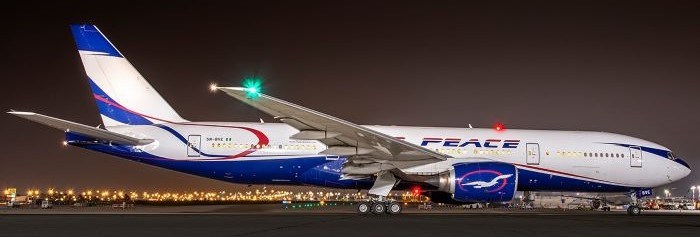

In Nigeria, there is a peculiar national habit: we celebrate people and institutions only briefly before pulling out a microscope to inspect every crack in the wall. Sometimes criticism is necessary; sometimes it is also deserved. But there are moments when one is tempted to ask, in popular street language: Wetin Air Peace do sef?
For years, Nigerians lamented the state of the aviation sector. We complained about expensive international tickets, the dominance of foreign airlines, poor connectivity, and the near absence of indigenous players capable of competing on the global stage. We argued that Nigerian businesses hardly received the support needed to stand shoulder-to-shoulder with multinational giants. Yet when one indigenous airline began to challenge conventions and stretch its wings beyond local boundaries, it suddenly found itself under intense public scrutiny. No airline in Nigeria has generated as much discussion in recent years as Air Peace.
Founded by Ide Allen Onyema, a lawyer by training, the airline has grown from a domestic carrier into a significant player in African aviation. Its expansion into regional and international routes has represented more than business growth; it has become, in many respects, a symbol of Nigerian ambition.
When Air Peace launched international routes, especially to destinations previously dominated by foreign carriers, many Nigerians celebrated. For decades, and for those who may have forgotten, international air travel often felt like a game rigged against the average traveler. Ticket prices were outrageous. Certain routes looked designed exclusively for the wealthy. Passengers frequently had little leverage.
But the entrance of Air Peace into some of these international markets forced conversations around pricing and accessibility. Suddenly, travelers began to ask questions: Why were tickets previously so expensive? Why did some routes become relatively more competitive? Why have passengers accepted certain realities for so long?
Around the world, interestingly, major airlines are hardly saints. Flight delays are common. Lost luggage has become an almost universal complaint. Overbooking happens with startling regularity. Customer service disasters occasionally become public spectacles.
Even some of the world’s biggest airlines have experienced major operational embarrassments. Passengers have been stranded overnight. Entire systems have collapsed because of technical failures. Thousands of flights have been cancelled due to weather, staffing shortages, strikes, or technological breakdowns. There have even been cases of passengers spending hours on aircraft without movement, bags disappearing for weeks, and customer complaints going unanswered.
Yet, despite these shortcomings, such airlines are often given the benefit of context. People say: “Operational issues happen.” “Weather caused delays.” “System failure occurred.”
But when Air Peace experiences turbulence – whether operational, logistical, or administrative – the reaction sometimes feels different. Social media erupts. Critics, including those whose ambassadorial or sponsorship requests were turned down, emerge from every direction. And headlines become dramatic.
Again, this is not to suggest that Air Peace should be immune from criticism. Far from it. Any airline carrying thousands of passengers bears an enormous responsibility. Delays should be swiftly addressed. Customer concerns should be taken seriously. Service quality should continuously improve.
Constructive criticism, categorically speaking, is healthy. But there is a difference between demanding excellence and spurious criticism.
Building and sustaining an airline, we must never forget, is not like running a corner shop. Aviation, in fact, is among the most complex industries in the world. Rising fuel prices, foreign exchange pressures, maintenance costs, airport infrastructure challenges, regulatory obligations, and global market uncertainties can create enormous operational strain. In Nigeria, those challenges are even multiplied.
But despite these realities, Air Peace has continued to expand operations, create jobs, and provide transportation services across numerous routes.
Beyond commerce, the airline has equally earned attention and commendation for humanitarian interventions. During periods of crisis, Air Peace has occasionally stepped into roles extending beyond traditional aviation services – evacuating Nigerians from troubled regions and participating in rescue efforts when needed. Such actions reinforce the idea that businesses can sometimes function as instruments of national support.
Perhaps that is why the recurring question: Wetin Air Peace do sef?
Did it commit the offence of dreaming beyond domestic routes? Did it make the mistake of competing in spaces long occupied by established foreign giants? Did it dare to prove that a Nigerian airline can aspire to operate on larger stages?
Agreed. No institution should be shielded from accountability. Excellence must repeatedly remain the standard. But fairness should also remain part of the conversation.
Because if Nigerians continually ask for strong indigenous brands, celebrate entrepreneurship, and demand global competitiveness, then there must be room to support those making the difficult journey from local success to international relevance.
Yes, let’s criticize where and when necessary. Demand better services where required. But perhaps also acknowledge effort and patriotism.
After all, if we keep pulling down every ladder being climbed, we should not be surprised when fewer people attempt the climb.
Azuh Arinze, FNGE, is the Publisher/Editor-in-Chief of YES INTERNATIONAL! Magazine and author of important books like The CEO’s Bible 1 and 2, Anything and Everything Journalism, Success Is Not Served A La Carte, Conversations with Showbiz Stars, My Story of Many Colours, etc