
FG secures £746m to upgrade Apapa, Tin Can Island Ports
The Federal Government has secured 746 million pounds for the modernisation of the Apapa and Tin Can Island Ports in Lagos.
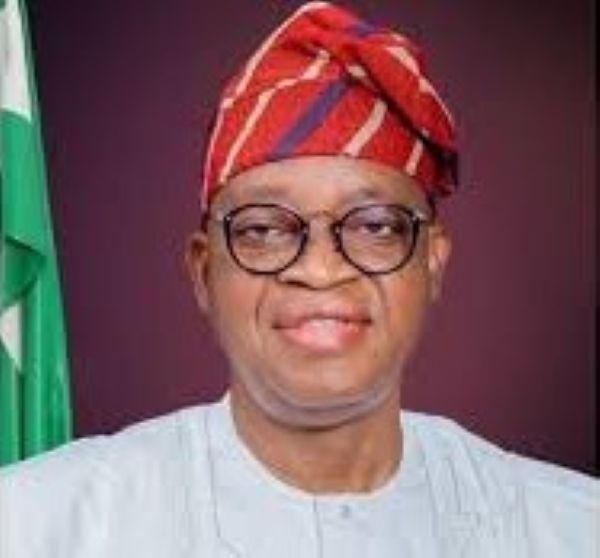
The Minister of Marine and Blue Economy, Dr. Adegboyega Oyetola, made this known while declaring open, the ‘Blue Economy Investment Summit 2026’.
Oyetola said that the project would significantly enhance capacity effectiveness and competitiveness of the ports.
The Summit was organised by Maritime Innovations Hub in collaboration with the Ministry on Thursday in Abuja.
The theme of the summit is “Shifting Gears: Heading to the Frontier of the Maritime Economy”.
He noted the ministry recorded remarkable improvement in revenue generation by agencies under the ministry.
“In 2023 when I assumed office, these agencies generated a total of N700.79 billion. By the end of 2025, this figure had risen substantially to approximately N1.83 trillion.
“This achievement is the result of deliberate and sustained reforms, including strengthened regulatory oversight, improved revenue collection mechanisms and digitalisation of core processes among others”.
He added that these efforts underscored a determination to build institutions that were efficient, accountable and financially sustainable.
Oyetola said: “this summit comes at a defining moment in global dynamics, when nations are grappling with conflicts while increasingly recognising the immense value of oceans and maritime resources.
“The global blue economy, now valued at over 3 trillion U.S. dollars annually, has become a critical driver of trade, climate innovation, and sustainable development.
“This presents a remarkable opportunity for Nigeria. Our country is uniquely positioned to harness the vast potential of the marine economy as a cornerstone of national prosperity”.
“This is with over 8,300 kilometres of coastline, extensive inland waterways, and a strategic geographic location along the Gulf of Guinea”.
On other achievements of the sector, Gboyega said that for the first time in the nation’s history, “we have developed and launched a National Policy on Marine and Blue Economy.
“It is a comprehensive and forward-looking framework that clearly articulates our vision, establishes strategic priorities and provides certainty and confidence to investors”.
“In further strengthening the financial ecosystem of the sector, we are prioritising the revitalisation of the Regional Maritime Development Bank, after over 16 years of delay”.
In her address, the Chief Executive Officer of Maritime Innovations Hub, Ronke Kosoko said the summit was happening at a very critical time, particularly from an economic standpoint.
“If you look at the current direction of the country, it is clear that the focus is shifting toward a more commercially driven and private-sector-led economy.
“The President, as we know, has a strong track record in this regard. He transformed his state from generating about ₦7.2 billion in internally generated revenue to over ₦2 trillion.
“Today, that same state can operate with minimal dependence on federal allocations because it unlocked its internal economic potential.
“Now, bringing that same mindset to the federal level, we are seeing deliberate efforts around policy reforms, fiscal and monetary frameworks and the creation of institutions like this ministry.
“These steps are already attracting investor interest. However, investors are not just interested in opportunities, they want efficiency”.
Also speaking, the Executive Secretary of the Nigeria Shippers Council, Pius Akutah said that poor logistics and weak maritime connectivity remained major obstacles to Africa’s trade ambitions under the continental free trade framework.
Akutah stressed that Nigeria and other African countries must urgently strengthen transport systems to unlock economic potential and improve intra-African trade.
In his address, Gov. Sheriff Oborevwori of Delta said the state government set up two critical committees as part of deliberate effort toward having a ministry of blue economy at the state level.
The governor, represented by his deputy, Monday Onyeme, said the two committees are the State Blue Economy Steering Committee, which is headed by Onyeme and the Blue Economy Technical Working Committee.
“The Steering Committee is to formulate and guide the implementation of policies relating to the Blue Economy and the Technical Committee, comprising career civil servants, is charged with the responsibility of developing frameworks and templates for implementation”.
Similarly, Chief Executive Officer, APM Terminals Nigeria, Frederik Klinke, said” If there was ever a defining moment for Nigeria’s blue economy to reposition itself for resilience, competitiveness, and sustainable growth, that moment is now.
“Globally, the maritime industry is undergoing a profound transformation”.
He said that beyond digitalisation, the Nigerian government, working through its agencies, has remained steadfast in supporting the country’s export growth agenda. (NAN)