



The Wike paradox and Nigeria’s democratic crisis, by Fortune Ulu
The Wike paradox is not just a political curiosity. It is a warning.
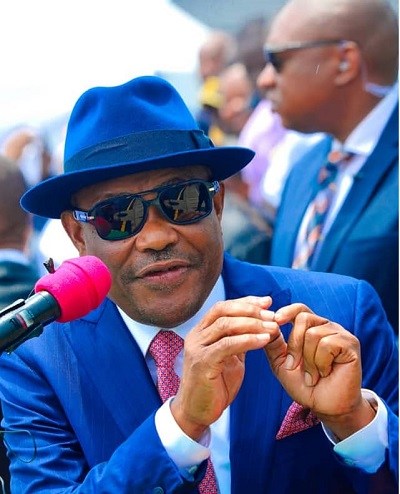
The unfolding political drama involving Nyesom Wike, minister of the Federal Capital Territory and former governor of Rivers State, is not just another episode in Nigeria’s endless theatre of power—it is a stress test of the country’s democratic integrity.
Here Is a sitting minister in a government led by the All Progressives Congress, who remains a member of the opposition People’s Democratic Party, while openly aligning with—and vowing to work for—the ruling party’s political interests.
This is not speculation. It is not whispered intrigue. It is a matter of public posture and political reality.
And it raises a fundamental question: can a democracy function when political actors openly operate on both sides of the divide?
Let’s be clear—this is not about personal attacks. It is about principle.
Because what is at stake goes far beyond one man. It goes to the heart of what political parties mean in Nigeria.
In any serious democratic system, party affiliation is a line of accountability. It tells voters where you stand, what you represent, and who you are answerable to. It creates a structure through which power is organized, contested, and checked.
But the Wike situation disrupts that logic entirely.
When a leading figure remains within one party while actively strengthening its rival, the result is not political sophistication—it is institutional confusion. It blurs the lines that democracy depends on. It weakens opposition. It concentrates influence in ways that are neither transparent nor accountable.
In more disciplined democracies, such a position would be untenable. Party structures would respond swiftly—not out of moral outrage, but out of institutional self-preservation. Loyalty, even if imperfect, is enforced because without it, parties lose coherence and elections lose meaning.
Nigeria’s system, however, has shown a remarkable tolerance for contradiction.
That tolerance is now being stretched to its limits.
Because the implications are profound. If one actor can effectively operate across two major parties—retaining influence in one while aligning with another—then political competition itself begins to erode. Parties risk becoming hollow platforms, easily penetrated, easily redirected, and ultimately indistinguishable in practice.
And when that happens, the voter is left navigating an illusion.
The ballot suggests choice. The system delivers convergence.
Supporters of this kind of political maneuvering often frame it as strategy—a reflection of realism in a fluid political environment. But there is a difference between strategic alliance and structural ambiguity. The former is negotiated and visible. The latter is opaque and destabilizing.
What we are witnessing is closer to the second.
It is not coalition-building. It is the concentration of political leverage in a single node, where influence flows in multiple directions without clear lines of responsibility.
This is where the ethical question becomes unavoidable.
What does party membership mean if it carries no binding obligation?
What does opposition mean if it can be internally compromised without consequence?
What does a voter’s mandate represent if political allegiance is this fluid?
These are not abstract concerns. They go to the survival of democratic credibility.
The exchange between Nyesom Wike and Bala Mohammed only brings these tensions into sharper focus, exposing a deeper struggle—not just between individuals, but within the very architecture of Nigeria’s party system.
At some point, a line must be drawn.
Not necessarily against individuals—but in defense of institutions.
Because no democracy can sustainably function where political actors can belong, in effect, to two opposing camps without clarity, consequence, or constraint.
Nigeria must decide whether party identity still matters—or whether it has become merely symbolic, a label to be worn or discarded depending on convenience.
If it is the latter, then the implications are stark.
Elections become less about choice and more about networks.
Parties become less about ideology and more about access.
And democracy itself becomes less about accountability and more about power management.
The Wike paradox is not just a political curiosity.
It is a warning.
Because no system can endure indefinitely when its core structures are stretched this thin—when allegiance is optional, and contradiction is normalized.
Sooner or later, something gives.
The only question is whether Nigeria’s political class will correct course—or whether the system will continue to bend until the very idea of party democracy loses its meaning entirely.
Ulu is Editor-in-Chief of Nigeria Essence.