Dangote Refinery

This is not about the Dangote Group that has redefined Nigeria’s industrial sector. It is more about Aliko, the man whose vision and inspiration led to the still changing industrial landscape. The issue of refining our crude oil had been taken for granted for over a decade during which Nigeria’s four refineries were left to rot. Successive administrations were content with wholesale importation of refined products that made the country the weakest link in the OPEC chain. In the event of any disruption in the market through a glut-induced price drop, Nigeria was always the first to feel the heat.
When President Olusegun Obasanjo at the twilight of his administration boldly sold two of the four refineries to a consortia that included Aliko Dangote, it was expected that an inexorable march to rebuilding local capacity in crude oil refining had been activated. Unfortunately, Umaru Yar’Adua who succeeded Obasanjo was too naive to see the long term vision in the deal. He allowed himself to be swayed by the cartel entrenched mainly in the state-owned behemoth, the NNPC, to reverse the sale, restoring the cartel to full business. Ordinarily, it should have been the death knell for the indigenous refining industry.
The ongoing unilateral war the United States and Israel is waging against Iran has brought back the intrigues of 1990 Gulf War when Nigeria earned an estimated $12.2 billion to $12.4 billion in additional oil revenue as prices spiked due to supply disruptions. The windfall under former military president Ibrahim Babangida’s administration, was largely spent on “off-budget” projects and deemed unaccounted for by the 1994 Pius Okigbo Panel, making it a major controversy in Nigeria’s history. Now, the volatile region is distorting the global economy again, this time with the United States and Israel unilaterally staging war against Iran unlike the previous one that involved over 40 countries squaring up against Iraq.
Unlike the 1990 war, the ongoing one is having a less debilitating impact on the availability of refined products in Nigeria. While the real windfall is yet to be revealed, the removal of subsidy by President Bola Ahmed Tinubu via his 2023 inaugural address, to a large extent, built a bulwark against the huge shock the economy would have been subjected to if there was no Dangote Refinery to process crude oil and supply the local market.
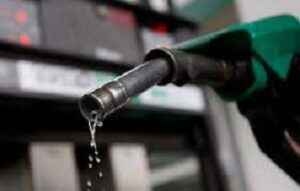
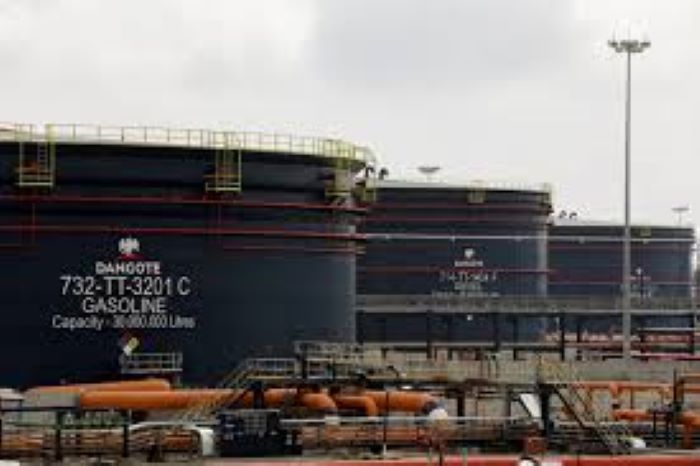
If Dangote’s 650,000 barrels per day capacity refinery had not come on stream when it did, the going rate of over $110 per barrel of oil would have taken Nigeria to an uncharted territory. Imagine if petrol and other refined products were being imported from the international market and imported with other ancillary costs, especially insurance and freight, the current retail price of petrol would have been unthinkable. We probably would have been dealing with the retail price of over N2,000 per litre. The current outrageous rise of aviation fuel by 350 percent to N3,300 would likely have applied to petrol.
That Nigerians are grappling with just about N1,400 would have been inconceivable. It is all due to Aliko Dangote’s indefatigable spirit. He was not put off when the initial sale of an existing refinery, albeit dilapidated and disused, was scuttled just months after the deal was struck. It may have been a divine intervention for him to initiate something more impactful and enduring for Nigeria. No such thing had been thought of previously. The scale, the fund and the logistics demand were unprecedented. But not for him. In the words of Walt Disney, “The way to get started is to quit talking and begin doing”.
In a twist that with hindsight was not entirely surprising, the entrenched cabal in the oil industry with the pivot in NNPC and its subsidiaries and regulatory agencies, it was not enough that up to $20 billion had been sunk into getting the refinery on stream.
Apart from banking on the refinery by the federal government to end the embarrassing reliance on imported products, the government also invested public funds into the project. Initially put at 20 percent of the stakeholding, Godwin Emefiele, former governor of the Central Bank of Nigeria (CBN) had claimed on May 22, 2023, when then President Muhammadu Buhari initially commissioned the refinery before its actual completion that the Dangote Group had paid back 70 percent of the loans it took to construct an oil refinery.
But the cabal was not afraid to put up one last ditch fight to kill the refinery. First, Dangote’s products were falsely said to be inferior to imported ones. The allegation fell like a pack of cards with the revelation that the refinery’s laboratory had certified that its own products have superior quality to the ones NNPCL was importing.
Then another story was promoted. According to the allegation by NNPC and its subsidiaries, the refinery was reselling crude oil from the United States and Nigeria.
Stating that it is not authorised for it to resell crude acquired in Nigeria, Anthony Chiejine, Dangote Industries Limited spokesman, urged the public to disregard what he termed false narratives intended to discredit the refinery.
Not one to shy away from this sort of war being waged against his conglomerate, Aliko Dangote himself fought back. He pointedly accused those running Nigeria’s oil industry of mischief for personal interests. He alleged that some personnel of NNPCL, oil traders and terminals have opened a blending plant in Malta, affirming that the areas of the blending plants are known.
Pointedly, Dangote, in a fiery press conference, said: “Some of the terminals, some of the NNPC people and some traders have opened a blending plant somewhere off Malta,” he said. “We all know these areas. We know what they are doing.”
That struck a cord, a raw one apparently. Although no names were mentioned, top state operatives queued to exonerate themselves. Mele Kyari, then Group Managing Director of NNPCL, went a step further to dare Dangote to name the culprits.The cartel is powerful, very powerful. They are richer than Nigeria and the government and can go all the way to maintain the status quo.
Today, that all Nigerians are complaining of is the high retail price of petrol, not chronic and costly scarcity is down to Aliko Dangote.
Individual vision drives industrialisation by transforming abstract ideas into concrete economic, technological, and infrastructural advancements, acting as the catalyst that shifts economies from agrarian to manufacturing-based models. Visionary leaders, entrepreneurs, and innovators create new value by identifying opportunities for businesses. That is Aliko Dangote. He is an icon in Nigeria’s advancement in the real sector.
At his peak as a global football icon of unparalleled skill and talent, the Brazilian government declared Pele a national treasure and he was even barred from playing outside the Brazilian League which at a time was the best in the world anyway. That is what Aliko Dangote is, a national treasure.