




Foreign Minister, Tuggar, on CNN, makes shocking revelations on US strike in Nigeria (Full transcript)
In the wake of US military bombing of targeted terror hubs in parts of norther Nigeria, RAHEL SOLOMON, CNN Anchor spoke to Nigerian Minister of Foreign Affairs, Yusuf Tuggar from New York. Below is the full transcript:
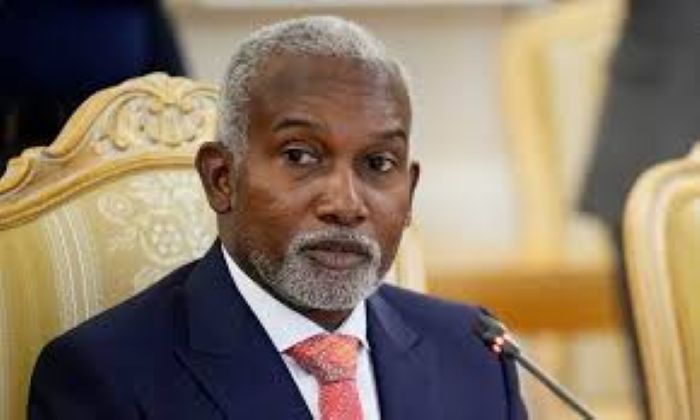
SOLOMON: Joining me now is Nigerian minister of foreign affairs, Yusuf Tuggar.
Foreign Minister, we appreciate you being here. This morning, you posted a statement to X shortly after the strike saying that terrorist violence in any form, whether directed at Christians, Muslims or other communities, remains an affront to Nigeria’s values and to international peace and security. Foreign minister, that is a different message than what we’ve heard from President Trump, who has really focused on the killing of Christians.
What can you explain for our viewers is really happening on the ground here, who’s — who’s really being targeted?
YUSUF TUGGAR, NIGERIAN MINISTER OF FOREIGN AFFAIRS: Terrorists are being targeted. This has always been Nigeria’s approach, and this this also puts paid or it puts to rest any doubt with regards to the administrations resolve to fight terrorism. And this was coordinated with the U.S. the same way that we’ve been saying we are ready, willing and able to collaborate, to coordinate with any foreign government that is committed to the fight against terrorism.
This is not about religion. It is about Nigerians, innocent civilians and the wider region as a whole. And even before the strike was carried out, I had a 90-minute phone call with secretary of state, U.S. Secretary of State Marco Rubio, after which I discussed with President Tinubu, and I later spoke again to President Tinubu. He gave the go ahead. And then Marco Rubio called me once more for five-minute discussion and subsequently, the attacks were carried out
SOLOMON: So, the president says that a record number of Christians are being killed. Do you dispute that? And if so, what’s the true number of people being killed?
TUGGAR: We’re not going to dwell or pore over forensically of what has been said or what hasn’t been said. For us, it’s a matter of what I can only describe as perhaps the choice between deontology and consequentialism. So, for us in this particular matter, we’re focusing more on consequentialism.
So, the end the end is to fight against terrorism, to stop, the terrorists from killing innocent Nigerians, be they Muslim, Christian, atheist, whatever religion, and to also understand that this is a regional conflict.
It is happening in West Africa. It’s happening in the Sahel region. It’s happening in the Lake Chad basin region. So, this is — this is important. But for us, whoever is prepared to work with us, to fight terrorism, we’re ready, willing and able.
SOLOMON: And I want to talk about that in just a moment. But just to sort of circle back, it’s not about disputing what has been said or hasn’t been said. But I do think it’s about understanding the scope of the problem on the ground and understanding who and who has not been a victim of this. And so, to help our viewers understand, you said its not just Christians, explain some of the factors sort of at issue here.
TUGGAR: So, the factors at issue, like I said, its a regional conflict. It goes back to the effect of the Leahy laws that stopped that precluded the sale of kinetic and nonmilitary equipment to countries like Nigeria. It goes back to the breaking down of government and governance in Libya, the killing of Gadhafi, the proliferation of weaponry and fighters from Libya, the attempt at a Sahel strategy by our neighbors to the north to stop the flow of migrants in a region in the Sahel region, which is arid or semi-arid and life depends on movement and, that created tensions because some of the countries, found themselves having to, to deal with outside, initiatives that were collaborating with Azawad Tuareg groups.
And those Tuareg groups were irredentists. They were separatists trying to create their own country. And the military are trained to keep countries together. So that put them at loggerheads with military in countries like Niger, like Mali, like Burkina Faso, which ultimately led to the, takeover of government by the military in those countries and ultimately led to the pulling out of a country like Niger from the multinational joint task force that had been combating terrorism effectively in the region, and which meant that what we the progress that we had made, I came to a standstill.
So, you can see that these are exogenous factors. It and they’re all tied to the wider region. It’s not a Nigerian problem. It’s not a Christian-Muslim problem. It is a regional problem. But we’re putting all of that aside.
We accept that we need the support of other countries and any country that is willing to work with Nigeria based on our moral precepts and ethical considerations and respect for territorial integrity and sovereignty, we’re prepared to do so, and we demonstrated this yesterday.
SOLOMON: Are you prepared, sir, to allow U.S. troops on the ground? To use President Trump’s words, guns a-blazing? When you say that you’re prepared to accept help, are you prepared for U.S. troops on the ground if that is, in fact, what the commander in chief, supposes?
TUGGAR: These are operational issues that would have to be considered by our military. I am heading foreign policy. I’m heading the ministry of foreign affairs and diplomacy, and it’s something that the minister of defense and some of our security agencies would be in a better position to respond to.
But for now, we have collaborated on this attack. It was a collaborative effort between Nigeria and the U.S., and the President Tinubu gave the go ahead before it took place, and we don’t see it violating our sovereignty or territorial integrity, which is very important. And it’s not about religion. It’s about the protection of lives and property of Nigerians. And our neighbors as well.
SOLOMON: And I take your point that some of the factors at play here on the ground are factors that may stretch beyond the border of Nigeria, that may stretch beyond even the continent. But I do want to ask, I mean, these are Nigerians who have been killed, Muslim, Christian and otherwise. For those who say, you know, you said a moment ago that this is not a Nigerian problem. This is not a Christian problem.
For those who say that Nigerian lawmakers haven’t done enough to protect Christians, haven’t done enough to protect Nigerians who have been the victim of these crimes, what do you say? What do you say to those concerns?
TUGGAR: What took place yesterday clearly underscores the fact that Nigeria is not lacking in will and a commitment to the fight against terrorism. We may have institutional challenges, partly due to for instance, the Leahy law that stopped the sale of military equipment, both kinetic and non-kinetic, to countries like Nigeria.
And I have to say here also that even when the Leahy law was in effect, President Trump in his first administration, acquiesced to the sale of aircraft, military aircraft, the Super Tucano to, Nigeria. And we appreciate that. And you could see that, it was the aircraft were put to work and this is a sort of collaborative effort that is required in the fight against terrorism and securing the region.
And it is — we are at the forefront of the fight against terrorism globally, because most of the threat is taking place in the Sahel region. And you could — you can even see from the records that the Sahel registered more deaths in terms of terrorist acts than any other part of the world. And when you talk about the Sahel, majority are Muslims, they’re not Christians. We’re talking about are the Sahelian countries, not even Nigeria here.
SOLOMON: Understood. And then lastly, I just want to circle back to something our military analyst said just shortly before we came to you, Mr. Foreign Minister, that a strike like this, sort of limited in scope in terms of the impact on the ground to sort of isolate militants, what comes next? I mean, his point was that you would need to see a larger military campaign to really, see some sort of substantial effect. What comes now? What happens next?
TUGGAR: For us, it’s both a kinetic and non-kinetic approach. We had the operation safe corridor. It was working so well when the multinational joint task force with Niger, with Chad, with Cameroon and Republic of Benin was working well.
But as I said, the military coup in Niger as a result of the failure of the U.S. health strategy led to the pulling out of Niger Republic from the multinational joint task force, which meant there was no longer the effective use of the, right of pursuit so that the military in one country could pursue terrorists up to 20 or 30 kilometers into the territory of its neighbor, and vice versa.
But prior to that, we had operation safe corridor. We had a lot of Boko Haram terrorists surrendering. So, it was a matter of sorting out who was an insurgent, who was simply a villager caught up in the in the conflict and so forth. And we were doing that. We were overwhelmed with the number of people that were turning themselves in.
But, you could — you could see a spike in Boko Haram activities because of, as I said, the knock on effect of, the challenges we had with the military coup in Niger. So, all of these things are interconnected, which is why we welcome a global effort. We welcome, collaboration with countries like the United States and others in fighting terrorism.
But again, we have the non-kinetic approach, which continues just like safe corridor was looking to sort, people out and also which also entails reorientation and so forth.
SOLOMON: Okay. We’ll leave it here. Nigerian Foreign Minister Yusuf, we appreciate the time this morning. Thank you.
TUGGAR: Thank you, Rahel.