Dele Alake

…Raw Mineral Exports No Longer Permitted
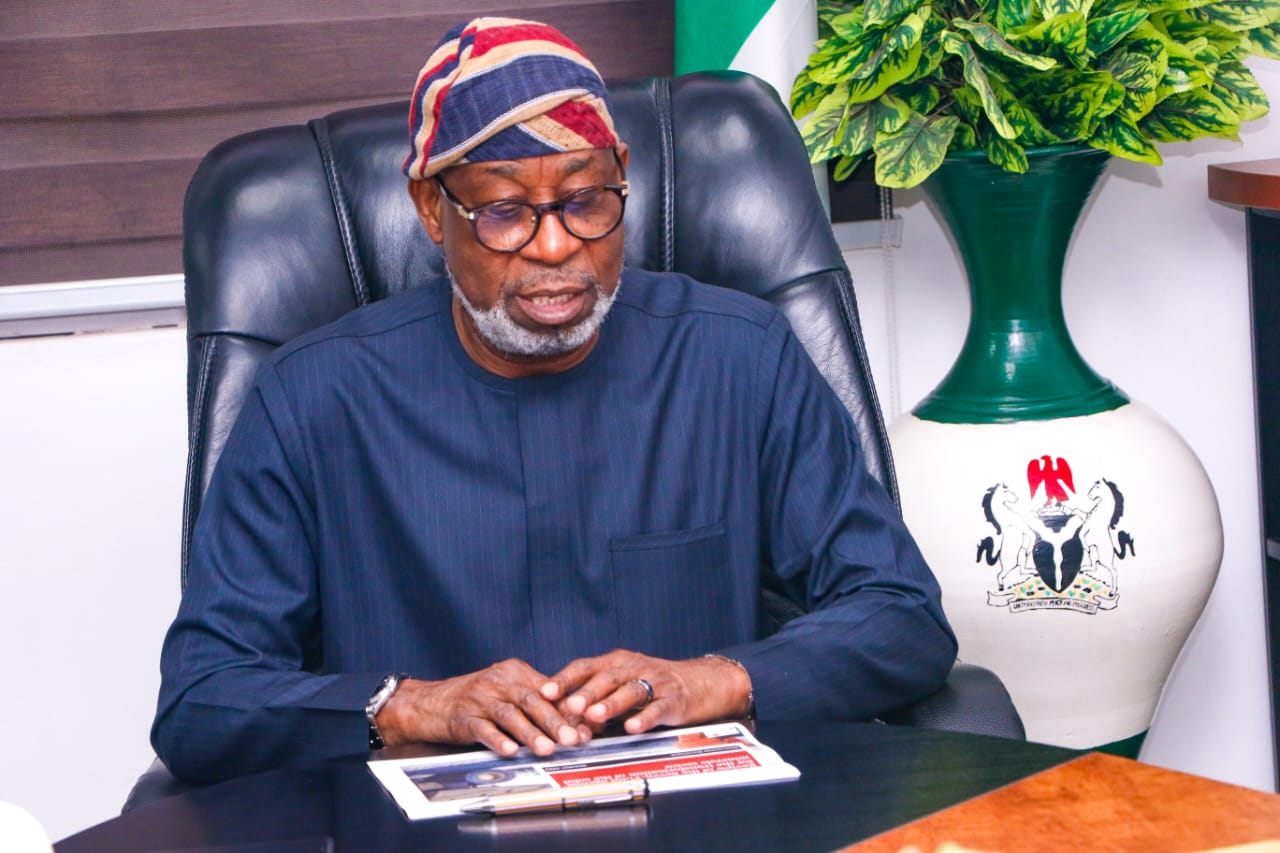
The Minister of Solid Minerals Development, Dele Alake, says Nigeria’s local value addition policy attracted over 2.6 billion dollars in mining investments within two years.
Alake spoke during a joint stakeholders’ sensitisation meeting organised by the Nigeria Revenue Service and the Ministry of Solid Minerals Development in Abuja.
A statement issued by the minister’s Special Assistant on Media, Lara Wise, was made available to journalists on Thursday in Abuja.
The minister said ongoing reforms extended beyond enforcement and revenue generation towards building a sustainable mining ecosystem capable of creating jobs and boosting exports.
He explained that reforms were also designed to increase government revenue and accelerate industrialisation across the country through responsible mining activities and local value addition initiatives.
According to him, the solid minerals sector has become central to the economic diversification agenda of President Bola Tinubu.
Alake said reforms introduced by the administration were already producing visible outcomes through increased investments and expanding mineral processing activities nationwide.
He added that gold processing plants and other mineral beneficiation factories were emerging across Nigeria, creating employment opportunities for citizens in mining communities and industrial centres.
The minister stressed that the Federal Government was no longer interested in exporting raw minerals without domestic processing and industrial value addition.
He said the ministry introduced reforms to improve ease of doing business and strengthen licensing processes within the solid minerals sector.
Alake stated that government had also expanded geoscience data generation, formalised artisanal miners and sanitised the sector to attract responsible investors.
According to him, more than 300 illegal mining operators, including foreign nationals, have been arrested during ongoing enforcement operations across the country.
He disclosed that over 150 prosecutions involving illegal mining activities were currently ongoing in different courts nationwide.
“Over 100 illegal mining sites have been recovered and returned to legitimate owners as part of efforts to restore investor confidence,” he said.
The minister observed that Nigeria struggled economically for years because previous administrations lacked the courage to implement difficult but necessary reforms.
“Nigeria was borrowing to pay salaries before 2023. Resources were used mainly for recurrent expenditure and unsustainable fuel subsidy payments,” he stated.
Alake said President Tinubu immediately moved to block leakages and reform critical sectors of the economy after assuming office.
He recalled that before crude oil discovery, mining was one of Nigeria’s major economic pillars and contributed significantly to industrial development.
According to him, Nigeria has now reset its economy through bold reforms introduced by the present administration.
He said the country’s economic recovery was firmly underway following reforms aimed at promoting long-term productive industrial growth.
Alake added that Nigeria had commenced a challenging but necessary transition from a consumption-driven economy to a production-based industrial economy.
The minister commended stakeholders for supporting reforms through compliance with licensing obligations, royalty payments and responsible environmental mining practices.
“That is why this engagement is important. We want continuous dialogue with operators and stakeholders.
“Our vision is built on partnership, transparency, education and shared prosperity because when the sector succeeds, Nigeria succeeds,” the minister said.
The meeting was with the theme, ‘From Resource to Revenue: Aligning Solid Minerals Operations with the 2025 Tax Reform Act.’
The forum brought together operators, regulators and industry leaders to strengthen collaboration and deepen understanding of the new royalty and tax administration framework.
The Nigeria Revenue Service has assumed responsibility for collecting mineral royalties from mining operators nationwide.
The Ministry of Solid Minerals Development will continue providing technical oversight and regulatory supervision for mining operations across the country.