




Ojulari, NNPC and self-audit, by Ken Ugbechie
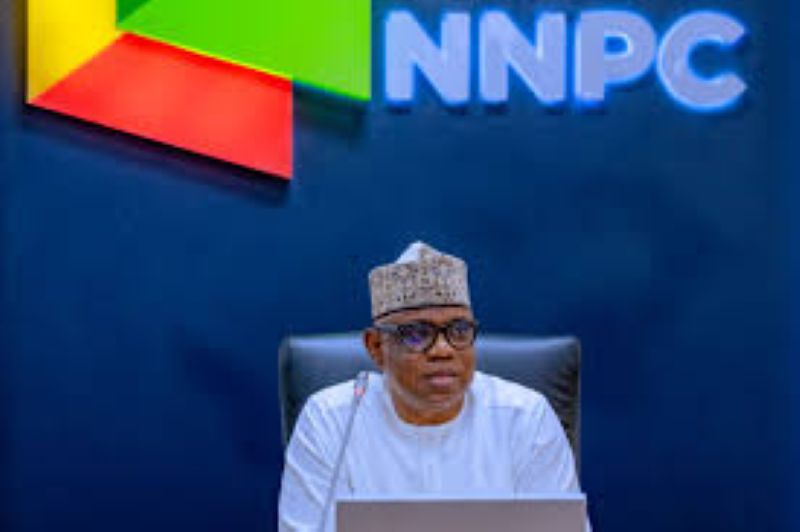
Until you summon the courage to lose sight of the shore, you can never cross the ocean. That was one of the nuggets of leadership from Christopher Columbus, the Italian explorer whose navigations across the Atlantic Ocean paved the path for Europe’s colonisation of the Americas. Bashir Bayo Ojulari, the Group Chief Executive Officer, GCEO, of the Nigerian National Petroleum Company (NNPC), showed such raw courage recently when he told Nigerians on February 24, 2026 that the nation’s refineries in Kaduna and Port Harcourt had been shut down.
His reason was clear and simple: They were operating at a “monumental loss” hence the need to halt the losses to prevent value erosion. Something like cutting your losses. It obviously took titanic courage to do that. And even much more, a heavy dose of pragmatism and patriotism. How could anyone shut refineries that had been packaged and primed as working? How could you shut a project that has consumed billions of dollars to execute? How could you be so frank in a clan where speaking the truth is anathema?
Ojulari simply lost sight of the shore and boldly crossed the ocean. It takes courageous leadership to ignore the shore and its temptations, even treachery, just so you could conquer the ocean. Ojulari did. And for that, he deserves oysters served on a diamond-plated salver. What he achieved by that singular show of audacity to state the truth was to send a strong signal to Nigerians and some elements in the NNPC ecosystem that the old order is long gone.
The refineries for decades have remained convenient conduits to siphon money and cheat the nation. Epileptic and unpredictable like the national grid, they have gulped billions of dollars from the nation’s vault.
Reports suggest that between $18 billion and $25 billion has been spent on turnaround maintenance (TAM) and rehabilitation of the four refineries in Port Harcourt, Warri, and Kaduna in the last 25 years. Yet, they keep huffing and cranking up with glitches instead of cracking crude oil for the good of Nigerians.
In 2021, for instance, the Federal Executive Council approved $1.5 billion for the Port Harcourt refinery and an additional $1.48 billion for the Warri and Kaduna refineries. Yet, they remained under-performing infrastructure in the petrochemical-processing ecosystem. Every TAM was fraught with fraud. In some cases, contracts were awarded to companies and persons with zero technical competence and capacity. Even when they were revived or turned-around, they remained under-performing facilities, sometimes performing at less than 30 percent. Idle or under-utilised, they rack up operational expenses for NNPC and for Nigerians.
Yet, NNPC is no charity. Neither were the refineries built to exist only as national monuments exemplifying rot and perfidy. They were built to refine crude oil; to serve the nation. Pumping billions of dollars into refineries that produce little or nothing is not smart thinking. Whereas previous managements may have slipped into the silent acquiescence syndrome of saying nothing and doing nothing even when the ship is sinking, Ojulari dared the odds and raised his voice. He told Nigerians the inconvenient truth. The refineries are not working. They no longer serve purpose; neither fit for purpose. They have become technical dinosaurs in dire need of modernity and rebooting. It takes courage to report to the owners of a business that all the optics of profitability and productivity they had been fed with through the years were delusory, more like optical illusions in physics.
Making Nigerians to believe that all was well with the refineries is not smart leadership. It’s primitive and crude; and conflicts with basic rudiments of successful enterprise management. It breeds a culture of losses untold, unspoken. The silence keeps the optics brighter and kaleidoscopic. It gives a veneer of sound fiscal health to the ledger when in reality, the holes are deeper than imagined. How do you explain, then justify, the running cost of a business, ramping up to over N12 trillion in two decades of poor productivity? Only a government spoon-fed entity can run on such low or zero oxygen and still stay ‘alive.’ Ojulari has bucked this trend of silent acquiescence. He slid into the whistleblower mode and has been blowing the whistle and clearing the rot these past one year. He clocks one year on the job next month.
But make no mistake about it; crude business is good business. It yields good profit, creates jobs and wealth. And because it is lucrative, it is also the hotbed of global corruption. Anywhere there is crude oil money, there is a high probability of graft. Russia, Venezuela, Angola et al have had their fair share of oil and gas corruption. The smell of oil is the stench of corruption.
Transparency International, the global corruption watchdog, says: “Many countries rich in oil and gas are home to some of the world’s poorest people. How can this happen? Too often, wealth stays in the hands of politicians and industry insiders. Revenues don’t get published. Payments made to governments to exploit resources remain secret. Bribery and embezzlement go unchecked.
“Many oil and gas companies protect the identities of their equity holders and subsidiaries. This allows corrupt leaders to hide stolen funds unnoticed. Inadequate financial statements make it easy to disguise corrupt deals, and impossible for any of us to monitor them. Many oil and gas companies don’t publish information country by country. This allows them to hide the royalties, taxes and fees they pay. But without this information, we can’t hold governments to account for the money they receive.”
That sums it up. There is a culture of lack of transparency in the global oil and gas industry. This paves the path for corruption to fester. Nigeria is no exception. Ojulari, coming on the back of a trove of accomplishments since April 2025, has turned the switch. He has transitioned NNPC to the transparency frequency mode. He has stanched the financial hemorrhage and cut losses reasonably by shutting the refineries. He has reset the work ethic.
Corporations do not fail for lack of strategy. Richard Raynor, a Deloitte Research Fellow and author of the best-selling The Strategy Paradox argued that businesses can commit to success but end up failing. The former managers of NNPC may have set out to succeed and give the oil and gas behemoth a new lease of life, but they failed to do one critical thing: Self audit! They failed to ask the question: What if NNPC were my personal business, will I run it like this with all the holes and leakages unchecked? Ojulari must have asked himself this question. And he was properly guided.
He has ignored the treachery of the shore to sail across the ocean. By such raw boldness, he has also attracted enemies to himself, from within and without. But that’s a good price to pay for daring to be different; for doing public good.